
How to Reduce Luxury Resort Food Expenses: A Strategic Asset Management Guide
The economics of high-end hospitality are governed by a fundamental, often invisible, principle: the resort is a captive market. When a traveler enters a luxury property, the standard rules of the open market—where competition, price discovery, and consumer choice dictate value—are effectively suspended. The Food and Beverage (F&B) operation within a resort is not merely a service amenity; it is one of the highest-margin engines of the property’s financial ecosystem. Understanding this reality is the primary step in mastering the operational logic of high-end travel. It is not about the crude practice of deprivation; rather, it is about the strategic allocation of capital within an environment designed to encourage consumption.
To approach this challenge with any degree of success, one must abandon the consumer mindset and adopt the perspective of a systems auditor. The resort’s pricing models for dining are based on “inelastic demand”—the assumption that the guest will pay the premium because the friction of seeking alternatives elsewhere is prohibitive. By acknowledging this structural bias, the traveler can begin to architect a spending strategy that respects the budget while maintaining the integrity of the travel experience. The goal is not to eliminate expense but to optimize it, ensuring that every dollar spent in the dining room provides a measurable return in quality, convenience, or experience.
This inquiry requires a deep dive into the underlying financial structures of resort operations. It requires analyzing the difference between fixed costs, variable margins, and the psychological architecture of menu design. For those who prioritize long-term fiscal discipline in their travel portfolios, understanding how to reduce luxury resort food expenses becomes a component of broader asset management. This is a guide to navigating the logistical and financial complexities of resort-based dining without compromising the standard of the stay.
Understanding “how to reduce luxury resort food expenses.”
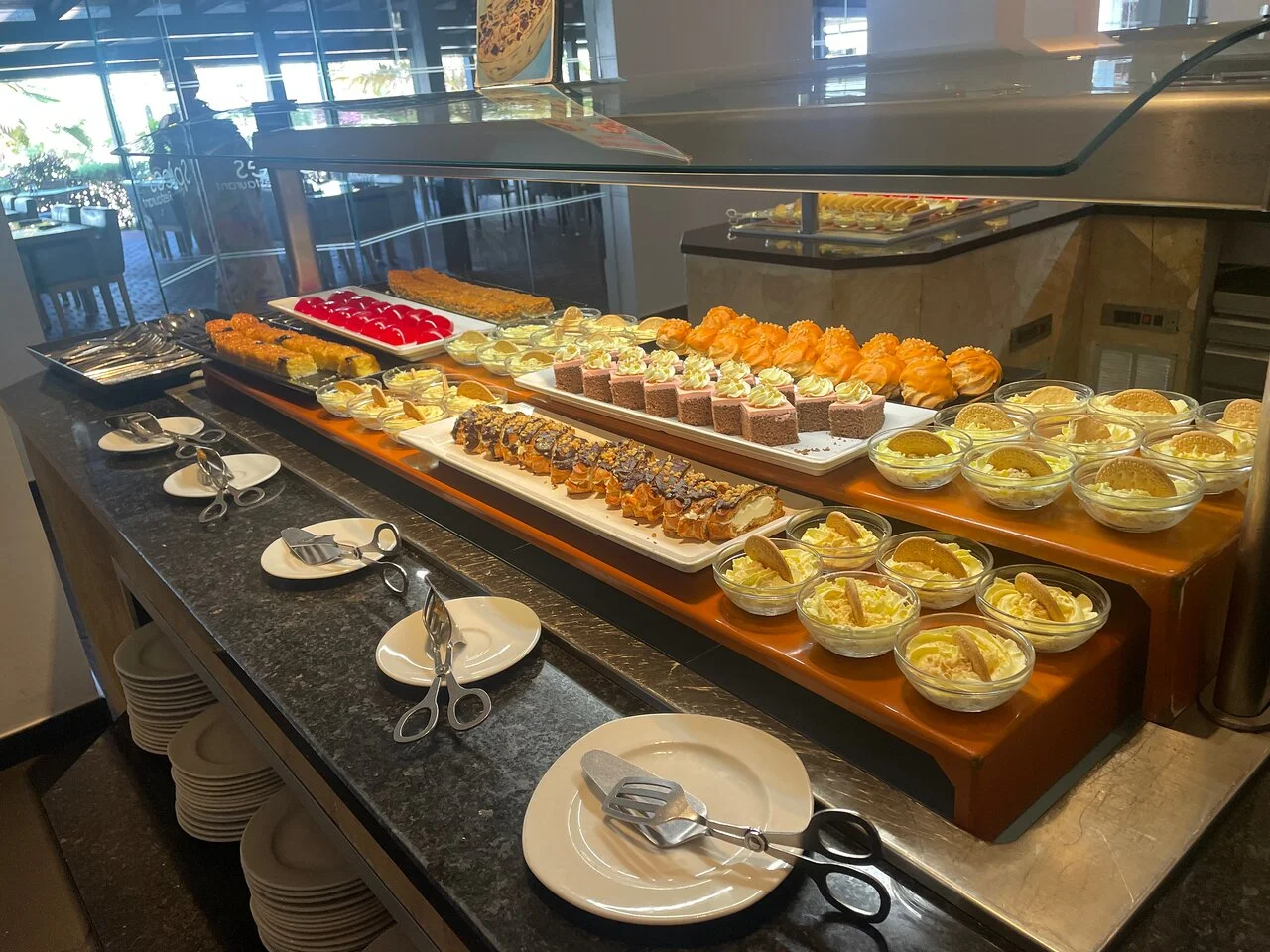
The pursuit of value in a luxury environment is frequently misunderstood as a quest for discounts. This is a tactical error. Luxury resorts do not discount their F&B operations; they manage them for maximum yield. Therefore, when attempting to understand how to reduce luxury resort food expenses, one must stop looking for lower prices on the menu and start looking for inefficiencies in the resort’s delivery model. The confusion arises because most travelers treat the menu as a fixed set of facts, whereas it is, in reality, a dynamic set of choices designed to lead the guest toward high-margin items.
The primary risk in this domain is the “Value-Degradation Trap.” If the effort to save on food expenses significantly reduces the quality of the trip, the strategy has failed. The oversimplification here is the assumption that any savings are a “win.” If you choose a resort that is isolated, forcing you to pay premium prices, but you attempt to survive on smuggled snacks, you are failing to optimize; you are merely suffering.
True optimization in this sector requires identifying the “leverage points” in the resort’s operational model. These might include the specific times of day when margin pressure is lower, the ability to negotiate package inclusions before the stay, or the capacity to leverage off-property partnerships that the resort management is contractually obligated to honor. By focusing on these systemic levers, you gain a degree of control over your expenditure that is absent when merely haggling over the price of a salad or a cocktail at the pool bar.
Deep Contextual Background: The Evolution of Hospitality Logic
Historically, the “Resort” was a self-contained estate. The food provided was an extension of the host’s hospitality; it was expected to be inclusive and abundant. The move toward the modern, hyper-profitable resort model began with the fragmentation of services. As brands sought to maximize RevPAR (Revenue Per Available Room), they decoupled F&B from the room rate. This allowed resorts to lower their “headline” price (the room rate) while extracting significant revenue through the “back door” of F&B, spa services, and incidentals.
This evolution has reached a point of extreme specialization. Modern luxury properties now operate multiple sub-brands within their grounds—fine dining, casual bistro, poolside service, and room service. Each is a separate business unit with its own profit and loss (P&L) accountability. When you analyze how to reduce luxury resort food expenses, you are essentially navigating the P&L strategies of these individual business units. You are competing against revenue managers whose sole objective is to ensure that the total spend per guest remains as high as possible.
The historical shift has moved from abundance (the estate model) to transactional optimization (the modern model). Recognizing this evolution is critical because it explains why resorts seem resistant to “reasonable” pricing; their systems are mathematically calibrated to capture the maximum willingness to pay from a captive demographic.
Conceptual Frameworks and Mental Models
To manage this complex financial landscape, apply the following frameworks:
-
The Captive Market Multiplier: Calculate the cost of the “friction of alternatives.” If the nearest town is two hours away, the resort’s F&B pricing is not just food cost; it includes the premium for the convenience of not driving four hours. Recognize that you are paying for logistics as much as you are paying for ingredients.
-
The Margin Asymmetry Principle: High-end resorts maintain high margins on items with low preparation complexity (e.g., alcohol, pre-prepared starters) and lower margins on items with high labor intensity (e.g., complex entrees). Focus your spending on high-labor items where you are extracting actual culinary value, rather than high-margin items where you are merely paying for the brand.
-
The Opportunity Cost of Consumption: Evaluate whether the resort’s F&B offering is a unique experience. If the breakfast is generic, do not treat it as a destination event. Treat it as a utility. When planning how to reduce luxury resort food expenses, you must distinguish between “utility dining” and “experience dining.”
Key Categories and Operational Variations
The following table categorizes resort food service models by their economic structure:
Realistic decision logic dictates that your approach to how to reduce luxury resort food expenses should change entirely depending on which of these models the property utilizes. If the model is Hybrid, your goal is to perfectly hit the credit limit without incurring “overage” charges. If the model is à la carte, your goal is to disrupt the transaction loop through pre-planning.
Detailed Real-World Scenarios
Scenario 1: The “All-Inclusive” Optimization. A resort offers an all-inclusive package that is significantly more expensive than the “room only” rate. The traveler calculates the break-even point: the package costs $400/day, while daily F&B spend averages $250. The traveler assumes the package is a loss. The failure mode: The traveler fails to account for the price inflation of items on the inclusive menu. When ordering a steak or a bottle of wine, the “menu price” is inflated to protect the margin. By upgrading to the inclusive package, the traveler isn’t just paying for food; they are purchasing “price certainty.”
Scenario 2: The In-Room Dining Arbitrage. The resort charges a 30% service fee and an automatic gratuity on all room service. The traveler orders individual items, triggering the fee on every order. The decision point: Aggregate the order. By ordering an entire day’s worth of non-perishables (e.g., breakfast and lunch supplies) in a single delivery, the traveler consolidates the service fees, effectively reducing the “delivery tax” by 60%.
Scenario 3: The “Off-Property” Pivot. A resort is located 15 minutes from a local village. The traveler maintains the “resort bubble” mentality, eating every meal on-site. The second-order effect is a 300% increase in food costs. The strategy: Allocate one or two days of the trip to “off-property exploration,” essentially moving the food budget into the local economy where price transparency is higher, and market competition prevents artificial inflation.
Planning, Cost, and Resource Dynamics
The resource dynamics of luxury dining are deceptive. One must differentiate between “Direct Costs” (the price on the menu) and “Indirect Costs” (service charges, taxes, and the “convenience tax”).
The most effective approach to reducing luxury resort food expenses is to front-load the planning. By negotiating food packages during the initial reservation, you are dealing with the sales department (which is incentivized to close the room booking) rather than the F&B manager (who is incentivized to maximize margin).
Tools, Strategies, and Support Systems
-
The Pre-Arrival Audit: Contact the resort’s sales manager. Ask for the specific list of meal plan options. Often, these are not advertised online because they represent lower margins for the resort. They exist for corporate groups but can be accessed by the individual.
-
The “Non-Perishable” Import: For high-luxury, remote resorts, bring high-quality, shelf-stable staples (nuts, chocolates, high-end snacks). This eliminates the “hunger-driven” impulse purchases that plague the late-night room service menu.
-
The “Local Liaison” Strategy: Engage the concierge (or a local guide) to identify high-quality local eateries that provide transport. This circumvents the “captive audience” problem entirely.
-
Beverage Strategy: The alcohol markup in luxury resorts is extreme. If the resort allows, bring duty-free items for in-room consumption to replace the high-margin “minibar” or “room service” bottle service.
Risk Landscape and Failure Modes
There is a significant risk of “value erosion.” If you attempt to reduce expenses by sacrificing the quality of the trip, you are merely diminishing your own experience.
-
The Isolation Risk: By trying to avoid resort food, you may become trapped in a logistics loop of trying to leave the property, causing stress that negates the point of the vacation.
-
The “Penny-Wise” Penalty: Avoiding a high-quality, on-property experience to save money, only to have a poor experience at a low-quality, off-property establishment.
-
The “Relationship” Risk: Being viewed as a “difficult” guest by the resort staff. F&B staff are the frontline of guest experience; if they perceive you as someone merely trying to “beat the system,” the quality of your service will inevitably decline.
Governance, Maintenance, and Long-Term Adaptation
The long-term approach to reducing luxury resort food expenses requires a systematic review process. After every trip, conduct a post-mortem: Did the meal plans offer value? Was the room service cost-effective? If a specific property proved to be a “margin sink,” blacklist it. When planning future trips, use this data to target properties that offer “transparent pricing” models. This governance ensures that you are not repeating the same financial mistakes across multiple travel destinations.
Measurement, Tracking, and Evaluation
-
Leading Indicators: The transparency of the resort’s initial rate card. Does the resort list all fees? If the resort hides its service charges, it is a high-risk property.
-
Lagging Indicators: The “F&B to Room-Rate Ratio.” If your food bill is 60% of your room bill, the F&B operation is extracting too much value.
-
Qualitative Signal: The “Convenience-to-Cost” score. If you felt that the convenience of an on-property meal was worth the high price, you succeeded. If you felt “trapped,” you failed.
Common Misconceptions and Oversimplifications
-
“All-Inclusive is a Scam.” It is not a scam; it is a hedge. It converts variable costs into fixed costs, which is a sound financial strategy for those who dislike price volatility.
-
“Tipping is Optional.” In the luxury resort context, the service charge is often a mechanism for base pay; extra tipping is a mechanism for “priority service.”
-
“Hotel Breakfast is Included.” Rarely. If it is included, check the room rate difference. Usually, the “breakfast-inclusive” rate is significantly higher than the standard rate.
-
“The Concierge is on your side.” The concierge is an employee of the resort. Their goal is to keep your spend on-property.
Ethical, Practical, and Contextual Considerations
While the goal is to optimize spending, one must acknowledge the ethical dimension. Resorts are major employers in their local regions. Reducing your spend by bypassing the resort entirely can have a negative impact on the local community, especially if the resort utilizes local supply chains and local labor. The most sophisticated strategy is not to boycott the resort, but to direct your spending toward the elements of the resort that provide real value, while avoiding those that are purely profit-maximization traps. This is the difference between being a “cheap” traveler and a “smart” traveler.
Synthesis and Conclusion
Ultimately, knowing how to reduce luxury resort food expenses is not about the avoidance of payment; it is about the assertion of control. By recognizing the resort as a sophisticated economic ecosystem designed to maximize yield, the traveler can shift from a passive consumer to an active manager of their own resources. The most successful strategies are those that integrate planning, negotiation, and strategic off-property engagement. When executed correctly, these tactics ensure that the luxury experience remains an investment in restoration, rather than a surrender to the mechanics of artificial inflation. The luxury traveler does not accept the menu as a fixed set of facts; they treat it as one variable in a much larger, and highly manageable, operational equation.