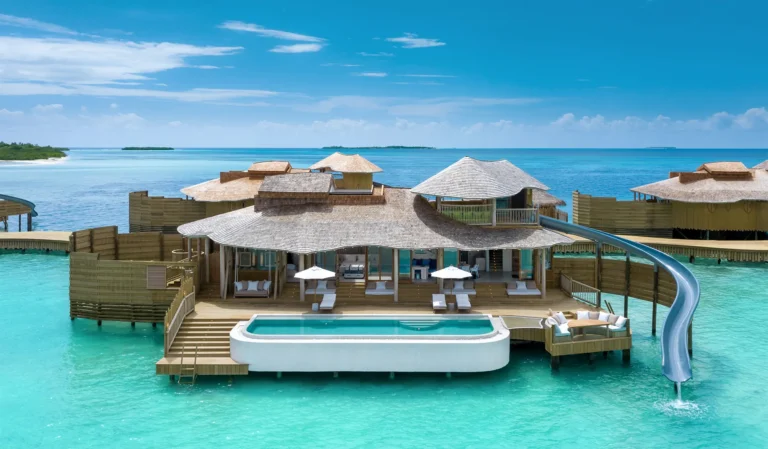
Best Luxury Resort Options: A Guide to Exceptional Hospitality
True luxury in hospitality is rarely about the thread count of the linens or the gold leaf on the lobby pillars. These are merely table stakes—baseline expectations that offer little insight into the actual quality of an experience. The contemporary definition of luxury has shifted toward a more nuanced equilibrium of time, space, and the intangible alignment between a property’s operational ethos and a guest’s specific psychological needs. When searching for the best luxury resort options, the challenge lies not in finding an expensive room, but in decoding the underlying logic of a property’s service and design philosophy.
Discerning travelers often mistake price point for value, creating a blind spot that leads to commoditized, high-cost experiences that lack character. A resort that functions perfectly for a corporate retreat will frequently fail the guest seeking radical solitude or cultural immersion. The search for excellence requires abandoning the search for a singular “top” destination and instead adopting an analytical approach to matching personal constraints with a property’s systemic capabilities.
Navigating this terrain requires an understanding that a resort is an engineered system, not just a place to sleep. It is a complex interaction of logistics, human capital, and spatial planning, all of which must function seamlessly to produce the sensation of effortlessness. This guide serves to deconstruct those systems, providing the mental models necessary to evaluate and select the best luxury resort options for any specific objective.
Understanding “best luxury resort options”
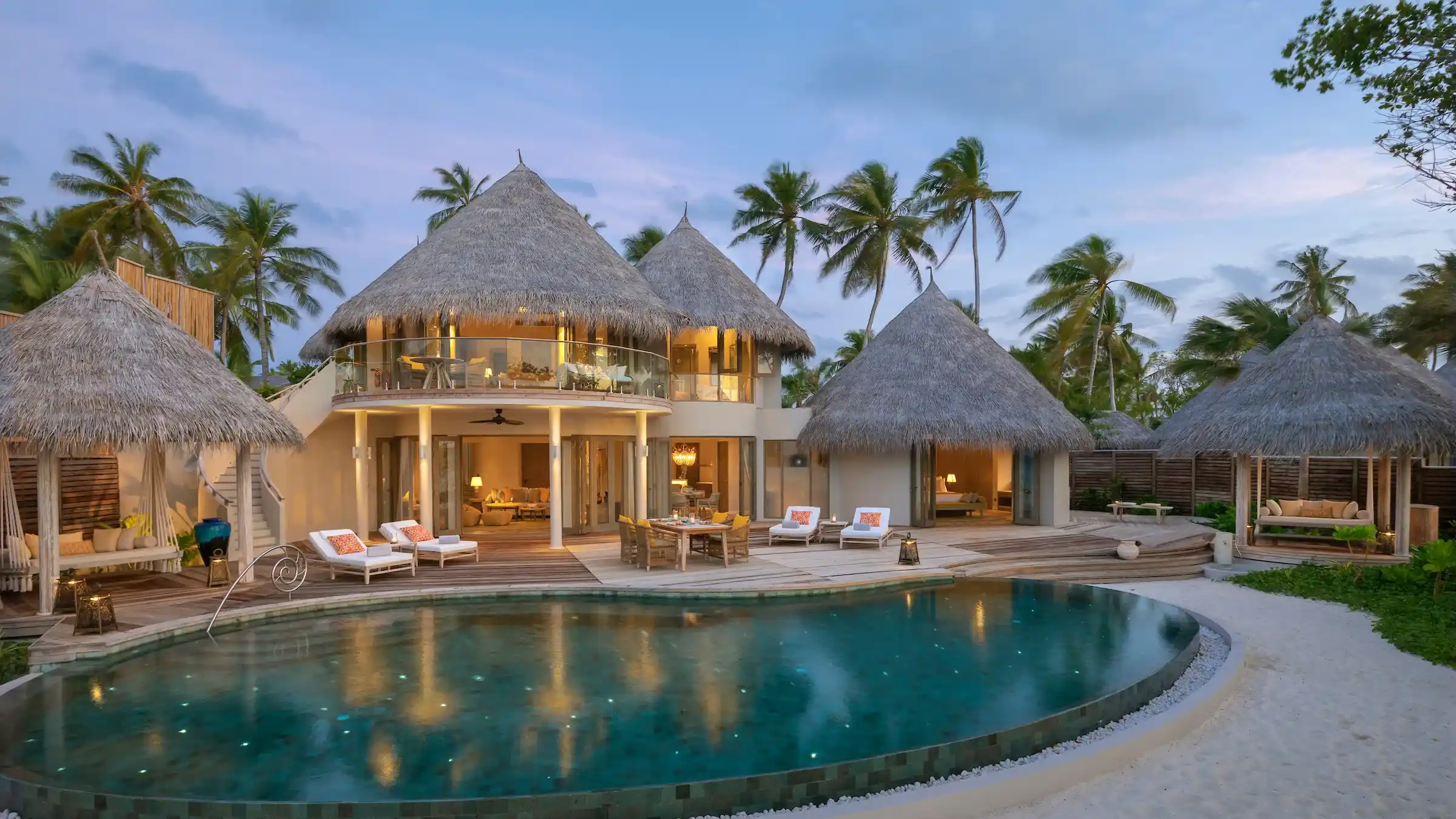
The phrase “best luxury resort options” is an inherently unstable descriptor. In the high-end travel market, the term “luxury” is used with such frequency that it has been effectively hollowed out of specific meaning. To utilize this term effectively, one must treat it as a variable dependent on the traveler’s intent rather than an absolute quality possessed by the resort itself.
A common misunderstanding involves conflating architectural extravagance with service capability. A resort may boast world-class structural design but suffer from rigid, script-dependent service protocols that stifle personalization. Conversely, an understated, heritage-focused property might offer a level of intuitive, hyper-personalized anticipation that surpasses a hotel with double the nightly rate.
The risk of oversimplification is acute. When prospective guests filter for “luxury” using aggregated review scores or star-rating systems, they inadvertently create an echo chamber. These metrics favor properties that satisfy a broad, middle-of-the-road consensus rather than those that excel at specific, niche experiences. True evaluation requires stripping away the marketing veneer to look at operational metrics: the staff-to-guest ratio, the frequency of management turnover, the property’s supply chain independence, and the resilience of its infrastructure. The “best” options are those that align their operational output with the guest’s primary objective—whether that be deep work, restoration, family engagement, or exploration.
Deep Contextual Background
The evolution of the modern luxury resort reflects broader shifts in global capital and societal expectations of leisure. In the mid-20th century, the luxury resort was defined by grandeur—grand lobbies, expansive ballrooms, and a rigid, hierarchical service structure. It was an exercise in performative wealth.
As global travel patterns shifted, so did the concept of the resort. The late 20th century saw the rise of the “integrated resort,” which prioritized self-containment. Everything a guest could possibly need—dining, sports, leisure, entertainment—was located on-property. This reduced friction but also led to the “bubble” effect, where properties became culturally indistinguishable from one another.
Today, we are in the era of “experiential intelligence.” The most sophisticated properties now operate less like hotels and more like curated media environments. They manage guest perception through carefully constructed narratives, using architecture, local sourcing, and hyper-specific programming to create a sense of place. This transition requires a higher level of scrutiny from the guest. Understanding a resort’s historical lineage—whether it was purpose-built for tourism or repurposed from a site of cultural or industrial significance—is a critical data point in assessing its long-term viability and charm.
Conceptual Frameworks and Mental Models
Evaluating high-end properties is aided by applying specific analytical frameworks. These models strip away the aesthetic distraction and focus on the mechanics of the experience.
-
The Friction-to-Flow Ratio: This measures how many interactions are required for a guest to achieve a desired outcome. A “low-friction” resort anticipates needs, making the experience feel organic and fluid. A “high-friction” resort forces the guest to navigate bureaucracy or rigid scheduling to access services.
-
The Proximity-Privacy Paradox: Luxury is defined by access, yet true luxury is also defined by seclusion. The best resorts solve this by creating zones: public spaces that encourage connection and private enclaves that offer total isolation. Evaluate a property by its ability to offer both within the same 24-hour cycle.
-
The Operational Autonomy Scale: Does the resort rely on a centralized corporate headquarters for every decision, or is the on-site management empowered to innovate? Properties with higher autonomy are generally more responsive to guest feedback and better at adapting to local environmental or cultural shifts.
Key Categories or Variations
When selecting from the best luxury resort options, identifying the category is the first step toward filtering for relevance.
| Category | Primary Value Proposition | Trade-offs |
| Urban Sanctuary | High access to culture/business, immediate service. | Lower privacy, higher ambient noise. |
| Remote Expeditionary | Radical solitude, unmediated nature. | Potential infrastructure fragility, isolation risk. |
| Heritage/Historical | Architectural significance, deep narrative. | Modern amenity limitations (e.g., HVAC). |
| Wellness-Centric | Managed diet, specialized medical/spa access. | Rigid scheduling, potential “clinical” feel. |
| Family-Integrated | Scalable service for multi-generational groups. | Loss of quietude, complex noise management. |
Choosing between these requires an honest assessment of one’s tolerance for compromise. For instance, selecting an expeditionary resort usually involves sacrificing the speed of service found in urban centers, as logistics in remote areas are inherently more complex.
Detailed Real-World Scenarios
Scenario 1: The High-Stakes Restorative Escape
The goal is total detachment. The risk is high-stress environments failing to provide the silence required. Decision Logic: Prioritize properties with low room density (fewer than 50 keys) and a track record of “stealth service”—where staff are present but invisible until called upon. Avoid large, brand-name properties that rely on volume.
Scenario 2: The Multi-Generational Legacy Trip
The goal is shared experience. The risk is the fragmentation of the group due to varying interests. Decision Logic: Seek out resorts with a “resort-within-a-resort” model, offering private villas with communal living spaces. This allows for individual autonomy while providing a central anchor point for the family.
Scenario 3: The Creative or Professional Sabbatical
The goal is deep work or intellectual output. The risk is poor connectivity or high-distraction environments. Decision Logic: Focus on properties that cater to extended stays, which often feature better desk ergonomics, high-speed, stable private infrastructure, and an atmosphere that tolerates—and encourages—extended periods of stillness.
Planning, Cost, and Resource Dynamics
The financial management of a luxury trip requires shifting from a “price-per-night” mentality to a “total-cost-of-experience” approach. This includes hidden variables like transfer logistics, service fees, and the cost of on-property activities.
| Cost Element | Variability | Mitigation Strategy |
| Accommodation | High (Seasonal) | Book during shoulder seasons; target length-of-stay discounts. |
| Logistics | Extreme (Remote) | Use resort-managed transport to shift liability/risk. |
| Experiences | Moderate | Pre-negotiate or lock in private guide rates early. |
Opportunity cost is the silent killer of luxury travel. A property that costs slightly less but is located two hours from the primary points of interest effectively steals time from the guest. Always prioritize locational efficiency over absolute nightly rate.
Tools, Strategies, and Support Systems
-
Direct-to-Management Communication: Bypass general reservation lines. Contacting the resort’s guest relations manager directly allows for the pre-establishment of preferences that general systems cannot track.
-
The “Pre-Arrival Audit”: Send a list of non-negotiables (allergies, work connectivity requirements, specific spatial needs) 14 days in advance. A resort’s responsiveness to this email is a leading indicator of the actual experience.
-
The Concierge Stress Test: Ask for a request that involves local, non-resort logistics (e.g., “Find me a local artisan who specializes in X”). A property that can manage external complexity is usually better at managing internal service.
Risk Landscape and Failure Modes
Even the best luxury resort options are susceptible to systemic failure.
-
The Scaling Trap: When a luxury property expands its room count without expanding its infrastructure (kitchen capacity, laundry, staff), the service quality degrades mathematically.
-
The Maintenance Lag: Many resorts look immaculate in photos but suffer from “deferred maintenance” in non-public areas. This is often a sign of cash-flow issues at the ownership level.
-
Management Churn: High turnover in General Managers or Executive Chefs is the most reliable predictor of declining quality. Monitor the leadership history of a target property via professional networks.
Governance, Maintenance, and Long-Term Adaptation
As a guest, you are a temporary participant in the resort’s ecosystem. However, observing the property’s maintenance cycles provides insight into its long-term health. A property that is constantly renovating in small, staggered phases is generally healthier than one that shuts down entirely for infrequent, massive overhauls, as the former indicates an ongoing investment in quality.
Measurement, Tracking, and Evaluation
How does one determine if a resort actually delivered on its promise? Do not rely on sentiment-based reviews. Use these metrics:
-
Response Latency: How long did it take for the property to acknowledge an email?
-
Service Consistency: Did the morning shift demonstrate the same knowledge and competence as the evening shift?
-
Predictive Capability: Did the staff notice a preference (e.g., room temperature, beverage choice) and adapt to it without being prompted a second time?
Common Misconceptions and Oversimplifications
-
Myth: “Higher price always equals better service.” Reality: Price often covers real estate cost and branding, not service intensity.
-
Myth: “All-inclusive is inherently lower quality.” Reality: High-end all-inclusive models remove the transactional friction of bill-signing, which can significantly enhance the sense of relaxation.
-
Myth: “Newer is better.” Reality: Establishments with longer operational histories often have better-trained, more tenured staff who understand the property’s nuances.
Ethical, Practical, or Contextual Considerations
The luxury traveler has a responsibility to understand the environmental and social footprint of their chosen resort. The best luxury resort options are increasingly those that demonstrate authentic engagement with their local community—not through performative charity, but through local employment, sustainable resource management, and preservation of indigenous culture.
Synthesis and Conclusion
The search for the best luxury resort options is ultimately a search for alignment. It is the practice of matching one’s own requirements for time, space, and experience with the specific, engineered capacity of a property to deliver them. By stripping away the marketing noise and focusing on the underlying systems of service, geography, and management, travelers can transform their decision-making process. The goal is to move from passive consumption of travel products to the active curation of an environment that facilitates whatever state of being—rest, adventure, connection, or growth—is required.