Best Luxury Resorts for Families: A Guide to Operational Excellence
The pursuit of high-end leisure while managing the complexities of family life presents an enduring paradox. For the traveler, the objective is dualistic: the desire for profound, uninterrupted restoration and the requirement for a functional, supportive environment that accounts for the divergent needs of multiple generations. Standard hospitality models—even those marketed under the “luxury” banner—often fail to bridge this divide. They typically default to one of two extremes: a sterility that feels restrictive to children, or a chaos that defeats the purpose of the adult retreat.
True excellence in this sector is rarely found in the existence of a “kids’ club” or a menu of children’s activities. These are auxiliary features. The authentic quality of a property is determined by its operational architecture—the unseen systems that regulate noise, manage the flow of human traffic, and create spatial boundaries that allow for communal interaction without sacrificing private respite. When the selection of the best luxury resorts for families requires more than a casual browse of travel brochures, one must pivot to an analysis of operational logistics and spatial design.
This article does not serve as a recommendation list. It is an analytical tool for the discerning traveler. It aims to decode the systemic design of high-end properties, offering a framework to evaluate their viability as long-term assets for your family’s travel portfolio. We will examine the mechanics of service, the risk profiles of various resort archetypes, and the metrics by which a property can be objectively audited before a single reservation is confirmed.
Understanding the best luxury resorts for families
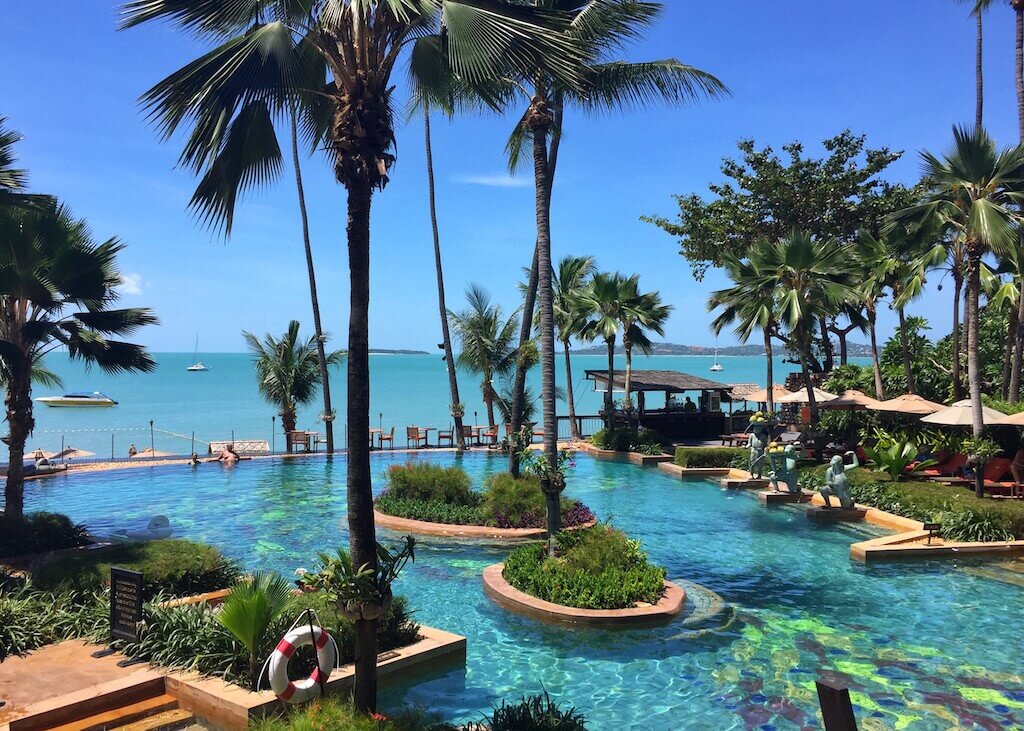
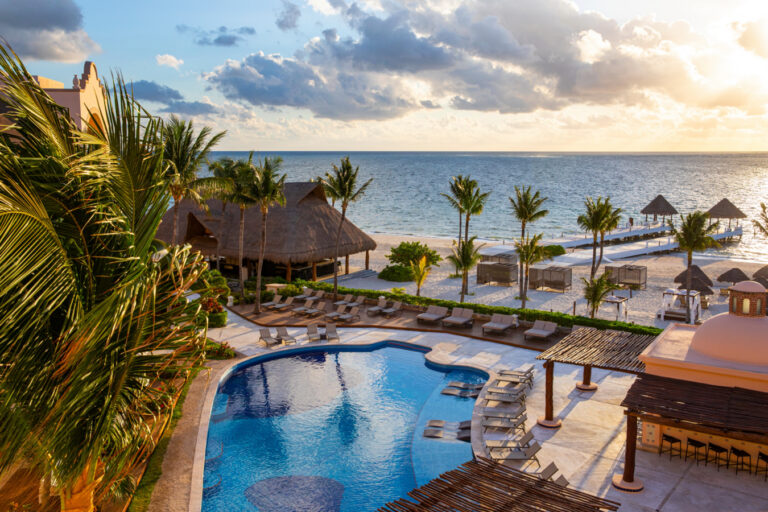
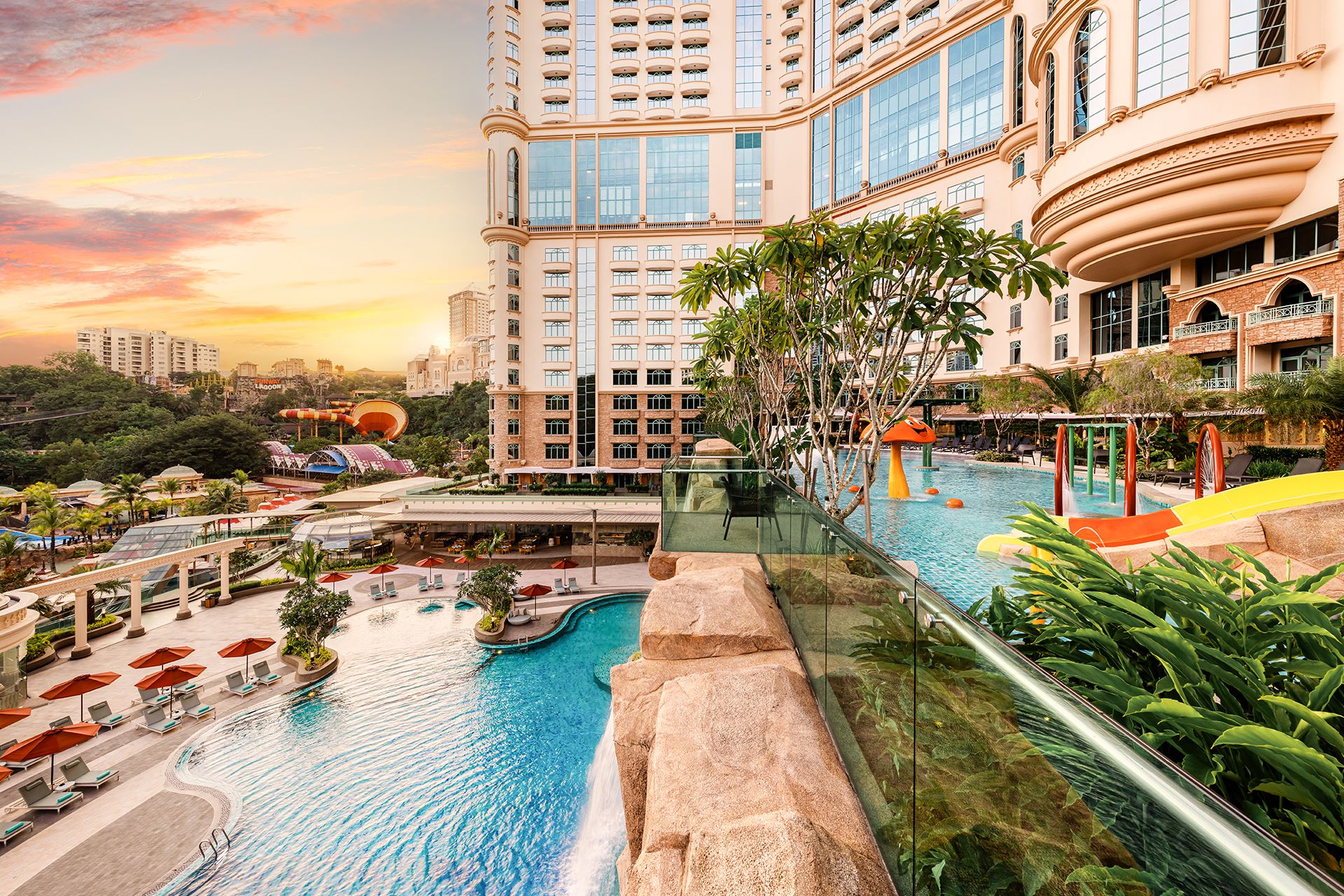
The phrase “best luxury resorts for families” is frequently used as a marketing catch-all, but it lacks operational precision. To understand this category, one must first dismantle the common misconception that “family-friendly” is a monolithic status. It is, in fact, a spectrum. On one end lie the high-density resorts designed for amusement; on the other, the secluded estates that view children as an operational challenge to be contained.
The “best” properties are those that successfully navigate the “Integration-Separation Paradox.” They provide sophisticated, adult-level amenities—gastronomy, spa facilities, quietude—while simultaneously offering high-engagement, autonomous zones for younger guests. Crucially, these zones must be designed with the same architectural intent as the adult spaces.
When evaluating such properties, one must look for indicators of systemic maturity. Does the resort have the staffing depth to offer genuine, one-on-one attention? Is the property’s footprint expansive enough to allow for distinct acoustic zones? The risk of oversimplification—choosing a resort based on a glossy photo of a pool—is the primary reason for failure in this category. The best luxury resorts for families are built on a bedrock of logistical predictability, where service failures are not “managed” but designed out of the system entirely.
Deep Contextual Background
Historically, the “family resort” was an American invention of the post-war era, characterized by the “all-inclusive” model. It prioritized scale and standard deviation; every guest was expected to have the same experience. This model served its purpose in the mid-20th century but became increasingly misaligned with the rise of the sophisticated, experience-driven traveler.
As global wealth distribution accelerated, the market diverged. The new class of traveler demanded a hybrid: the infrastructure of a resort with the personalization of a boutique hotel. When evaluating the best luxury resorts for families in a historical context, we observe that the most successful properties are those that have adapted to this demand by decentralizing their service. They moved away from the “hub” model—where all activity emanates from the center—to an “enclave” model, where the property is a collection of semi-independent, serviced residential units. This structural shift is what allows high-end hospitality to maintain an aura of exclusivity while accommodating the energetic requirements of a family unit.
Conceptual Frameworks and Mental Models
To assess property capability, apply these structural models. They remove the distraction of aesthetics and focus on operational utility.
-
The Spatial Friction Index: This measures how much of the property is “navigable” by a family without triggering staff intervention. A high-friction property requires constant management of children (e.g., “don’t touch that,” “stay quiet here”). A low-friction property is designed to be physically resilient and psychologically welcoming.
-
The Service-Autonomy Balance: The ideal property offers a service level that is high in support but low in intrusion. It is the ability to have a nanny or a guide appear precisely when needed and disappear immediately thereafter.
-
The Acoustic Zoning Model: Evaluate the property’s density. Does it have natural barriers (topography, vegetation, distance) between suites? A resort that relies on physical walls to dampen sound is inferior to one that uses environmental planning to achieve the same result.
Key Categories or Variations
Categorizing the best luxury resorts for families involves assessing the dominant operational philosophy of the management.
| Category | Operational Philosophy | Primary Advantage | Typical Failure Mode |
| Estate-Style Villas | Self-contained luxury | Absolute privacy, space | Isolated from resort amenities |
| Integrated Enclaves | Managed proximity | Shared access to high-end infrastructure | Potential for noise bleed |
| Expeditionary Resorts | Activity-led immersion | Deep engagement, unique experiences | High logistical fatigue |
| Urban Sanctuary | High-access, service-intense | Proximity to culture | Lack of outdoor, open-air play space |
Choosing the right category requires an honest assessment of the family’s “energy profile.” High-energy families often struggle in Estate-Style Villas because the logistics of moving the group to activities can become a source of friction. Expeditionary resorts, conversely, might be too draining for families requiring rest.
Detailed Real-World Scenarios
Scenario 1: The Multi-Generational Legacy Trip
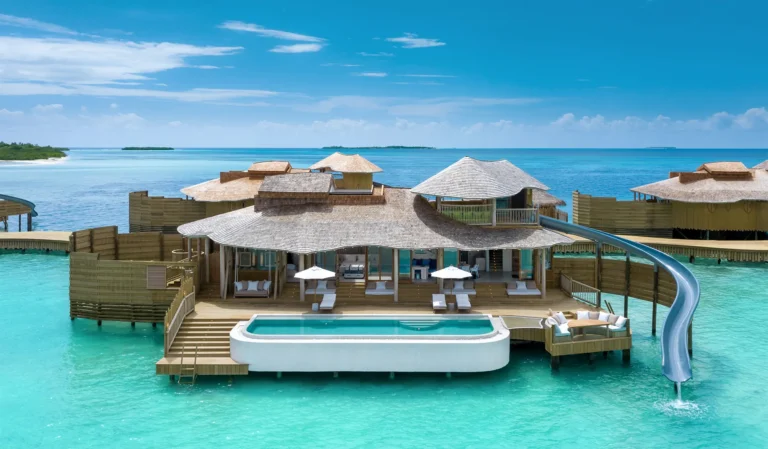
Grandparents, parents, and grandchildren must be accommodated in a way that allows for group connection and independent rest. The failure mode is the “one-size-fits-all” suite. The solution is a property offering compound-style living, where multiple units share a private or semi-private pool, allowing for a “hub” of activity while maintaining private bedrooms for downtime.
Scenario 2: The High-Stakes Recovery Trip
The family is burned out and requires a “non-active” holiday. The risk is an environment that forces activity (e.g., constant animation teams). Look for properties with an “Opt-Out” culture—where the default is silence and autonomy, and services are strictly on-demand.
Scenario 3: The Adolescent Engagement Gap
A common challenge is finding a resort that accommodates toddlers and teenagers. The failure is the “daycare” model that alienates the older child. The best luxury resorts for families solve this by offering skill-based programming (e.g., diving, sailing, culinary) rather than “activity” programming. This shifts the focus from supervision to mastery.
Planning, Cost, and Resource Dynamics
The financial logic behind the best luxury resorts for families often ignores the standard nightly rate, focusing instead on the “Total Cost of Experience.”
-
The Convenience Premium: A property that is located 10 minutes from the airport and includes comprehensive in-villa services is worth a significant premium over a remote, low-cost alternative. The cost of transit and the loss of time are often higher than the delta in room rates.
-
The Service Overhead: If a property requires you to hire external childcare or guides, you are not paying for a luxury experience; you are paying for logistics management. Seek properties where these services are institutionalized and fully integrated into the operating cost.
-
Opportunity Cost: Time is the most constrained resource. A property that forces you to plan your day around restaurant reservations or shuttle schedules is imposing an invisible tax on your vacation time.
Tools, Strategies, and Support Systems
-
The Pre-Arrival Service Audit: Send an email detailing the specific requirements of the family (e.g., dietary, equipment, scheduling) 14 days before arrival. The quality of the response—and the speed—is a leading indicator of how the property will handle your actual needs.
-
The “Fixer” Relationship: For extended stays, identify one person at the resort (a guest relations manager or a dedicated butler) and establish a direct line of communication. Relying on the general concierge desk leads to information dilution.
-
The Property-Map Stress Test: Study the resort map. Look for the proximity of your potential room to high-traffic areas. If the map is confusing, the property’s logistics will be chaotic.
-
Institutional Memory: Ask the property if they keep a “Guest Profile” that tracks preferences across visits. Properties that do this are operationally mature; those that require you to explain your children’s needs every time are not.
Risk Landscape and Failure Modes
Even top-tier properties degrade. The most dangerous trend is the “Asset-Light/Service-Heavy” model, where a resort retains the branding of a luxury entity but has outsourced its staff or maintenance to cut costs.
-
The Staff-to-Guest Ratio Drift: This is the most silent killer of quality. If you see high staff turnover or noticeable fatigue, the service quality is about to collapse.
-
Infrastructural Stagnation: A resort that looks immaculate in photos but feels “tired” in person is a red flag. Maintenance of the physical plant (plumbing, lighting, AV) is usually the first thing to be ignored during periods of financial stress.
-
The “Managed” Experience: Beware of properties that are overly prescriptive. If the daily schedule is pre-filled with mandatory activities, the resort is likely trying to hide a lack of inherent soul or genuine character.
Governance, Maintenance, and Long-Term Adaptation
As a consumer, you should treat your relationship with a high-end property as a form of governance. Provide structured, detailed feedback. If a property is truly excellent, it will value the constructive critique of its high-frequency guests. A property that dismisses your feedback is a property that has stopped innovating. When you find a location that meets your needs, invest in that relationship. It will yield better returns in the form of priority access and personalized service than constantly chasing the “newest” property.
Measurement, Tracking, and Evaluation
Do not evaluate based on subjective happiness. Use objective markers:
-
Resolution Latency: How long does it take for a housekeeping request or a minor maintenance issue to be addressed?
-
Consistency: Is the breakfast service at 7:00 AM as polished as the dinner service at 8:00 PM? (This reveals if the property has a “day shift” and a “night shift” bias).
-
Data Integrity: Does the staff remember your children’s names and preferences? This proves that the property has an internal CRM system that is actually used by the frontline staff.
Common Misconceptions and Oversimplifications
-
“All-inclusive is inherently low quality.” This is an antiquated view. Some of the highest-end, most exclusive properties in the world now operate on inclusive models to remove transactional friction.
-
“Newer is better.” In hospitality, older is often better, provided the property is maintained. Tenured staff who know every corner of the estate are more valuable than a brand-new facility with an untrained team.
-
“High-end means formal.” True luxury is about comfort. The most exclusive family resorts are often the most informal, prioritizing a “barefoot elegance” that allows children to exist without restriction.
-
“Kids clubs are necessary.” They are useful, but they are not the metric of success. The metric is the ability of the property to facilitate family bonding without the family having to do the work.
Ethical, Practical, and Contextual Considerations
The luxury traveler has an implicit responsibility to the local ecosystem. A resort that employs local staff, preserves local heritage, and manages its environmental impact is inherently more “luxurious” than one that imposes an alien culture upon the landscape. When selecting your travel destination, prioritize those that demonstrate institutional respect for their location. This creates a deeper, more resonant experience for your children, turning a vacation into an educational and character-building endeavor.
Synthesis and Conclusion
The defining characteristic of the best luxury resorts for families is their ability to disappear. They function as a stage, not a script. The management is invisible; the infrastructure is supportive but unobtrusive; and the experience is curated, not controlled. By adopting an analytical approach—focusing on operational metrics, spatial logic, and service reliability—the traveler can move past the noise of marketing and identify properties that genuinely facilitate the reconnection and growth that families seek. It is a process of discernment that rewards the patient, detail-oriented planner with the only commodity that truly matters: a seamless, restorative, and shared experience of time.