Compare Luxury Resort Amenities: A Structural Guide for Elite Travelers
The modern hospitality industry presents itself as a collection of aesthetic experiences—visual, sensory, and fleeting. However, beneath the curated surface of high-end properties lies a complex, industrial-scale operational engine. For the discerning traveler or the professional organizer, the decision to invest in a premium stay should not be based on the marketing collateral, which is designed to highlight the presence of an amenity, but rather on the operational infrastructure that supports it. A pool, a spa, or a high-speed data connection is not merely a line item on a property description; it is a point of potential failure or performance, dependent entirely on the underlying management systems.
To treat high-end travel with the analytical rigor it deserves, one must pivot from a consumerist mindset—where one accepts the published list of offerings as a guarantee of quality—to an asset-management perspective. This means looking beyond the “what” and interrogating the “how.” How does the resort maintain its amenities during peak stress? What is the turnover rate of the staff responsible for these facilities? How does the property mitigate the entropy that inevitably degrades physical infrastructure?
This inquiry serves as an audit framework for the professional traveler. It moves past the superficial marketing tropes to provide a definitive, system-based method for evaluating properties. By applying these frameworks, you can strip away the veneer of high-gloss photography and press releases to understand which properties deliver genuine, high-performance environments and which are simply trading on the hollow currency of “luxury” branding.
Understanding “compare luxury resort amenities”
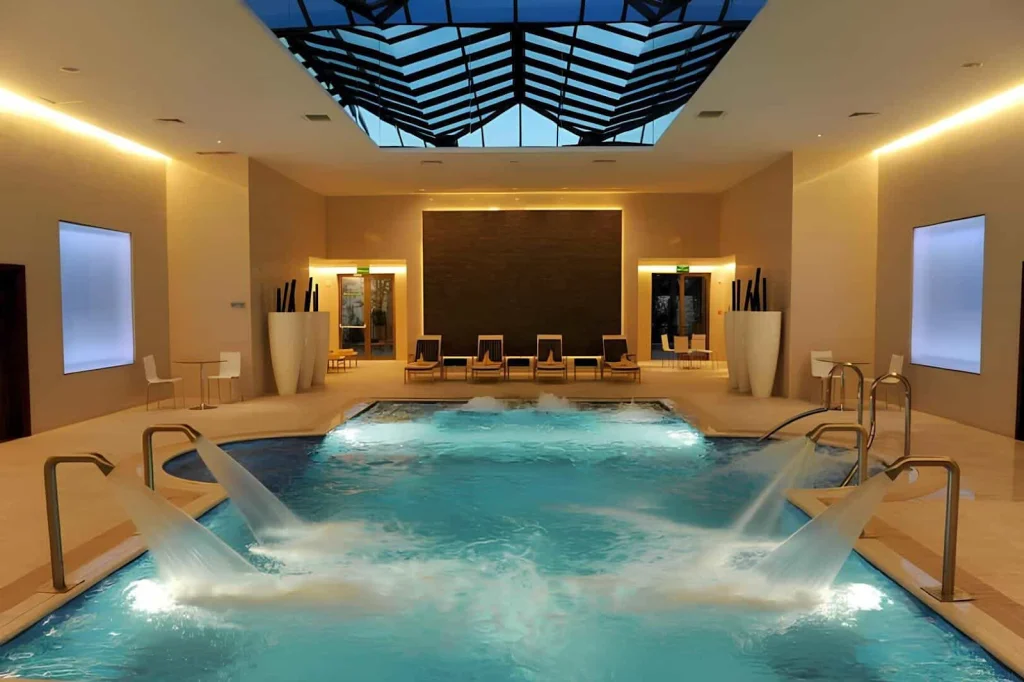
The difficulty in attempting to compare luxury resort amenities lies in the fact that most evaluations are purely feature-based. They function like a spec sheet: Pool? Yes. Spa? Yes. High-speed Wi-Fi? Yes. This approach is fundamentally flawed because it ignores the variable of operational execution. A high-speed internet connection is not a static utility; it is a network architecture that can be throttled, fail, or be subject to security risks depending on the property’s investment in IT.
Common misunderstandings center on the belief that luxury is an inherent quality of the object. It is not. Luxury is a function of the service-to-guest ratio, the continuity of the maintenance schedule, and the responsiveness of the management team. When you attempt to compare luxury resort amenities, you must adjust for the “systemic friction” inherent in the destination. A world-class spa in a remote, logistically challenged location requires vastly different operational inputs to function than a similar spa in an urban center with established infrastructure.
The primary oversimplification risk is assuming that global brand standards create uniformity. They do not. A luxury property under a global flag is still an individual business entity, governed by its specific general manager, its local labor pool, and its unique ownership structure. When you compare features without accounting for the local operational context, you are building a strategy on incomplete data. True comparative analysis requires looking for indicators of systemic resilience—evidence that the property manages its facilities with the same rigor it uses to market them.
Deep Contextual Background: The Evolution of Hospitality Logic
Hospitality has evolved through three distinct eras, each fundamentally changing how amenities are conceptualized. In the Gilded Age, the “Grand Hotel” functioned as a social palace. Amenities were status markers—massive ballrooms, grand dining halls, and expansive lobby lounges. They were designed for visibility and performance. The service was personal, the amenities were architectural, and the expectation was total, self-contained autonomy.
The post-war era introduced the “Corporate Resort,” characterized by mid-century modern design and the standardization of service. This was the era of the “amenity package”—the creation of predictable, reliable add-ons that could be exported across properties. This improved accessibility but led to the homogenization of the high-end experience. A property in the Caribbean became operationally identical to a property in the Alps, sacrificing local authenticity for the sake of brand consistency.
We are now in the third era: the “Curated Ecosystem.” Today’s leading properties focus on amenities that integrate with the local landscape and the guest’s psychological state. The modern amenity is not just a facility; it is an experience loop. It is not just a “gym”; it is a “performance center” that includes biometric tracking and customized nutritional protocols. This shift requires a change in evaluation; when you attempt to compare luxury resort amenities, you are no longer measuring inventory, but the property’s ability to orchestrate a sophisticated, multi-layered service environment.
Conceptual Frameworks and Mental Models
To move beyond feature-listing, apply these frameworks to your evaluation process:
-
The Friction vs. Restoration Spectrum: Does the amenity reduce the cognitive load of your stay, or does it add to it? A pool that requires a 15-minute logistical negotiation to access is a friction point, not a restorative amenity.
-
The Operational Decay Metric: Every physical facility faces entropy. Look for evidence of proactive capital expenditure. A property that is perpetually “renovating” is a property that is managing its decay in real-time.
-
The Institutional Memory Index: When you use an amenity—be it a personal trainer, a concierge, or a dinner service—does the staff remember your preferences from yesterday, or do you have to reset the interaction? Amenities are only as good as the system that records the interaction.
Key Categories and Operational Variations
The following table delineates the core operational pillars of modern luxury properties.
| Category | Operational Focus | Primary Failure Mode | Evaluation Metric |
| Connectivity/IT | Network Architecture | Throttling / Latency | Throughput speed vs. occupancy |
| Culinary/Dining | Supply Chain Resilience | Consistency / Sourcing | Farm-to-table traceability |
| Wellness/Recovery | Protocol/Biometrics | Sterile/Generic protocols | Customization depth |
| Concierge/Fixer | Network/Relationships | Transactional/Commission-based | Access to non-public inventory |
| Infrastructure | HVAC/Maintenance | Cosmetic patch-work | Proactive maintenance records |
Realistic decision logic dictates that you prioritize the category that most aligns with your intent of the stay. If your primary intent is business, the connectivity and infrastructure amenities are the only variables that truly matter; the spa is irrelevant. If your intent is restorative, the wellness protocols are the priority.
Detailed Real-World Scenarios
Scenario 1: The “New General Manager” Transition
A high-performing resort is acquired by a new management group. For the first 12 months, the legacy staff keeps the property running at a high level. However, the corporate office begins replacing senior leadership with cost-focused managers. The failure mode is booking based on legacy amenity reputation. The second-order effect is a sudden, jarring decline in service standards that the traveler did not anticipate.
Scenario 2: The Infrastructure Failure
A remote, high-end wilderness resort experiences a power fluctuation. The property lacks a secondary power grid integration for its high-bandwidth guest suites. The amenity—high-speed connectivity—fails entirely. The failure mode here is a lack of operational redundancy. A well-managed property would have a secondary, satellite-based failover system.
Scenario 3: The “Ghost” Season Pivot
A traveler targets a resort just before the start of the peak season. The infrastructure is fully primed, the staff is trained and ready, but the pricing is still suppressed due to low demand. The failure mode is the “shoulder-season collapse”—where the resort is open, but the amenities (e.g., specific fine-dining outlets) are closed for “maintenance.” The decision point is verifying the full operationality of the entire amenity list before confirming the booking.
Planning, Cost, and Resource Dynamics
The economic management of elite travel requires a shift from “nightly rate” thinking to “Total Cost of Experience” (TCOE). When you evaluate amenities, factor in the “friction tax”—the time and money spent resolving logistical failures at the property.
| Investment Tier | Strategy | Expected Outcome |
| Baseline | Static rate booking | High price volatility |
| Mid-Level | Institutional relationship | Access to preferred inventory |
| High-Level | Direct management audit | Operational stability |
Opportunity cost is the silent metric. If a resort requires you to spend four hours a day navigating their logistical challenges, the effective cost of your stay is significantly higher than the nightly rate suggests.
Tools, Strategies, and Support Systems
-
The 14-Day Audit: Send a specific, multi-layered inquiry to the property 14 days before arrival regarding a complex request (e.g., a specific, non-menu meal request or a logistical transport requirement). Their response will signal their operational maturity.
-
The Fixer Relationship: Cultivate a relationship with an independent travel designer who possesses direct lines to property management. They are not merely booking agents; they are your insurance policy against operational drift.
-
CRM Fidelity Check: Ask the property to confirm your preferences are logged in their CRM. If they cannot confirm, they lack the institutional memory to manage your long-term needs.
-
Local Network Mapping: Inquire about the property’s local partnerships. A resort that integrates with its city’s ecosystem is structurally stronger than an “island” property.
Risk Landscape and Failure Modes
A taxonomy of failure is essential for those who want to compare luxury resort amenities effectively.
-
Systemic Collapse: Total failure of core services (power, water, food safety). These are rare but catastrophic.
-
Management Drift: The slow, creeping decline of service standards as the property drifts away from its founding vision. This is the most common failure.
-
Physical Degradation: The building is neglected. This is often disguised by “frequent renovations,” which may only be cosmetic.
-
The Reputation Gap: The resort’s online presence is maintained by a high-end PR firm, but the guest experience is lagging years behind. This is the “Marketing-Reality Gap.”
Governance, Maintenance, and Long-Term Adaptation
A successful risk-averse strategy requires a feedback loop. When you find an urban property that demonstrates high resilience, treat it as a core asset. Do not discard it for a “new” property. Build a relationship with that management team. When a property fails, govern your relationship with it: provide clear, structured feedback. If they do not acknowledge or adapt to this feedback, the governance decision is simple: divest and remove it from your approved portfolio. This disciplined approach ensures that your efforts in evaluating these destinations are channeled toward reliable, high-performance assets.
Measurement, Tracking, and Evaluation
-
Leading Indicators: Staff morale (detectable through demeanor), speed of response to inquiries, and the quality of internal communication.
-
Lagging Indicators: The frequency and specificity of critical complaints on industry-specific networks or internal audit logs.
-
Documentation: Keep a “Property Audit Journal.” Record your experiences, the tenure of staff encountered, and the operational quirks. This data becomes your competitive advantage in future planning.
Common Misconceptions and Oversimplifications
-
“High Prices Guarantee High Quality.” Price is a function of demand and marketing, not operational excellence.
-
“Newer is Always Better.” New properties often suffer from “teething” operational failures. Mature properties, if well-maintained, are more resilient.
-
“Reviews are Objective.” Online reviews are highly volatile and often represent the extreme ends of the spectrum, providing little insight into the “average” operational state.
-
“The Concierge is an Expert.” Often, the concierge is a gatekeeper for third-party commissions. Distinguish between a concierge who understands the property’s limitations and one who is selling inventory.
-
“Amenities are additive.” In many cases, amenities are subtractive—they add complexity that the property is not equipped to manage, leading to a degraded experience.
Ethical, Practical, and Contextual Considerations
The ultimate risk is not just to the traveler, but to the environment and the local community. A property that is operationally failing is often also failing its staff, its local suppliers, and its ecological surroundings. Knowing how to compare luxury resort amenities also means avoiding properties that are unethical in their business practices. A property that treats its workers with dignity and manages its resources with care is, invariably, a property that is better managed from an operational standpoint as well.
Synthesis and Conclusion
The evaluation of high-end amenities is a discipline of anticipation. It requires moving from a state of reliance on marketing promises to a state of independent verification. By applying the analytical frameworks of operational auditing, tenure assessment, and supply-chain scrutiny, the sophisticated traveler can insulate themselves from the failures that plague less intentional itineraries. The goal is the creation of a travel portfolio comprised of assets that are structurally sound, operationally resilient, and perpetually capable of delivering the quality of experience that defined the luxury standard in the first place. This is not about suspicion; it is about the professional management of leisure, ensuring that every expedition is an investment in restoration rather than a gamble against operational mediocrity. When you properly compare luxury resort amenities, you are not just checking features; you are stress-testing the integrity of your own travel life.