Luxury Beach Resorts USA: An Analytical Guide to Coastal Excellence
The American coastal landscape does not possess the historical, century-spanning continuity of European seaside retreats, nor does it share the commodified, hermetically sealed nature of many Caribbean all-inclusive enclaves. Instead, the domestic high-end beach market is defined by a unique tension between rugged geography, complex property zoning laws, and a service philosophy rooted in American hospitality standards, which are often more focused on hyper-efficient logistics than on the leisurely luxury beach resorts of the USA, slow-paced traditions found elsewhere.
To engage with this sector effectively, one must discard the simplistic notion of the “vacation” and adopt the mindset of an asset manager. The American coast, whether the fog-bound cliffs of the Pacific Northwest or the manicured dunes of the Atlantic barrier islands, is a geography of extreme variability luxury beach resorts usa. The operational demands placed on a property in these environments are substantial. A resort that functions flawlessly in the dry heat of Southern California may face systemic failure in the high-humidity, storm-prone corridors of the Carolinas.
This article serves as an analytical audit of the sector. It is designed for the individual who demands not just a room, but a specific, engineered experience. By dissecting the structural, financial, and operational realities that govern these properties, we can move past the curated photography and promotional luxury beach resorts USA rhetoric that saturates the market. True understanding lies in the mechanics—how the property manages labor, how it navigates local environmental regulations, and how it translates those factors into the final product that the guest experiences.
Understanding “luxury beach resorts USA.”
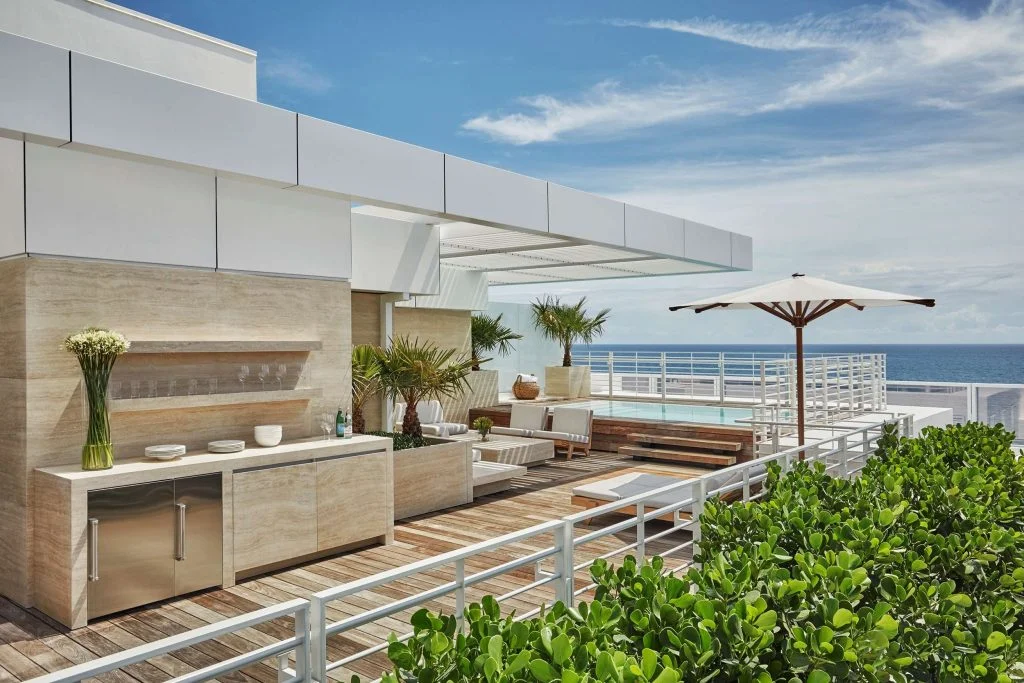
The term “luxury beach resorts USA” is frequently treated by travel aggregators as a monolithic category, yet this creates a dangerous analytical blind spot. A resort in the Pacific Northwest, characterized by temperate rainforests, rocky terrain, and a culture of outdoor autonomy, operates on a completely different operational wavelength than a Florida-based resort, which is inherently tied to high-density service models and tropical preservation efforts. The fundamental mistake is the assumption of uniformity.
When we discuss this category, we are exploring properties that exist at the intersection of three competing pressures: extreme environmental exposure, stringent local labor and zoning regulations, and the guest’s desire for an effortless experience. The oversimplification risk is profound. If you treat a coastal hotel as a generic luxury product, you will consistently fail to account for the physical realities of the location. Salt-air corrosion, seasonal storm patterns, and the logistical challenges of island or isolated-coastal supply chains are not mere background details—they are the primary variables that dictate the quality of service.
Furthermore, the American model of high-end coastal hospitality is increasingly defined by the “estate” concept. Unlike the high-rise luxury hotels of urban centers, the most robust coastal properties operate as semi-autonomous estates. They manage their own power, their own water filtration, and their own proprietary ecosystems. Understanding this autonomy is essential. When you select a property in this tier, you are not merely selecting a brand; you are selecting a physical infrastructure that has been built to survive in one of the most volatile environments on Earth.
Deep Contextual Background: The Evolution of Hospitality Logic
The genesis of the American beach resort lies in the Gilded Age, with the rise of the railroad-accessible grand hotels—vast, wooden structures that were essentially self-contained cities. These properties were designed for long-term residencies. The transition from these grand hotels to the modern resort era was marked by the influence of automobile accessibility and the post-war boom in recreational travel.
The shift toward the contemporary model accelerated in the 1990s and early 2000s, driven by the professionalization of revenue management and the globalization of design standards. We moved from the “rustic coastal retreat” to the “global luxury standard.” This meant that properties were forced to adopt international service benchmarks—concierge, spa, fine dining—regardless of whether those amenities were structurally suited to the local geography.
Today, the industry is in a phase of “correction.” The most successful properties are those that have successfully re-integrated their local identity with global standards. They are no longer attempting to be “Paris on the beach”; they are doubling down on what makes their specific stretch of coastline unique, utilizing local materials, local labor, and local culinary traditions as their primary value proposition. This shift is critical for the discerning traveler. It separates the properties that are merely “expensive hotels” from those that are “authentic coastal assets.”
Conceptual Frameworks and Mental Models
To evaluate these properties, apply the following frameworks:
-
The Exposure-to-Service Ratio: Analyze how much of the property’s design is focused on the outside vs. the inside. A property with a high exposure ratio leans into the environment—rugged paths, open-air structures, reliance on the natural climate. A high service-to-interior ratio leans toward air-conditioned, controlled environments. Determine which you require before committing.
-
The Logistical Isolation Index: This measures how difficult it is to import resources to the property. An island resort off the coast of Maine faces different supply constraints than a beachfront estate in Malibu. The index predicts the likelihood of “service drift,” where the reality of the experience fails to meet the promotional promise due to supply-chain friction.
-
The Infrastructure-as-Experience Model: In top-tier coastal resorts, the infrastructure is the attraction. The water desalination system, the dune preservation program, the storm-mitigation architecture—these are not “back-end” issues; they are the foundation of the luxury experience. A property that hides its infrastructure is often hiding its functional weaknesses.
Key Categories and Operational Variations
We can group these properties into distinct operational categories. Each requires a different mindset for engagement.
| Category | Typical Landscape | Service Focus | Primary Constraint |
| Pacific Rugged | Cliffs, cool water, forests | Privacy, activity, autonomy | Zoning, environment |
| Atlantic Legacy | Dunes, structured beaches | Tradition, social, legacy | Infrastructure age |
| Gulf Seasonal | Shallow, warm, humid | Relaxation, aquatic, family | Storm management |
| Island/Enclave | Isolated, exclusive | Hyper-service, control | Logistics/Supply chain |
The decision logic here is straightforward: prioritize the environmental fit. If you value privacy and atmospheric intensity, the Pacific models are superior. If you value social connectivity and established, predictable service frameworks, the Atlantic legacy properties offer a safer, albeit less “wild,” alternative.
Detailed Real-World Scenarios
Scenario 1: The Seasonal Pivot
A property on the coast of South Carolina faces a mid-season staff turnover. The traveler who understands the resort’s operational rhythm will avoid the “peak-turnover” weeks. They treat the resort not as a static entity, but as a biological one that has a natural cycle of health and fatigue.
Scenario 2: The Storm Infrastructure Test
A major weather event impacts the Gulf Coast. A guest at a poorly managed property finds the amenities suspended for the remainder of the trip. A guest at a property with robust storm-mitigation architecture experiences a seamless transition to indoor-centric luxury. The difference lies in whether the resort is built for the coast or merely built on the coast.
Scenario 3: The Logistics Barrier
A remote coastal resort in the Northeast advertises a culinary experience relying on fresh local seafood. A logistics failure occurs, and the resort is unable to source the product. The guest who understands the risks of “remote luxury” will have already vetted the resort’s secondary supply chains and their ability to pivot to shelf-stable, high-quality alternatives, rather than expecting a specific menu item.
Planning, Cost, and Resource Dynamics
The “Total Cost of Experience” (TCE) is distinct from the nightly room rate. Coastal properties often carry “hidden” costs related to their geography.
| Cost Variable | Direct Expense | Indirect Opportunity Cost |
| Environmental Surcharge | High (Pass-through taxes) | None |
| Logistics Tax | High (Premium on goods) | Limits on culinary choice |
| Service Scarcity | High (Labor retention) | Higher base service charge |
| Exposure Maintenance | Moderate | Increased ambient noise/upkeep |
The opportunity cost is rarely the money; it is the time lost to operational friction. A resort that charges a premium for “exclusive beach access” is charging for the management of the crowd. Ensure that the price point is commensurate with the density of the experience you desire.
Tools, Strategies, and Support Systems
-
The Zoning Map Audit: Before booking, look at the satellite view of the property. Does it sit on a barrier island prone to erosion? Is it next to a public beach access point? This reveals more about the “privacy level” than any promotional video.
-
The Staff Tenure Ratio: Inquire politely about the tenure of the department heads. High turnover in coastal management usually signals a disconnect between the corporate owner and the on-the-ground operational reality.
-
The “Off-Season” Reconnaissance: If you are planning a high-stakes trip, consider a short “reconnaissance” stay during the shoulder season. It allows you to audit the property’s ability to manage its infrastructure when the demand is lower, but the maintenance requirements are higher.
-
Local Competitor Intelligence: Call the local high-end dining establishments or activity providers. Ask them: “Who is the most professional resort in this area to work with?” They have no stake in the resort’s marketing and will give you the most honest assessment of the resort’s organizational competence.
Risk Landscape and Failure Modes
There is a distinct taxonomy of failure in coastal hospitality.
-
The Preservation Trap: Properties that are heavily restricted by environmental preservation laws may lack the ability to perform basic modern upgrades, leading to “historic” properties that feel merely “neglected.”
-
The Labor Vacuum: Remote, luxury coastal regions often struggle to house their staff locally. A resort that lacks a comprehensive employee-housing strategy will inevitably suffer from inconsistent service as staff commutes become unsustainable.
-
The “Atmospheric” Failure: The most unpredictable risk is the environment itself. A resort that is perfectly designed for sunshine may be abysmal during a week of coastal fog or rain. A truly elite coastal resort will have a “rain-day” contingency that is as high-quality as its “sun-day” offering.
Governance, Maintenance, and Long-Term Adaptation
The top-tier properties are those that view their coastal environment as a partner, not a hostile force. They engage in long-term governance of their dune systems, their shoreline, and their local community relationships. When evaluating a property, look for evidence of this long-term investment. Is the resort involved in local conservation? Do they maintain the infrastructure for the local area, or just for their own gates? Properties that invest in the health of the broader geography are invariably the most resilient and reliable choices.
Measurement, Tracking, and Evaluation
-
Leading Indicators: The specificity of the pre-arrival communication regarding environmental conditions. A property that warns you about the tide, the wind, or the local seasonal cycle is a property that respects your planning.
-
Lagging Indicators: The “Maintenance Visibility.” Do you see staff constantly repairing the effects of salt, wind, and sand? This is a positive indicator—it means they are ahead of the decay. If you see maintenance after it fails, you are in a merely reactive property.
-
Qualitative Signals: The “Soundscape Assessment.” In a luxury coastal resort, the only sound should be the environment (waves, wind) and the deliberate sounds of service. If you hear loud mechanical noise (HVAC, maintenance equipment), the property’s infrastructure is failing to mask its own operations.
Common Misconceptions and Oversimplifications
-
“High Price Equals High Quality.” Price in coastal hospitality often tracks with “exclusivity of location” (real estate value) rather than “quality of service.”
-
“The Concierge is an Authority.” The concierge is an employee. Their recommendations are often filtered through commission structures and vendor contracts.
-
“Beachfront is Always Better.” Beachfront property suffers from the highest levels of environmental decay. Properties slightly “set back” are often better maintained and offer more consistent infrastructure.
-
“All-Inclusive is Efficient.” In the US, all-inclusive luxury is rare and often represents a compromise in culinary or service quality compared to an à la carte model.
Ethical, Practical, and Contextual Considerations
The American coastal environment is a fragile, publicly debated resource. The “private beach” is a legal fiction in many jurisdictions, even when the property claims it. Understanding the local access laws—and the resort’s history of navigating them—is essential for the responsible traveler. Furthermore, the labor model of remote coastal resorts can be complex. Engaging with properties that demonstrate a commitment to local staff development and regional ecological stewardship is not just a moral choice; it is an operational one. These properties are better integrated into their surroundings and, as a result, offer a more authentic, stable experience.
Synthesis and Conclusion
The search for the ideal among luxury beach resorts in the USA is not a hunt for perfection, but a search for competence. The most successful coastal properties are those that have managed to harmonize the extreme demands of the American environment with the high standards of global luxury. They are properties that do not fight the coast, but rather build their identity around it.
For the traveler, the goal is to shift from the role of the passive guest to that of the active evaluator. By scrutinizing the infrastructure, auditing the supply chain, and prioritizing properties that demonstrate long-term ecological and community stewardship, one can secure an experience that is structurally sound and environmentally authentic. The luxury of the American coast is not found in the gold leaf or the velvet cushions; it is found in the reliability of the property, the intelligence of its design, and the seamlessness of its integration into the landscape. This is the new benchmark for the modern coastal retreat: an experience defined not by excess, but by the absence of failure.