Luxury Rooftop Resorts USA: An Operational & Strategic Analysis
The modern city skyline has been reimagined not merely as a backdrop for corporate activity, but as the new frontier of leisure and hospitality. As urban density increases, the ground floor has become a contested space of logistics and public access, driving the premium experience upward. The development of high-elevation resort environments—often termed “sky resorts” or elevated lifestyle retreats—represents a fundamental shift in how luxury properties monetize their real estate. It is no longer sufficient to provide a high-end room; the modern traveler demands an elevated environment that offers complete sensory detachment from the street-level chaos of the metropolis.
This vertical shift is not merely a matter of architectural ambition; it is an exercise in complex operational engineering. When one evaluates the landscape of premium high-elevation hospitality, the challenges are significant: wind load management, acoustic isolation, logistics of supply chains, and the delicate balancing act of guest privacy versus social atmosphere. The marketing surrounding these properties often emphasizes the “view” or the “vibe,” but the operational reality requires a much more robust framework. Achieving a consistent luxury experience at forty stories in the air requires a mastery of logistics that few operators fully possess.
To navigate this market, one must move past the glossy promotional brochures and examine the structural, financial, and service foundations that define a true vertical escape. This analysis provides the methodology for auditing these properties, ensuring that the selection of a high-elevation destination aligns with the rigor and exclusivity that the term “luxury” implies.
Understanding “luxury rooftop resorts usa”
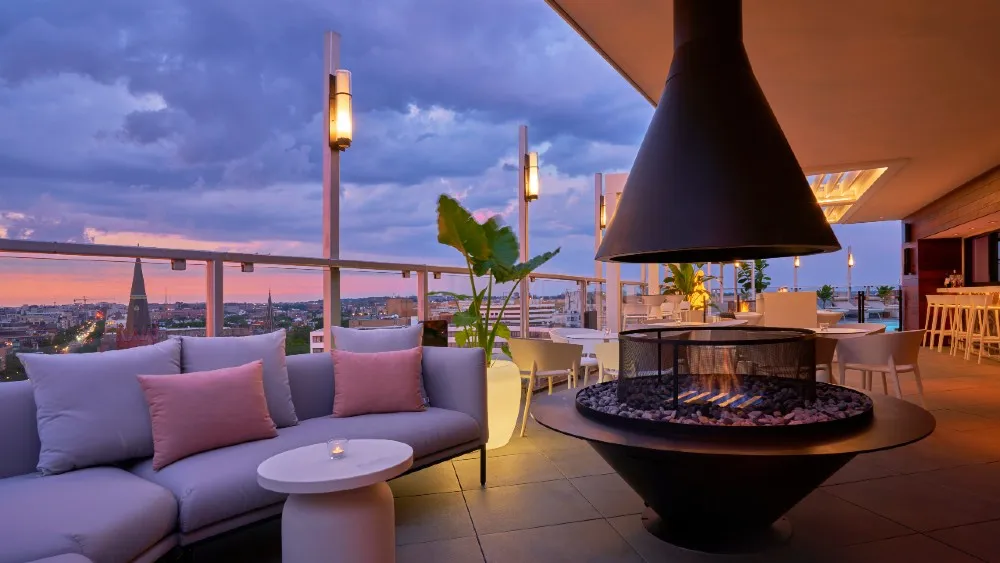
The term is often conflated with “hotels with a rooftop bar,” which is an analytical error. True luxury rooftop resorts usa must offer more than a singular bar or dining venue; they provide a comprehensive, multi-layered experience that includes dedicated concierge services, private event spaces, curated wellness offerings, and often private pools or gardens that exist entirely detached from the street level. The “resort” designation implies a self-contained ecosystem where the guest can spend their entire duration without needing to descend to the ground floor.
The primary risk in this category is the “public-private collision.” Because many of these properties seek to monetize their rooftop space via third-party dining or nightlife outlets, the exclusivity of the guest experience can be compromised. Oversimplification arises when one equates high price with high exclusivity. A hotel may charge premium rates for a room, but if its rooftop is open to the general public, the “resort” value—privacy and sanctuary—is significantly diluted. Understanding this category requires auditing the “permeability” of the rooftop space. Is it a curated retreat for guests, or is it a commercialized nightlife destination? The difference determines whether the property functions as a legitimate resort or merely a hotel with a noisy rooftop venue.
Deep Contextual Background
The evolution of vertical leisure began as a reaction to the limitations of urban planning. Early 20th-century hotels utilized rooftops for signage and utilitarian mechanical storage. It wasn’t until the mid-to-late 20th century that the “sky lounge” concept gained traction, primarily as a nightlife amenity. However, the 21st century brought a change in material science and zoning capabilities. High-performance glass, sophisticated structural dampers, and advanced weather-proofing materials allowed architects to enclose and program spaces that were previously considered unusable during inclement weather.
Simultaneously, the demand for “lifestyle” travel shifted the value proposition. Travelers began seeking the “urban resort” experience—the ability to travel to a city and remain in a secluded, high-elevation environment that mimics the amenities of a seaside property. This systemic shift forced developers to treat the roof as “found space”—a value-creation engine that, if programmed correctly, commands the highest revenue per square foot in the entire property. Today, the most successful luxury rooftop resorts usa have moved away from the “nightclub on a roof” model and toward the “elevated private estate” model, integrating spas, gardens, and fine dining into a seamless vertical experience.
Conceptual Frameworks and Mental Models
To evaluate these high-altitude properties, apply the following frameworks:
-
The Vertical Utility Gradient: This model suggests that the value of an amenity increases exponentially as it moves higher, but only if the service quality scales with it. A rooftop bar is a commodity; a rooftop service (private dining, dedicated concierge, secured entry) is a premium asset.
-
The Acoustic Isolation Index: Urban rooftops are inherently loud environments—wind, sirens, HVAC hum. Evaluate the property’s ability to dampen this noise. If the rooftop cannot maintain a quiet environment during peak city hours, the “luxury” claim is invalidated.
-
The Logistical Throughput Model: How does the resort move service staff, culinary inventory, and guests to the roof without degrading the experience? An elevator system that is shared with the general public or cleaning staff is an operational failure point.
Key Categories or Variations
| Category | Primary Offering | Service Integration | Logistical Complexity |
| Sky-Retreats | Wellness & Spa | High (Private) | Moderate |
| Culinary Hubs | Fine Dining Focus | High (Public/Private) | High |
| Event-Centric Estates | MICE/Weddings | High (Volume) | Very High |
| Residential-Luxury | Apartment-style living | Low (Autonomous) | Low |
The realistic decision logic requires asking: “What is the resort trying to solve for?” If the resort’s revenue model relies on public bar sales, the guest experience will inevitably involve crowds. If the resort’s model relies on room rates, the rooftop is likely reserved for private guest use, ensuring higher exclusivity.
Detailed Real-World Scenarios
Scenario 1: The Corporate Leadership Retreat. An executive team requires absolute privacy for sensitive strategy sessions. The rooftop resort provides a glass-walled conference suite. The failure mode here is “visual permeability.” If the rooftop is accessible to other guests or dining patrons, the confidentiality is compromised. The second-order effect is a breach of trust.
Scenario 2: The Wellness Sabbatical. A guest selects the resort for its rooftop pool and meditation garden. The constraint is “operational noise.” If the resort hosts large, loud weddings on the same roof, the wellness environment is destroyed. The decision point is the management’s ability to partition the roof into distinct “zones” of experience.
Scenario 3: The Weather Disruption. A high-end wedding is booked for a rooftop. A sudden storm hits. Does the resort have the operational infrastructure (retractable roofs, secondary indoor suites) to manage the transition without the guest noticing? This is the ultimate test of an elite luxury rooftop resorts usa operator.
Planning, Cost, and Resource Dynamics
The economic profile of a rooftop resort is defined by high overhead and extreme maintenance costs.
-
Fixed Costs: Structural maintenance, specialized HVAC for high altitudes, and the premium cost of transporting goods to the roof (the “vertical supply chain”).
-
Opportunity Cost: Every square foot of rooftop used for a pool is square footage not used for a restaurant or bar. The resort is making a conscious decision about its revenue stream.
-
Variability: Resorts that operate year-round in climates with extreme seasons face significant “climate-proofing” costs, which are passed directly to the guest.
| Stay Type | Cost Profile | Value Driver |
| Short-Term (Transient) | High Base | Aesthetic & Social access |
| Long-Term (Extended) | Discounted Base | Privacy & Service infrastructure |
| Event/Buyout | Premium/Fixed | Total exclusivity |
Tools, Strategies, and Support Systems
-
The “Vertical RFP”: When booking for a high-level purpose, request a site plan that shows the separation between the public areas and the private guest areas on the roof.
-
The Acoustic Site Visit: If possible, visit the rooftop during peak city hours (rush hour). If you cannot hold a normal conversation without shouting, the acoustic design is insufficient for a “luxury” designation.
-
Elevator Analysis: Ask how many elevators serve the rooftop exclusively.
Risk Landscape and Failure Modes
The primary risks are not aesthetic, but logistical and structural.
-
The “Elevator Bottleneck”: If the property has high occupancy but limited vertical transport, guests will spend their time waiting for the elevator, which creates immediate friction.
-
Climate Fragility: Rooftops are the most exposed part of a building. If the resort lacks robust “Plan B” infrastructure for rain, wind, or extreme heat, the experience can collapse in minutes.
-
The Public-Private Conflict: Properties that try to serve both the luxury guest and the public “scene” often end up serving neither well. The best properties have dedicated entry points for each.
Governance, Maintenance, and Long-Term Adaptation
Governance of a high-elevation asset requires rigorous monitoring.
-
Review Cycles: Treat the rooftop infrastructure (HVAC, decking, waterproofing) as a high-maintenance asset. The best resorts perform quarterly structural audits.
-
Adjustment Triggers: If noise levels reach a certain threshold, the management must have pre-defined triggers to adjust the music, service flow, or crowd density.
-
The Layered Checklist: A document tracking “Operational Delivery”—everything from the quality of the pool water (which can be difficult to maintain at height) to the service response time for rooftop dining.
Measurement, Tracking, and Evaluation
Evaluation occurs both during the stay and via post-experience analysis.
-
Leading Indicators: The precision of the pre-arrival communication regarding rooftop usage. If the staff can clearly explain the zones and the privacy protocols, the execution is likely competent.
-
Lagging Indicators: The “Service Fidelity” metric. Did the experience live up to the promise? Did the rooftop amenities function perfectly throughout the stay?
-
Documentation: Keep a ledger of the specific service failures (e.g., waiting for elevator, noise pollution). This is the only way to track if a property is deteriorating over time.
Common Misconceptions and Oversimplifications
-
Myth: “Rooftop pools are always heated and swimmable.” Correction: High-altitude wind makes water temperature control extremely difficult. Many “rooftop pools” are essentially decorative.
-
Myth: “A high floor guarantees a quiet room.” Correction: Lower floors are often quieter because they are buffered by the hotel’s own structure. Higher floors are susceptible to wind and mechanical noise.
-
Myth: “The higher the price, the better the experience.” Correction: Price is often a marketing tool. Operational excellence is a choice, not an inherent result of high tariffs.
Ethical and Contextual Considerations
The development of luxury rooftop resorts usa also carries an ethical footprint. These properties are resource-intensive—the energy required to transport water, food, and people to the roof is significant. The most sophisticated traveler will favor properties that incorporate sustainable design, such as greywater recycling for rooftop gardens, solar energy capture, and energy-efficient climate control. True luxury involves stewardship, not just consumption.
Conclusion
The selection of a high-elevation destination is a function of operational discipline. It requires the traveler to look past the marketing imagery—the perfect sunset over the city—and interrogate the operational reality: the logistics, the privacy protocols, and the infrastructural robustness. When one evaluates the luxury rooftop resorts usa, one is not merely booking a room; one is purchasing a position within a complex, vertical ecosystem. By treating the process with the professional weight it deserves, the traveler can move from being a passive consumer to an active curator of their own high-altitude experience.