American Luxury Resort Lifestyle: An Analytical Guide to Excellence
The American luxury resort sector is not merely a collection of hospitality venues; it is an industrial architecture designed to manufacture a specific form of human experience. Unlike the historic European model, which often relies on inherited cultural context and centuries-old architectural continuity, the domestic industry in the United States is built upon an aggressive fusion of asset management, high-density service engineering, and the systematic control of environments. To engage with the American luxury resort lifestyle is to participate in a highly regulated,
This curation is a paradox. Every amenity, excursion, and dining reservation is a data point in a sophisticated revenue management system. To understand this lifestyle is to look past the velvet drapery and the curated photography to the logistical machinery that keeps the facade intact. For the serious observer or the discerning traveler, the resort is a case study in operational efficiency, supply chain management, and the economics of leisure.
True mastery of this subject requires moving beyond the consumer mindset. It involves auditing these properties not as destinations, but as operating businesses. Whether it is an alpine estate, a coastal sanctuary, or a desert oasis, the underlying physics of high-end hospitality remain constant: success is determined by the resort’s ability to maintain a frictionless interface between the guest’s desires and the property’s limited operational capacity. This article serves as an analytical audit of that interface, designed to provide a deep, structural understanding of how the industry functions, where it fails, and how it is managed.
Understanding “American Luxury Resort Lifestyle.”
The term American luxury resort lifestyle is frequently misused in travel discourse, often conflated with a generic sense of affluence. In reality, it is a specific mode of consumption characterized by the outsourcing of domestic responsibility to a managed environment. The primary misunderstanding is the belief that this lifestyle is passive. On the contrary, the resort guest is an active participant in a high-touch economic exchange.
The oversimplification risk here is profound. When consumers view the resort as a static commodity—”I pay X, I get Y”—they inevitably collide with the operational reality of hospitality, which is dynamic and labor-dependent. A luxury resort is not a static installation; it is a labor-intensive performance that occurs in real-time. The “lifestyle” is essentially the byproduct of a successful operational performance.
Furthermore, the American luxury resort lifestyle is deeply tied to the American obsession with “personalization.” The industry has responded by moving away from uniform, high-standard service to bespoke, data-driven service. This creates a new set of risks: the resort that tries to be everything to everyone often ends up being mediocre for most. The properties that truly define this space are those that have chosen a distinct identity—whether it is wellness, adventure, or quiet isolation—and have optimized their entire operational infrastructure to support that single, coherent experience.
Deep Contextual Background: The Evolution of Hospitality Logic
The grand hotels of the late 19th and early 20th centuries were the first iteration of the luxury resort; they were remote, self-contained castles designed to host the elite for weeks at a time. The transition occurred post-World War II with the rise of the automobile and the subsequent “motor hotel” boom, which democratized access to coastal and mountain destinations. This era introduced the tension between scale and exclusivity that continues to define the industry today.
By the 1990s, the “corporate consolidation” phase began. Independent grand hotels were acquired by massive hospitality conglomerates. The focus shifted from the “host-guest relationship” to “RevPAR” (Revenue Per Available Room) optimization. The luxury resort lifestyle was packaged, standardized, and marketed on a global scale. This led to the “uniformity problem,” where luxury resorts from Maine to Maui began to feel indistinguishable in their service models, amenity offerings, and design language.
We are currently in a corrective phase. The market is witnessing a resurgence of the “boutique” and “independent” model. Travelers are actively seeking resorts that resist the homogenization of the corporate chains, preferring properties with deep local roots, regional architectural integrity, and labor models that prioritize long-term staff retention over short-term revenue spikes. This shift back to a model of authenticity is the most significant trend in the current landscape, placing a premium on properties that function less like a global brand and more like a regional asset.
Conceptual Frameworks and Mental Models
To effectively analyze and participate in this landscape, one should adopt the following analytical frameworks:
-
The Amenity Friction Coefficient: This model evaluates an amenity based on the effort required to access it. A spa that requires a 3-week reservation, a complicated waiver form, and a shuttle ride to a remote wing has a high friction coefficient, which often negates its value.
-
The Labor-to-Asset Ratio: This measures the quality of the resort’s operational backbone. Does the property invest more in its staff (training, retention, culture) or in its physical plant (upgrades, technology, aesthetic shifts)? Properties that prioritize the former are invariably more reliable in their delivery of the American luxury resort lifestyle.
-
The “Captive Demand” Paradox: Resorts thrive when they can capture the guest’s entire attention and expenditure. However, the best properties balance this “captivity” with genuine local engagement. A resort that isolates the guest from the surrounding community eventually creates a “gilded cage” effect that reduces the depth of the experience.
Key Categories and Operational Variations
The following table categorizes the primary types of high-end resorts, their operational drivers, and the typical compromises inherent in their models.
The decision logic here is clear: the traveler must align their needs with the resort’s operational strengths. If one seeks reliable service and predictable infrastructure, the Urban-Resort is often the safest bet. If one seeks the atmospheric intensity of the American luxury resort lifestyle, the Coastal or Mountain properties offer higher rewards but come with significant risks related to maintenance, labor, and weather.
Detailed Real-World Scenarios
Scenario 1: The Seasonal Labor Pivot An alpine resort prepares for the transition from the ski season to the summer hiking season. The property’s ability to retain its “anchor” staff—the departmental leaders—while effectively onboarding seasonal line staff is the critical indicator of quality. A failure here results in a “service dip” that guests often perceive as a sudden decline in property standards.
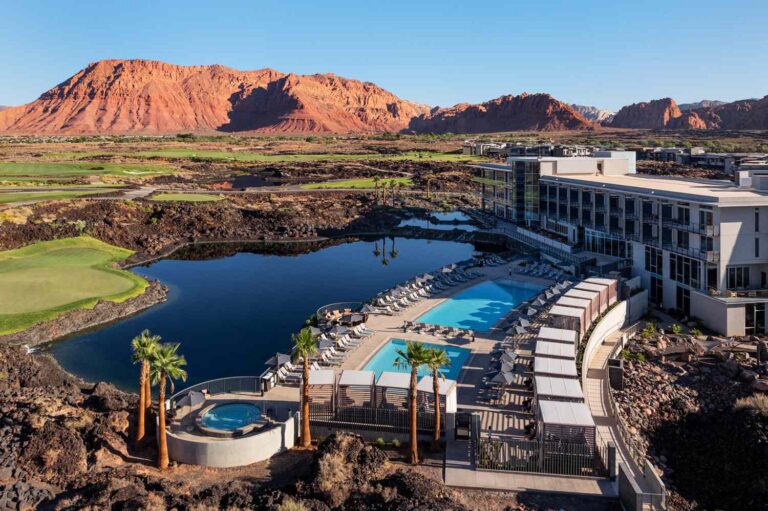
Scenario 2: The Supply Chain Disruption. A remote desert resort relies on a single, long-distance supply chain for its high-end culinary offerings. A logistical failure occurs, and the resort is unable to source its signature ingredients. The “top-tier” response is to have a pre-vetted, local backup supply chain. The “mediocre” response is a sudden, uncommunicated change in the menu. This distinction separates the true practitioners of the American luxury resort lifestyle from the opportunists.
Scenario 3: The “Resort Fee” Conflict A guest books a stay at a property that uses a “resort fee” to bundle amenities. The guest realizes that they are paying for access to facilities (e.g., a golf course) that they have no intention of using. The frustration is not the cost; it is the lack of transparency. The failure mode here is a breakdown in the contract between the guest and the resort—a sign of a property that prioritizes revenue extraction over guest alignment.
Planning, Cost, and Resource Dynamics
The management of the American luxury resort lifestyle requires a shift from standard consumer budgeting to what can be termed “Lifestyle Asset Management.”
The cost of not planning is high. When a guest arrives at a luxury property without a clear understanding of the operational rhythms—the peak dining times, the concierge’s limitations, the maintenance schedules—they effectively forfeit their ability to curate their own experience.
Tools, Strategies, and Support Systems
-
The Pre-Arrival Operational Audit: 14 days before arrival, engage the concierge team with specific, high-level requests. Their responsiveness and the precision of their follow-up are the best indicators of the property’s internal communication effectiveness.
-
The “Local Partner” Verification: If the resort offers excursions or specialized dining, ask who the provider is. If it is an in-house team, expect high control and reliability. If it is a third-party vendor, expect higher variability.
-
The “Key Staff” Relationship: In any resort, there are 3-5 staff members who control the flow of the entire property (e.g., the front-of-house manager, the head concierge, the chef). Identifying and establishing a professional, respectful rapport with these individuals early in the stay can transform the experience from standard to exceptional.
-
The Digital Ledger of Preferences: Many top-tier properties use advanced CRM systems. Do not be shy about documenting your preferences, dietary requirements, and logistical needs in your profile before booking.
Risk Landscape and Failure Modes
There is a distinct taxonomy of failure in the high-end resort market.
-
The Service-Capability Gap: A resort introduces a high-end amenity (e.g., a Michelin-star dining concept or a full-service spa) that the current staff is not trained to operate at an elite level. This is the most common cause of “luxury dissatisfaction.”
-
The Aesthetic-Functional Mismatch: The resort is beautiful but physically dysfunctional (e.g., HVAC noise, poor Wi-Fi, awkward layout). This creates a latent stress that undermines the entire American luxury resort lifestyle.
-
The “Staff Burnout” Cycle: High-end resorts are physically and emotionally demanding on the staff.
Governance, Maintenance, and Long-Term Adaptation
The most stable resorts are those that engage in “Adaptive Governance.” They do not just maintain the property; they evolve it. Look for evidence of regular, incremental upgrades rather than massive, infrequent overhauls. A property that is constantly being refreshed is one that is being actively managed as a long-term asset. When evaluating a property for the long term, consider its relationship with the local community. A resort that is integrated into its local economy is almost always more stable and capable of delivering a high-quality experience than one that exists as a gated, alien entity.
Measurement, Tracking, and Evaluation
-
Leading Indicators: The precision and warmth of the pre-arrival communication. A property that is organized in its digital outreach is almost always organized in its physical operations.
-
Lagging Indicators: The “Staff-to-Guest” interaction quality at the end of the stay. Do the staff look genuinely engaged, or are they exhausted and mechanical? The latter is a clear sign of systemic failure in management.
-
Qualitative Signals: The “Atmospheric Consistency.” Does the quality of service remain constant from the early morning shift to the late-night shift? If the service quality drops significantly during off-hours, the property lacks a unified operational standard.
Common Misconceptions and Oversimplifications
-
“Expensive Brands Guarantee Service.” Brand identity is often a marketing tool, not an operational reality. The operational quality of a specific property is almost always more important than the logo on the door.
-
“The Concierge is an All-Knowing Authority.” The concierge is an employee with a specific set of vendor relationships and local partnerships. They are an asset, not a god.
-
“The ‘Resort Fee’ is Just a Rip-off.” While often annoying, it is a mechanism for bundling. The key is not to avoid it, but to understand what it actually covers and leverage those services fully.
-
“High Occupancy is a Sign of Excellence.” High occupancy is a sign of marketing effectiveness. It is often the enemy of luxury, as the property becomes crowded, service slows down, and the environment loses its sense of exclusivity.
Ethical, Practical, and Contextual Considerations
The American luxury resort lifestyle is often critiqued for its environmental and social footprint. The sophisticated traveler should consider this. Resorts that prioritize water conservation, local sourcing, and the ethical treatment of their labor force are not just “doing good”—they are building a more resilient, higher-quality product. A resort that exploits its environment or its staff will eventually suffer from the consequences of that exploitation, whether through regulatory failure, staff attrition, or a degradation in the quality of the experience.
Synthesis and Conclusion
The pursuit of the American luxury resort lifestyle is an exercise in discerning what is genuine and what is merely a performance. It requires an analytical mindset that treats the resort not as a fairy-tale destination, but as a complex, industrial-scale operational system. By understanding the underlying mechanics—the labor models, the supply chain logistics, the infrastructure, and the revenue strategies—the discerning traveler can navigate this environment with clarity and purpose.
The ultimate objective is to secure an experience where the logistical apparatus is invisible, leaving only the intended impact: a sense of restoration, engagement, or luxury. This is not achieved by chance; it is the result of aligning oneself with properties that respect the operational reality of their environment and possess the internal discipline to maintain their standards in the face of constant pressure. The true luxury is not the amenities themselves, but the total absence of operational friction, a state achieved only when the resort is functioning at the absolute peak of its potential.