Top Forest Luxury Resorts in America: An Analytical Strategic Guide
The definition of luxury has undergone a radical recalibration over the last decade. Where opulence was once measured by the density of gilded fixtures and urban proximity, it is now defined by the quality of silence, the purity of air, and the structural integrity of one’s disconnection from the modern grid. The wilderness retreat, specifically the high-end forest enclave, has emerged as the apex of this shift. However, not all forest-bound properties are created equal. The search for the top forest luxury resorts in america has become an exercise in navigating the intersection of delicate ecological preservation and demanding high-touch hospitality.
A true luxury resort situated within a forest ecosystem must operate as a paradox: it must provide absolute, uninterrupted comfort while simultaneously maintaining a footprint that respects—and ideally enhances—the surrounding biome. This is a difficult balancing act. Many properties marketed as “luxury” are little more than aesthetic veneers, utilizing rustic design motifs to mask insufficient infrastructure or degraded service models. The genuine article—the property that balances deep-woods isolation with operational excellence—is rare.
This article provides the methodology for evaluating these estates. It is intended for the reader who treats their travel not merely as a temporary distraction, but as a calculated investment in experience and restorative value. By analyzing the structural, financial, and logistical realities of these properties, one can move beyond the marketing brochures and identify the resorts that deliver authentic, high-fidelity wilderness experiences.
Understanding “top forest luxury resorts in america”
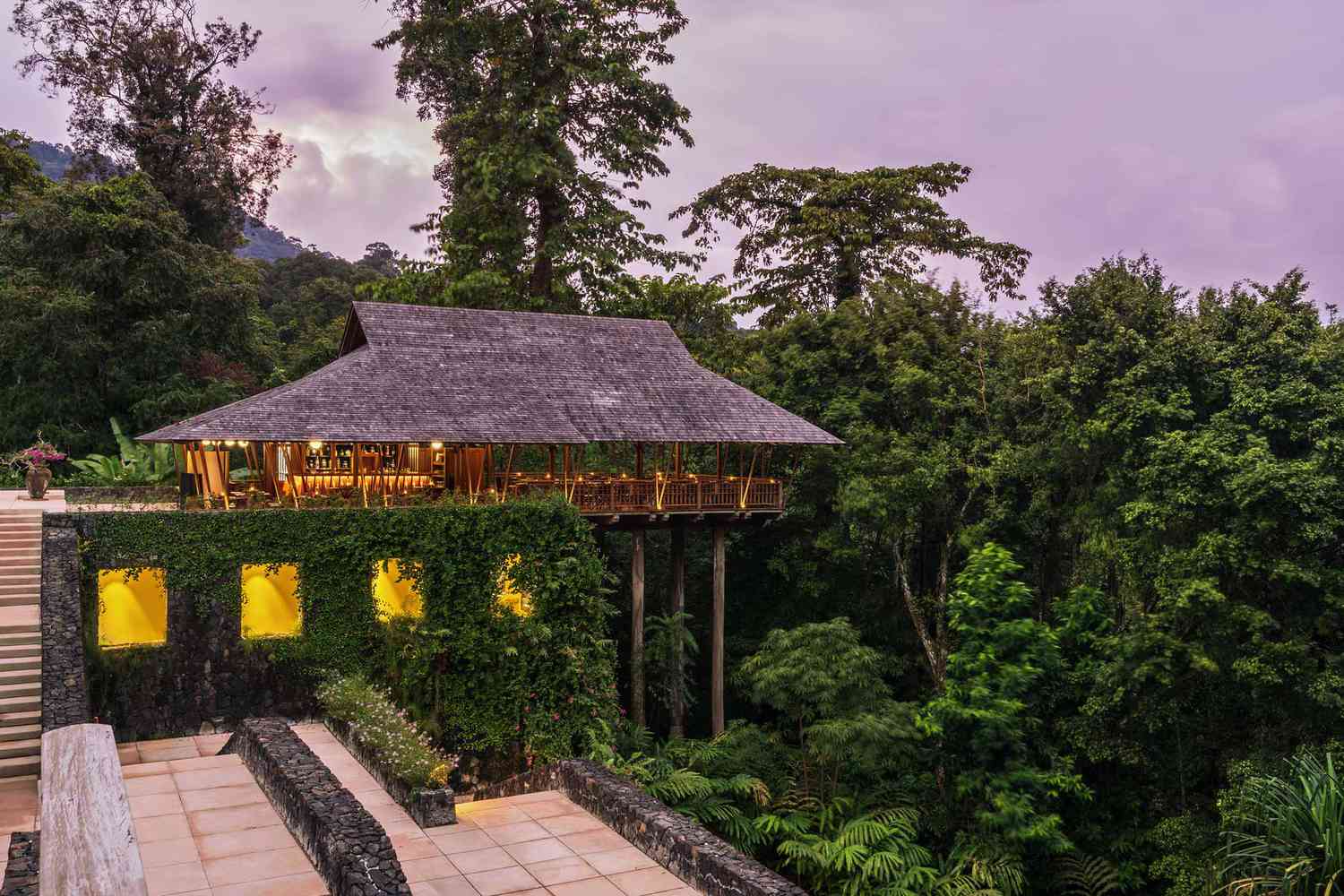
The designation “forest resort” is frequently applied to any property with trees on its perimeter. This is a critical error in categorization. The top forest luxury resorts in america are distinguished by their functional immersion within a specific ecological niche—whether it be the boreal expanses of the North, the temperate rainforests of the Pacific Northwest, or the deciduous canopies of the Eastern ranges. They are not merely “near” the forest; they are systems designed to inhabit, monitor, and steward it.
A common misunderstanding is the assumption that forest luxury is synonymous with “off-grid.” On the contrary, the highest-performing properties in this category often utilize sophisticated off-grid technology to support highly grid-like service standards. The oversimplification risk is high; travelers often mistake “rustic decor” for “authentic experience.” A property may feature reclaimed wood interiors and high-thread-count linens but lack the operational rigor to handle, for instance, a multi-day power outage, a supply chain disruption, or a staff turnover event. To identify the genuine leaders in this space, one must look past the interior design and examine the property’s ability to maintain luxury service standards in an environment that is naturally hostile to such consistency.
Deep Contextual Background
The evolution of forest-based hospitality in the United States traces a lineage back to the “Great Camps” of the Adirondacks in the late 19th century. These were the private preserves of the industrial elite, designed to mimic European manorial architecture while utilizing local materials. They established the foundational ethos of “civilized wilderness”—the ability to transport high-society living standards into the deep woods.
The mid-20th century saw a decline in this model, replaced by the standardized “lodge and motel” culture of the highway era. It was not until the recent pivot toward “experiential travel” that the high-end forest resort saw a resurgence. Today, the competitive landscape of the top forest luxury resorts in america often masks the fact that these properties are essentially competing for the same limited pool of high-net-worth travelers who are increasingly bored by urban excess. This has led to a boom in “architectural hospitality,” where the design of the lodge itself—often brutalist, minimalist, or highly integrated glass-and-steel structures—becomes the primary draw, sometimes at the expense of the actual engagement with the forest. The current era is defined by this tension between the built environment and the organic one.
Conceptual Frameworks and Mental Models
To audit these properties effectively, one must move beyond subjective preference and employ rigorous operational models:
-
The Integration Ratio: Plot the property on a scale of “Observed” versus “Participatory.” An “Observed” resort allows guests to view the forest from climate-controlled glass boxes; a “Participatory” resort integrates the guest into the landscape via active stewardship, guided forest ecology, and immersive terrain navigation.
-
The Resilience-Luxury Duality: In a remote forest location, resilience is the foundation of luxury. If a property lacks backup power redundancy, localized water filtration, and secure, year-round supply lines, its “luxury” is fragile. A single storm can reduce the experience to a survival scenario, which is rarely what the guest is paying for.
-
The Logistical Friction Constant: The further a property is from a major population center, the higher the “logistical friction.” Does the property manage this friction through superior planning, or does the guest feel it via service delays, limited menu options, or outdated equipment? The best properties have minimized this friction to a point of invisibility.
Key Categories or Variations
| Category | Primary Ecosystem | Service Philosophy | Operational Risk |
| Architectural Estate | Temperate/Deciduous | Passive/Observational | High-maintenance infrastructure |
| Deep-Woods Outpost | Boreal/Alpine | Active/Participation | High-logistical friction |
| Eco-Immersion Lodge | Rainforest/Old Growth | Educational/Stewardship | Weather vulnerability |
| Corporate/Hybrid Resort | Mixed Forest | High-Service/Amenity | Low-ecological authenticity |
Identifying the top forest luxury resorts in america requires a departure from brand loyalty. One must categorize the property based on its intent. If the intent is deep psychological decompression, an “Architectural Estate” in a quiet forest may be the correct choice. If the intent is technical outdoor proficiency (e.g., advanced fly fishing, tracking), a “Deep-Woods Outpost” is required.
Detailed Real-World Scenarios
Scenario 1: The Creative Sabbatical. A creative professional requires three weeks of intense focus. The resort must provide absolute sound isolation and high-speed, satellite-backed internet. The failure mode here is the “shared space” issue—if the resort lacks private workspaces, the guest is forced into common areas, destroying the intended focus.
Scenario 2: The Multi-Generational Estate Takeover. A family of ten requires a high-level coordination of activities. The decision point is “dedicated staffing.” A property that does not provide a single point of contact (a dedicated estate manager) for large groups will inevitably lead to logistical fragmentation. The second-order effect is a disjointed experience where the family spends more time managing their itinerary than enjoying the forest.
Scenario 3: The Ecological Immersion. A guest seeks deep educational engagement. The risk is “surface-level guiding.” If the property’s guides are merely outdoor enthusiasts rather than trained naturalists or ecologists, the experience remains superficial. The decision point is the depth of the property’s partnership with local conservationists.
Planning, Cost, and Resource Dynamics
The budgetary structure of forest-based hospitality is frequently misunderstood by the consumer.
-
Fixed Overhead: The cost of maintaining infrastructure in a forest environment (clearing downed trees, managing fire risk, road maintenance) is an order of magnitude higher than in urban settings. This is baked into the room rate.
-
The “Isolation Premium”: Shipping high-end culinary supplies to a remote forest location is expensive. Do not expect urban-level menu variety; expect localized, seasonal scarcity.
-
Variable Staffing: Many forest resorts rely on seasonal labor. The quality of the experience can fluctuate significantly between the peak summer season and the shoulder season.
| Stay Duration | Economic Profile | Strategic Tip |
| 1–3 Days | High-Transient/Risk of Incomplete Immersion | Avoid deep-woods locations |
| 4–7 Days | Moderate/Optimal | Ideal for most forest resorts |
| 14+ Days | Contract-based/Value-optimized | Negotiate full-service support |
Tools, Strategies, and Support Systems
-
The “Redundancy Inquiry”: Before booking, inquire directly about the resort’s disaster contingency plans. Ask: “What happens if the main power grid or access road is compromised?” A top-tier property will have a comprehensive, documented answer.
-
Guide Provenance: Ask for the bios of the senior lead guides. Are they long-term employees, or seasonal hires? Longevity is the key indicator of a stable, high-quality program.
-
The Estate Manager Protocol: For high-stakes trips, bypass the general booking office. Request to speak with the “Experience Coordinator” or “Estate Manager” to discuss the specific parameters of your stay.
Risk Landscape and Failure Modes
The risk profile of the top forest luxury resorts in america is inextricably linked to the forest itself.
-
Fire Risk: In the Western U.S., wildfire is the existential threat to forest hospitality. A property that does not have a transparent, public-facing fire management plan is a liability.
-
Supply Chain Fragility: Remote locations are subject to severe supply chain shocks. A poorly managed resort will run out of fresh inventory during a weekend rush, leading to a degraded guest experience.
-
The “Staff Burnout” Factor: Living and working in a remote forest environment is mentally taxing. High staff turnover is a common failure mode. Look for resorts that emphasize staff housing, community, and mental health support, as these are the ones that retain the best talent.
Governance, Maintenance, and Long-Term Adaptation
To effectively govern one’s experience at these properties, one must act as a client, not just a guest.
-
The 45-Day Audit: Send a detailed requirements document 45 days prior to arrival. This is not just for dietary needs; it is for equipment requirements, connectivity, and activity pacing.
-
Adjustment Triggers: If the property’s responsiveness to this pre-arrival document is slow or generic, take it as a leading indicator of the service level you will receive on-site.
-
The Layered Checklist: Create a document that tracks “Hard Constraints” (e.g., must have high-speed internet, must have private dining space) versus “Soft Preferences” (e.g., room decor, specific trail access). Never trade a hard constraint for a soft preference.
Measurement, Tracking, and Evaluation
Evaluation is the difference between a high-value stay and a commoditized one.
-
Leading Indicators: The quality of the resort’s digital footprint—specifically, the technical accuracy of their facility descriptions. If their website implies features that don’t exist, the operational reality will likely be equally inaccurate.
-
Lagging Indicators: The “Service Fidelity” metric—did the service quality remain consistent as the environment became more challenging? For example, was the staff as professional during a rainstorm as they were on a clear day?
-
Documentation: Keep a ledger of the specific service misses. This becomes the primary data for determining whether to return or to seek a different property for the next iteration.
Common Misconceptions and Oversimplifications
-
Myth: “Forest resorts are always quiet.” Correction: Many are situated near major logging roads, regional airports, or popular public hiking trails. Noise pollution is a real issue.
-
Myth: “Staying in a forest means being disconnected.” Correction: The highest-end properties offer “managed connection”—the ability to be fully offline if desired, but with the immediate capacity to be fully online if the situation demands.
-
Myth: “The most expensive property is the best.” Correction: Many high-priced properties are essentially “marketing shells” with aging infrastructure. The premium is for the brand, not the operational quality.
Ethical and Contextual Considerations
The stewardship of the forest is the ultimate ethical imperative for these resorts. Selecting from the top forest luxury resorts in america demands a look at the property’s impact. How are they managing their waste? Do they have a reforestation program? Are they employing local labor, or are they extracting wealth from the local economy without contributing to it? A truly high-end resort understands that its business model is dependent on the health of the forest; therefore, its primary operational goal should be the preservation, not the consumption, of the land.
Conclusion
The search for elite wilderness hospitality is an exercise in discerning the difference between superficial aesthetics and operational substance. It requires a traveler to look past the marketing imagery—the perfect cabin in the woods—and interrogate the operational reality of the estate. By focusing on properties where the hospitality is a deliberate, high-touch extension of the forest’s own rhythm, rather than a mere commercial appendage, the traveler can secure an experience that is both intellectually enriching and profoundly restorative. The most successful stays in the American wilderness are those where the guest understands the fragility of the environment, respects the labor required to sustain such isolation, and appreciates the complexity of the balance between human comfort and wild space.