Historic Luxury Destinations USA: A Strategic Audit for Travelers
The American landscape is punctuated by architectural artifacts that serve as both physical relics of the past and active centers of commerce. These properties occupy a paradoxical position: they are static, bounded by the immutable realities of their original construction, yet they are expected to perform within a modern hospitality ecosystem that demands relentless adaptability. When we discuss the caliber of these spaces, we are not simply assessing aesthetic value or historical trivia. We are engaging with an operational discipline that balances the preservation of cultural heritage against the unforgiving requirements of contemporary revenue management.
To understand these properties is to move beyond the superficial allure of “timelessness.” True endurance in this sector is not the result of static perfection but of active, aggressive stewardship. Every historic asset operates under a constant state of pressure—from the degradation of materials to the shifting demands of modern safety codes and guest expectations. The most successful examples of these properties are those that have learned to treat their historical limitations not as liabilities, but as the core value proposition of the guest experience.
This analysis provides a structured audit of the sector, intended to cut through the marketing veneer that often obscures the reality of asset management. By examining the operational, financial, and ethical frameworks that govern this category, we can distinguish between genuine custodial excellence and mere commercial exploitation.
Understanding “historic luxury destinations usa”
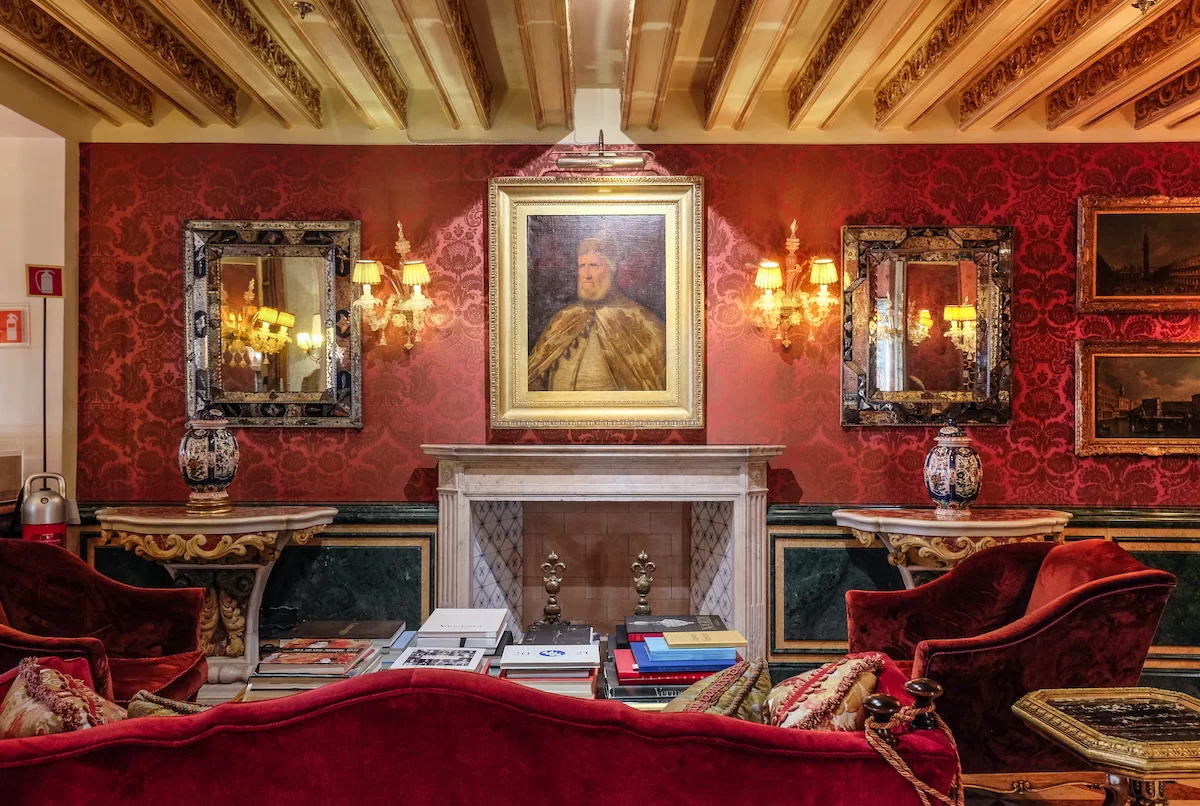
Defining the category requires a departure from standard hospitality taxonomy. We often conflate age with luxury, assuming that a property’s longevity inherently guarantees a superior experience. This is an analytical error. Historic luxury destinations usa are defined not merely by their date of construction, but by the intentionality of their preservation and the sophistication of their operational integration. They must function as high-performance assets while adhering to the physical and aesthetic constraints of their heritage status.
The primary misunderstanding in this space is the “Museum Fallacy”—the belief that these properties should exist in an unchanging state. The most viable properties are those that engage in “dynamic conservation.” They allow for the evolution of their interior systems—HVAC, data connectivity, ADA compliance—while protecting the narrative and structural integrity of the shell. When a property attempts to force a modern luxury standard into a historic envelope without sensitive structural intervention, the result is “Disneyfication,” a sterile environment that lacks the very authenticity it purports to sell. Conversely, properties that prioritize authenticity to the exclusion of operational functionality inevitably decline, becoming beautiful but ultimately unviable relics.
Deep Contextual Background: The Evolution of Hospitality Logic
The trajectory of American heritage hospitality began with the “Great Railroad Hotels” of the late 19th and early 20th centuries. They were monolithic, self-contained, and defined by a sense of grand civic ambition.
Following the mid-century rise of the suburban motel and the mass-market chain, the historic hotel entered a period of existential crisis. Travelers began to seek out the “unreplicable,” finding value in the specific, the storied, and the imperfect. However, this resurgence has also invited a new danger: the commodification of “historic” as a brand, leading to the construction of “new-old” properties that mimic the aesthetic of heritage without the structural or cultural substance.
Conceptual Frameworks and Mental Models
To evaluate these assets, we must employ frameworks that go beyond traditional profit-and-loss statements.
-
The Patina vs. Performance Ratio: This measures the equilibrium between the aesthetic character of the building (the patina) and the efficiency of its internal systems (the performance). A property failing to maintain this ratio will either suffer from neglect (excessive focus on preservation at the cost of utility) or sterility (excessive focus on modern efficiency at the cost of character).
-
The Adaptive Capacity Matrix: This assesses the building’s ability to be repurposed for modern technology and comfort without compromising its core architectural typology. Some structures are inherently more “flexible” than others; understanding this is vital for long-term viability.
-
The Stewardship Index: A qualitative assessment of how the ownership group manages the property’s narrative. Are they acting as custodians or liquidators? This index is predictive of the property’s long-term health.
Key Categories and Operational Variations
The following typology illustrates the diversity of high-end heritage properties in the American market.
| Category | Typical Landscape | Primary Operational Challenge | Strategic Value |
| Grand Dame Urban | City Center | Infrastructure densification | Location & Scale |
| Remote Heritage Resort | Wilderness/Coast | Logistical friction | Absolute exclusivity |
| Adaptive Reuse Estate | Rural/Country | Maintenance debt | Narrative & Privacy |
| Cultural/District Node | Neighborhood Core | Regulatory constraints | Community integration |
When selecting from historic luxury destinations usa operators, the discerning traveler must recognize that these categories carry different operational risks. An Urban Grand Dame requires massive investment in technological infrastructure (internet, HVAC, elevator capacity) that an Adaptive Reuse Estate might not prioritize, but the latter requires an entirely different supply chain and labor model to compensate for its remoteness.
Detailed Real-World Scenarios
Scenario 1: The Code Compliance Conflict
The conflict lies in maintaining the original aesthetic of the exposed brick and timber framing while meeting modern safety mandates. A successful operator treats the bracing as a design element, integrating it into the visual narrative rather than hiding it behind drywall, thus preserving the “authentic” feel while satisfying regulatory oversight.
Scenario 2: The Infrastructure Paradox
An 1880s railroad hotel undergoes a top-tier digital upgrade. The thickness of the original limestone walls renders standard Wi-Fi systems obsolete. The failure mode here is a reliance on modern solutions that don’t account for the physical reality of the building. A solution-oriented approach utilizes mesh-network technology integrated into the molding and original fixture points, a “stealth” integration that respects the building’s fabric.
Scenario 3: The Talent Vacuum
A remote heritage estate relies on the charm of local staff to maintain its appeal. As the local cost of living rises and infrastructure development (or lack thereof) limits accessibility, the staff turnover spikes. The stability of the labor pool is the most significant leading indicator of a property’s health.
Planning, Cost, and Resource Dynamics
Budgeting for historic luxury destinations usa often surprises the unprepared. The costs are not merely in the room rate, but in the hidden “preservation tax” of the experience.
| Expense Variable | Direct Impact | Indirect Impact | Optimization Strategy |
| Facility Age | Moderate | High maintenance frequency | Verify last “core” renovation date |
| Regulatory Compliance | High (Pass-through) | Limited customization | Leverage established, updated properties |
| Logistics/Remote | High | Unpredictable delays | Build 24-hour buffer for travel |
The opportunity cost of choosing a “rebranded” heritage property (one that uses the aesthetic without the history) is the loss of the intangible “gravitas” that defines the experience. While cheaper, these properties rarely deliver the same sense of place.
Tools, Strategies, and Support Systems
-
The Preservation Audit: For the professional traveler, verify if the property has a dedicated historic designation (e.g., National Register of Historic Places). This provides a baseline of protection against radical alteration.
-
The Ownership History Search: Properties managed by long-term stewardship groups typically outperform those managed by private equity groups that prioritize short-term cash flow.
-
The Staff Longevity Check: When on-site, ask the staff about their tenure. High turnover in management positions is a warning sign of operational instability.
-
The “Third-Party Reliability” Assessment: Engage with a local architectural or preservation consultancy. They have no incentive to market the hotel and will provide an honest assessment of the building’s current structural condition.
Risk Landscape and Failure Modes
The primary risk in this sector is “structural drift”—the slow, incremental abandonment of maintenance standards until a catastrophic failure forces an emergency closure or a radical, character-erasing renovation.
-
Compounding Risks: A failure in the building’s envelope (leaking roof, poor insulation) inevitably leads to mechanical system failure, which leads to interior degradation, which finally destroys the asset’s reputation.
-
The Regulatory Squeeze: Many properties are effectively “trapped” by zoning laws that prevent necessary upgrades, forcing management to operate with obsolete HVAC or electrical systems, which creates a negative feedback loop of guest dissatisfaction.
-
Gentrification Erasure: Properties that exist in formerly marginalized districts often face ethical dilemmas regarding their role in the displacement of the very community that provided the cultural foundation for the area’s original appeal.
Governance, Maintenance, and Long-Term Adaptation
True custodianship requires a multi-generational horizon. The most effective properties have established clear governance protocols—maintenance cycles, capital expenditure funds, and preservation guidelines—that transcend the tenure of any single General Manager. When observing a property, look for signs of proactive maintenance: scaffolding that indicates ongoing repair, not just an event-driven fix; staff who are trained to articulate the building’s history; and a management team that demonstrates transparency regarding the building’s inevitable limitations.
Measurement, Tracking, and Evaluation
-
Leading Indicators: The quality of the property’s communication before the stay. If they are proactive about explaining the building’s idiosyncrasies (e.g., “The floor in the lobby is original and uneven”), they are effectively managing expectations, which is a hallmark of high-level management.
-
Lagging Indicators: The “Service Consistency.” Are the common areas maintained with the same rigor as the private rooms? If there is a visible disparity, the operational management is likely siloed and reactive.
-
Qualitative Signals: Observe the staff’s attitude toward the building. Do they treat it as an inconvenience or as a primary asset? The difference in their vernacular—whether they describe it as a “money pit” or as “part of the legacy”—is a direct reflection of the property’s internal culture.
Common Misconceptions and Oversimplifications
-
“Age Equals Quality.” An old building that has not been modernized is a liability.
-
“Historic Preservation is Just Aesthetic.” It is an active, engineering-heavy discipline.
-
“The Concierge Knows the Building History.” Often, they know the marketing brochure history. For actual historical context, look for on-site historians or archival documentation.
-
“All-Inclusive is Efficient.” In historic properties, all-inclusive models often limit the menu or service quality to manage costs, which may not align with the grandeur of the space.
Ethical, Practical, and Contextual Considerations
The ethics of historic luxury destinations usa hospitality are fraught with complexity. These properties are often located in areas where the history being celebrated is complex, contested, or incomplete. Responsible travelers and operators recognize that a “sanitized” history is a failed one. The most sophisticated properties are now moving toward a model of “radical transparency,” where they acknowledge the full scope of their history, including its darker aspects, while maintaining their function as high-end leisure spaces. This builds a deeper, more resilient brand identity that goes beyond the mere aesthetic appeal.
Synthesis and Conclusion
The search for the exceptional within this sector is an exercise in discerning what is genuine and what is merely a performance of antiquity. It requires an analytical mindset that treats the property not as a passive backdrop, but as a complex, operational system. By understanding the underlying mechanics—the labor models, the structural engineering constraints, the preservation requirements, and the revenue strategies—the discerning traveler can navigate this environment with clarity.
The ultimate objective is to secure an experience where the logistical apparatus is invisible, leaving only the intended impact: a sense of connection, restoration, and engagement. The enduring appeal of historic luxury destinations usa lies in the successful synthesis of our past with the necessities of our present, ensuring that these vessels of culture remain vibrant, relevant, and structurally sound for the decades to come.