The Best Lakeside Luxury Resorts in the US: A Guide
The allure of the lake lies in its stillness. Unlike the rhythmic, often aggressive kinetic energy of an ocean coastline, a lake operates on a different temporal scale. It is an inward-facing environment, one that demands a specific type of hospitality—introspective, grounded, and intensely private. When evaluating the best lakeside luxury resorts in the us, one is not merely assessing thread counts or the quality of concierge services, but rather the degree to which a property can facilitate a communion between the guest and a static, reflective landscape.
True luxury in a remote or lakeside setting is defined by the absence of friction. In a destination where the environment itself is the primary asset, the hospitality structure must recede into the background. The guest should experience the landscape as if they are the first to discover it, yet with the total logistical support of an urban five-star facility. This dichotomy—the tension between wild, unmanaged nature and highly curated, seamless service—is the baseline requirement for any property aspiring to be ranked among the top-tier lakeside destinations in the country.
This analysis serves as a comprehensive reference for discerning travelers, investors, and industry observers who recognize that selecting a retreat is an exercise in resource management, logistical planning, and psychological calibration. We will move beyond the superficial metrics of star ratings and celebrity endorsements to examine the systemic, operational, and environmental factors that separate merely expensive properties from those that provide genuine, enduring value.
Understanding the Best Lakeside Luxury Resorts in the US

The term “luxury” is frequently diluted by marketing vernacular, rendering it nearly meaningless in broad commercial applications. When applied to lakeside properties, however, it requires a rigorous, multi-perspective definition. To understand the best lakeside luxury resorts in the us, one must view them through three specific lenses: isolation capacity, infrastructure resilience, and sensory integration.
Common misunderstandings often stem from the conflation of “opulence” with “exclusivity.” A property may feature marble floors and gold-leaf architecture, yet if it fails to leverage the unique topography of its waterfront location, it is not a luxury lakeside resort; it is merely an expensive hotel located near a body of water. The true leaders in this space understand that the lake is not a view—it is a participant in the guest experience.
Oversimplification risks ignoring the logistical reality. Operating a high-end resort in a remote, water-adjacent setting introduces massive systemic variables. Supply chain logistics, climate-sensitive architectural maintenance, and seasonal staffing fluctuations create a complexity that urban properties rarely face. Consequently, the best properties are those that have built robust, often proprietary systems to mitigate these variables, ensuring the guest experience remains pristine regardless of external pressures.
Deep Contextual Background
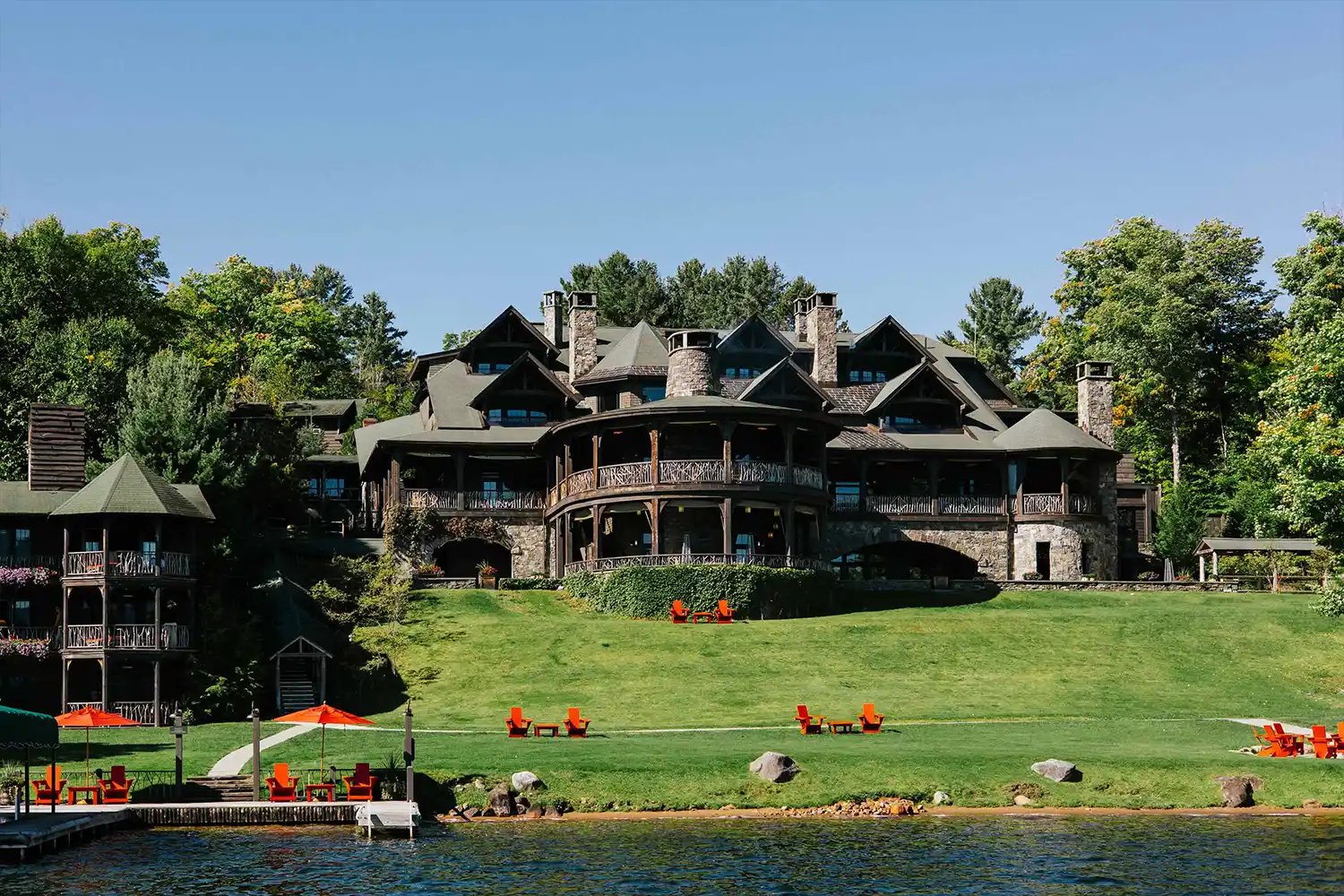
Historically, the American lakeside retreat emerged from the late 19th and early 20th-century “Great Camp” movement. Wealthy industrialist families sought escape from the soot and social density of burgeoning cities, building expansive, log-and-stone complexes in the Adirondacks, the Rockies, and the Sierras. These camps were designed as bastions of self-sufficiency, often requiring their own power generation, food production, and internal transport.
This historical lineage is critical because it established a specific aesthetic and operational baseline. The “rustic-luxe” vernacular that dominates today—exposed timbers, massive stone hearths, floor-to-ceiling glass—is a direct evolution of that era. However, the modern iteration has shifted. We have moved from the self-sufficient compound to the hyper-connected, high-service resort. Today’s top properties occupy a middle ground: they must offer the illusion of total isolation while maintaining the technological connectivity and service responsiveness required by a contemporary global traveler.
Conceptual Frameworks and Mental Models
To categorize and evaluate these properties, we utilize specific mental models:
-
The Privacy-Accessibility Matrix: This framework measures a property based on its distance from major transit hubs versus the level of privacy maintained on-site. The highest-tier resorts optimize for “forced arrival,” where the journey into the property is an intentional decoupling from the outside world.
-
The Seasonality Sensitivity Model: Lakeside environments are often binary; they are either peak-season magnets or off-season ghost towns. The “best” resorts are those that design their operational model to be seasonally agnostic, ensuring the value proposition holds steady regardless of whether the lake is a summer swimming destination or a frozen winter landscape.
-
The Sensory Integration Index: This evaluates how the architecture interacts with the water. Does the design prioritize the visual (static views) or the experiential (sound, breeze, access)? Top properties treat the water as a noise-management tool, a lighting element, and a recreational asset simultaneously.
Key Categories or Variations
When curating a list of the best lakeside luxury resorts in the us, one must categorize them by their primary operational “mood.” This table delineates the common categories and their trade-offs.
| Category | Primary Focus | Service Style | Best For |
| Alpine/Mountain | Wellness & Adventure | High-touch, guided | Deep renewal, high-activity |
| The Historic Compound | Heritage & Legacy | Subtle, historical | Legacy travelers, history buffs |
| The Modern Minimalist | Architectural Purity | Invisible, tech-integrated | Solitude, design-focused |
| The Hybrid Waterfront | Social & Event | High-visibility, active | Corporate, group travel |
These categories dictate not just the architecture, but the type of luxury provided. An alpine resort in the Tetons will prioritize thermal recovery and guide services, whereas a historic compound in the Northeast will prioritize library spaces, fire-side service, and fine dining.
Detailed Real-World Scenarios
Scenario 1: The Executive Reset.
A high-net-worth individual requires a one-week stay with zero interruptions. The failure mode here is “social intrusion.” A property that relies on high-turnover guest interaction (weddings, conferences) will fail. The successful candidate property utilizes an “all-suite” or “private cabin” layout where staff interaction is handled through discreet service portals rather than central hallways.
Scenario 2: The Multi-Generational Legacy Trip.
Families often travel with varying degrees of mobility and interest. The constraint here is “varied engagement.” A resort that is strictly “wilderness adventure” will isolate the elder members. The best properties in this category utilize a tiered amenity structure, offering high-exertion guided hikes alongside high-comfort, low-impact waterfront relaxation zones.
Scenario 3: The Seasonal Weather Event.
Lake environments are prone to rapid weather shifts. A retreat that relies solely on outdoor dining and water sports as its primary value proposition faces catastrophic revenue risk during “off” weather. The most resilient resorts have internal, architectural, and culinary ecosystems that allow the guest to experience the “lake energy” from a climate-controlled, high-comfort environment when the weather does not permit outdoor activity.
Planning, Cost, and Resource Dynamics
Evaluating the investment requires looking at the “Total Cost of Experience.” This extends beyond the nightly room rate.
-
Direct Costs: Room rate, resort fees, mandatory dining plans.
-
Indirect Costs: Private transfer from major regional airports (often necessary for remote lakeside locations), specialized gear rental (if the resort does not provide it), and guide gratuities.
-
Opportunity Cost: The time value of travel. Many luxury lakeside resorts are “destination resorts,” requiring significant travel time from major hubs.
| Cost Component | Range (Est. Per Trip) | Variability Factor |
| Lodging | $1,200 – $5,000+ / night | High (Seasonality) |
| Logistical Transport | $500 – $2,500 | High (Distance/Privatization) |
| Amenity/Activity Spend | $200 – $1,000 / day | Medium (Curated vs. Self) |
Tools, Strategies, and Support Systems
For those tasked with selecting the destination, the following strategies apply:
-
The “Staff-to-Guest” Ratio Audit: Do not look at the advertised ratio. Look at the staff turnover rate, if available via industry reports. High turnover in remote locations correlates directly to service inconsistency.
-
The “Sustainability of Water” Check: Research how the property manages its lake frontage. Are there private docks? Is the shoreline pristine? Resorts that over-develop their shoreline often suffer from long-term erosion and noise pollution, degrading the experience.
-
Digital Decoupling Infrastructure: Does the property offer seamless connectivity for when it is needed, but robust “off-switch” capabilities for when it is not? The best properties allow the guest to control their digital environment entirely.
-
Supply Chain Transparency: Do they source locally? High-end lakeside resorts that rely on importing 100% of their food from urban centers often struggle with freshness and environmental consistency.
Risk Landscape and Failure Modes
The primary risks inherent in this asset class include:
-
Environmental Degradation: The lake itself is the product. If the resort fails to manage the ecosystem (algae blooms, shoreline erosion, over-fishing), the product loses value.
-
Service Drift: Remote locations make it difficult to attract and retain top-tier hospitality talent. Properties that do not provide on-site housing or a robust company culture often suffer from “service drift,” where the staff is well-intentioned but inadequately trained.
-
Systemic Fragility: In remote areas, utility grids are often less stable. The best properties have triple-redundancy on power, water purification, and waste management. A failure here is not just an inconvenience; it is a total collapse of the luxury value proposition.
Governance, Maintenance, and Long-Term Adaptation
Properties that sustain their reputation over decades do so through rigorous maintenance cycles. This includes:
-
Review Cycles: Active solicitation of feedback from “repeat guests,” not just online review aggregators, which are prone to bias.
-
Adjustment Triggers: A well-governed property has clear metrics (e.g., occupancy rates, guest satisfaction scores, facility wear-and-tear) that trigger capital expenditure.
-
Layered Checklists: The maintenance staff at a superior lakeside property follows a checklist that includes not just room cleanliness, but “vista management”—pruning trees to maintain lines of sight, clearing debris from the shoreline, and monitoring dock integrity.
Measurement, Tracking, and Evaluation
How does one determine if a stay was successful?
-
Leading Indicators: The ease of the pre-arrival booking process and the specificity of the pre-arrival questionnaire. If they know your preferences before you arrive, they have the systems in place to deliver.
-
Lagging Indicators: The “re-booking intent.” In the luxury sector, the primary metric of success is the percentage of guests who return to the same location, not just for the destination, but for the specific property.
-
Documentation: Maintain a personal travel log. Record not just the cost and the dates, but the “service friction points”—the moments where you had to ask for something twice, or where the environment did not meet the promise of the marketing.
Common Misconceptions and Oversimplifications
-
“More Expensive is Better”: Price is often tied to real estate value and land scarcity, not necessarily service excellence.
-
“The View is the Product”: A view is a feature, not the product. The product is the ability to enjoy that view without discomfort.
-
“All Lakes are Quiet”: Many lakes are high-traffic hubs for motorized boating. Research the acoustic footprint of the lake before booking.
-
“Online Photos are Reality”: Wide-angle photography can mask the proximity of other guests, the presence of public infrastructure, or the age of the facilities.
-
“Sustainability is Just Marketing”: True luxury resorts in fragile ecosystems are deeply invested in sustainability because their existence depends on the health of the lake. If they are not vocal about conservation, they are likely extractive.
-
“The Best Resorts are Always Remote”: Proximity to a regional airport can actually enhance a short-trip luxury experience by reducing transit fatigue.
Ethical, Practical, and Contextual Considerations
The ethical dimension of lakeside luxury is centered on land use. These resorts consume immense resources in regions that are often ecologically sensitive. The consumer has a responsibility to evaluate whether the property engages in meaningful conservation. Does the resort use the lake as a resource, or does it contribute to the lake’s longevity? Investigating the property’s relationship with local municipal water boards and environmental agencies often reveals the truth behind their marketing brochures.
Conclusion
Evaluating the best lakeside luxury resorts in the us requires moving past the aesthetic and into the operational. The properties that endure—the ones that truly qualify as flagship assets—are those that successfully navigate the complex tension between the wild, unpredictable nature of a lake and the rigid, high-performance requirements of modern luxury. They are not merely hotels; they are carefully engineered environments designed to facilitate a specific, inward-facing human experience. When selecting your next destination, prioritize the systems, the history, and the environmental integrity of the location over the superficial gloss of high-resolution imagery. Securing a stay at one of the best lakeside luxury resorts in the us is, ultimately, an investment in the quality of your own silence and reflection.