Luxury Resort Catering: A Strategic Guide to Operational Excellence
The intersection of high-concept gastronomy and remote-location logistics creates one of the most demanding environments in the hospitality sector. When an event is staged within a luxury resort, the expectation is not merely that the food will be exceptional; the expectation is that the entire delivery mechanism will be seamless, regardless of the geographic constraints or the limitations of local infrastructure. This is where the selection of top luxury resort catering options transitions from a simple menu-planning exercise into a sophisticated exercise in project management and supply chain engineering.
Traditional banquet service relies on the stability of a city-based supply chain. Conversely, destination luxury resort catering necessitates a complex orchestration of talent, ingredient sourcing, and thermal regulation in environments often ill-equipped for such precision. The challenge lies in maintaining a standard of service that rivals metropolitan fine dining while operating in isolation. This requires a shift in perspective, moving away from purely culinary considerations toward an analysis of the total operational architecture required to execute a large-scale, high-touch event under variable conditions.
Achieving this requires a granular understanding of how internal and external catering teams interact with the resort’s existing infrastructure. The goal is to avoid the friction between the venue’s static capabilities and the transient needs of the specific event. As high-net-worth clients and corporate planners demand increasingly bespoke experiences, the margin for error narrows, necessitating a deep dive into the systems, risks, and methodologies that define the elite tier of resort hospitality.
Understanding “top luxury resort catering options”
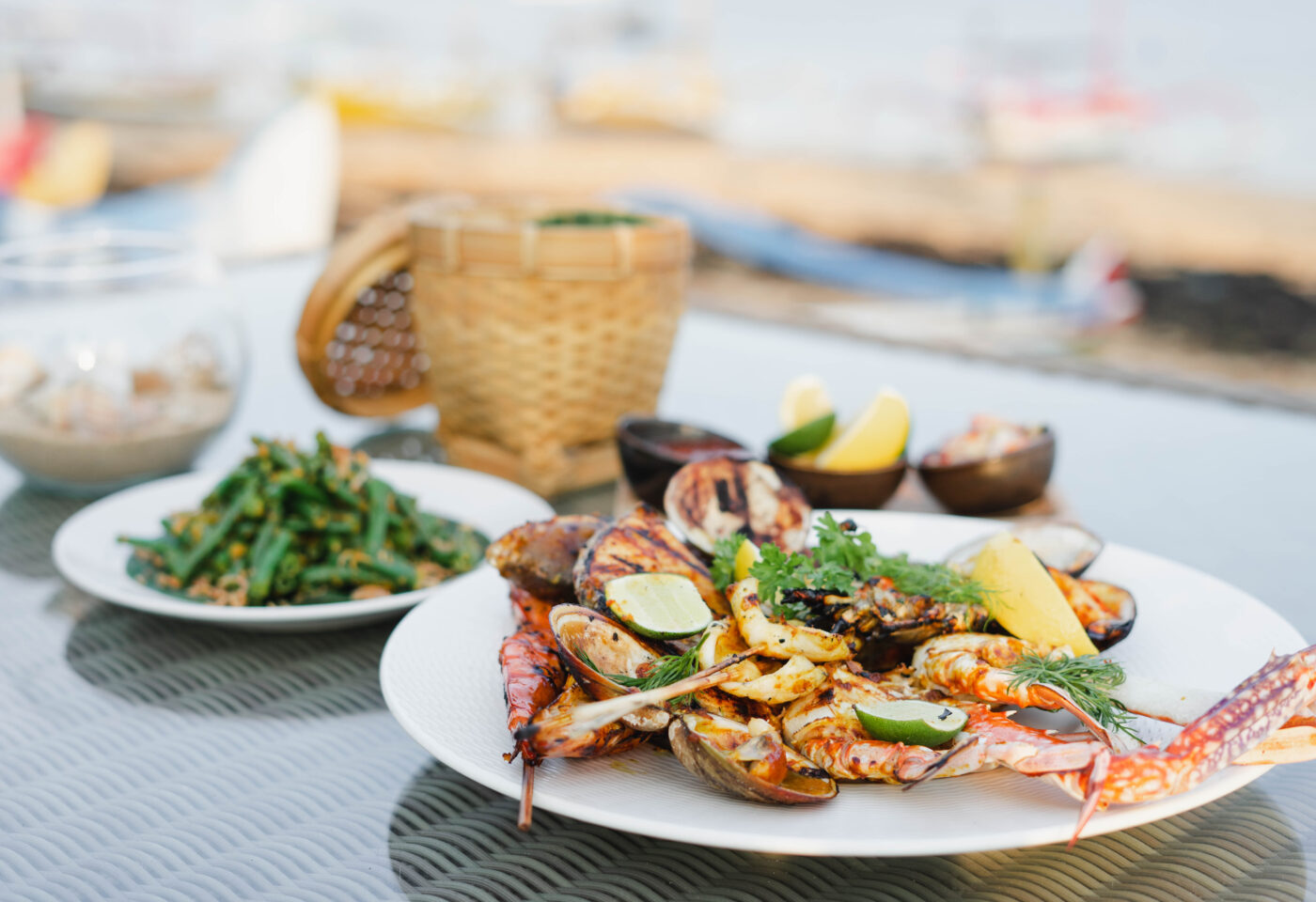
The nomenclature surrounding this subject is often fraught with ambiguity. When planners investigate the best culinary services, they often conflate “catering” with “restaurant management.” In the resort context, these are fundamentally different disciplines. The former is inherently mobile, event-specific, and duration-limited, whereas the latter is sedentary and continuous. Understanding top luxury resort catering options requires viewing the service as an agile, temporary pop-up restaurant designed to meet a specific, high-stakes brief.
The common misunderstanding here is the belief that quality is purely a function of the chef’s reputation. While talent is a prerequisite, it is insufficient without the supporting logistics—what we might term “culinary infrastructure.” This encompasses everything from the cold-chain integrity required to transport ingredients to remote island locations to the specialized service equipment necessary to maintain plate temperature in humid or high-altitude environments. When evaluating these options, one must look beyond the proposed menu to the operational pedigree of the provider. Are they a brand-affiliated team utilizing the resort’s existing kitchens, or are they an external, high-end agency bringing their own specialized staff and equipment? This distinction defines the boundary between a predictable, high-quality event and one prone to logistical failure.
Deep Contextual Background
The evolution of luxury resort dining has moved rapidly from standardized, tiered banquet packages toward hyper-personalized, farm-to-table narratives. Decades ago, resorts operated on a volume-based model: high-turnover buffets and pre-set menus that minimized labor costs and maximized predictability. The systemic shift occurred alongside the globalization of culinary luxury, where guests began to expect the same quality in a remote archipelago as they would receive in a major financial hub.
This transformation forced a bifurcation in how resorts handle food service. Many properties realized that their internal kitchen staff, optimized for day-to-day guest operations, lacked the bandwidth to manage massive, high-specification events. Consequently, the industry witnessed the rise of specialized event catering agencies that operate in a “parasitic” but symbiotic relationship with resorts—they utilize the facility’s bones but bring their own operational soul. This historical pivot dictates the current landscape, where the primary tension is no longer about the food itself, but about the control, safety, and scalability of the delivery system.
Conceptual Frameworks and Mental Models
To effectively analyze and select catering providers, one must apply rigorous mental models rather than relying on brochures or marketing materials.
-
The Infrastructure Friction Model: This framework posits that the quality of catering is inversely proportional to the amount of adaptation required to fit the venue. If the kitchen requires significant retrofitting to accommodate the chef’s vision, the risk of failure increases exponentially.
-
The Talent Density Ratio: High-end catering relies on specialized roles (sommeliers, pastry chefs, service captains). Evaluate the ratio of specialized staff to the total headcount. A provider that relies on temporary, general-labor staffing for a luxury event is a primary failure point.
-
The Last-Mile Supply Chain Audit: For remote luxury resorts, the ability to secure fresh, high-end ingredients is the ultimate bottleneck. This model forces a focus on the provider’s relationship with local and regional purveyors rather than their reliance on global air-freight, which is inherently fragile.
Key Categories or Variations
When surveying the landscape of top luxury resort catering options, it is helpful to categorize providers by their operational model. Each carries distinct trade-offs.
| Category | Operational Focus | Primary Advantage | Primary Risk |
| In-House Executive Team | Leverages existing resort assets | Seamless integration with venue | Limited bandwidth; staff fatigue |
| Boutique External Agency | Specialized, high-touch talent | Culinary innovation & visual flair | Integration friction with resort staff |
| Global Brand Partner | Standardized corporate excellence | Extreme consistency and reliability | Lack of local or bespoke character |
| Hybrid Bespoke Model | Local producers + external chef | Unique, narrative-driven menus | Complex logistics; multi-vendor coordination |
Determining the right choice requires a realistic assessment of the event’s constraints. An internal team is almost always the safest bet for high-volume corporate gatherings where institutional knowledge of the resort is paramount. Conversely, for a milestone luxury event (e.g., a multi-day destination wedding), the boutique external agency model often delivers the creative output necessary to justify the high-end cost structure.
Detailed Real-World Scenarios
The Remote Island Summit. The constraint here is complete isolation. There is no local market to source last-minute supplies. The decision logic must favor an in-house team that has already optimized the shipping routes and storage capabilities of the resort, supplemented by a high-end external pastry and beverage consultant to elevate the offering. The failure mode here is a supply chain breakdown; the second-order effect is a compromise in food safety.
The Urban/Coastal Corporate Gala. Here, the luxury resort is well-connected to the mainland. The decision logic shifts toward the boutique external agency. The resort infrastructure is excellent, but the corporate client requires a specific visual and service aesthetic that the internal team may not be trained to deliver. The friction point is the interaction between the agency’s staff and the hotel’s unionized or permanent workforce.
The Ultra-High-Net-Worth Milestone. This scenario demands extreme exclusivity. The choice is a bespoke hybrid model. An external celebrity chef or specialist caterer is flown in, but they are supported by the resort’s operational team. The decision point is the control of the “back of house”—the external team must have full autonomy to prevent operational dilution.
Planning, Cost, and Resource Dynamics
The financial structure of top luxury resort catering options remains surprisingly opaque to many planners. Costs should be decomposed into three primary buckets: direct food and beverage, labor/specialist talent, and logistical overhead.
-
Direct Costs: These are linear. They scale with headcount and menu complexity.
-
Specialist Labor: These are non-linear. The cost of bringing in a high-level service captain or a specialized sommelier often carries a fixed “daily rate” that is unaffected by headcount.
-
Logistical Overhead: This includes the “invisible” costs—refrigerated transport, specialized kitchen build-outs, and the insurance premiums required for remote event catering.
| Cost Component | Typical Allocation | Variability Level |
| Ingredients/Food | 30% – 40% | Moderate |
| Labor (Direct) | 25% – 35% | High |
| Specialized Equipment/Logistics | 10% – 20% | Very High |
| Administrative/Management Fee | 10% – 15% | Low |
Tools, Strategies, and Support Systems
-
The Tech Stack for Thermal Management: Demand proof of thermal regulation protocols. This includes the use of hot-holding cabinets and blast chillers that are separate from the resort’s standard guest service units.
-
The “Staff-to-Plate” Ratio: In luxury catering, this is the definitive metric. For a seated dinner, a ratio of one server per 8 to 10 guests is standard. Anything higher indicates a degradation of service quality.
-
Operational SOP Documentation: Require a physical, written copy of the Standard Operating Procedures for the event. If the caterer cannot articulate their SOPs for fire safety, service flow, and contingency management, they lack the maturity for top-tier operations.
Risk Landscape and Failure Modes
The primary risk in luxury resort catering is not the food quality—it is the supply chain fragility. The “Last Mile” is where most operations falter. If an event is taking place in a remote location, the entire event is dependent on the integrity of the cold chain from the airport to the resort’s service area.
Secondary risks include:
-
The “General Labor” Trap: Utilizing low-skilled resort staff for high-level service tasks. This leads to inconsistency in presentation and poor knowledge of the menu.
-
Power Instability: High-end kitchens require significant load. If the resort’s grid is at capacity, the catering equipment can trip breakers, leading to disastrous equipment downtime.
-
Talent Burnout: Managing a high-pressure event requires stamina. If the planning phase underestimates the labor hours, the execution phase will suffer from diminishing returns in service quality.
Governance, Maintenance, and Long-Term Adaptation
Governance of a catering operation requires a clear “Command and Control” structure. For major events, this is achieved through a daily briefing cycle.
-
Pre-Event Review (T-Minus 30 Days): Finalize all procurement and confirm that specialized equipment is already en route.
-
Operational Stress Test (T-Minus 48 Hours): Test all critical equipment (ovens, chillers, POS systems) under simulated load.
-
The Debriefing Cycle (Post-Event): This is the most neglected aspect. A formal review of the event, focusing on timing variances and waste metrics, creates the institutional knowledge necessary to refine future operations.
Measurement, Tracking, and Evaluation
Evaluating the success of these operations requires moving beyond qualitative sentiment.
-
Waste Metrics: A high-end caterer should track food waste by weight and category. Excessive waste is a leading indicator of poor planning or over-ordering.
-
Service Velocity: Monitor the time elapsed between the kitchen pickup and the arrival at the guest table. This is a critical quantitative signal of service efficiency.
-
The “Recovery” Rate: How quickly does the team respond when a guest requests an unplanned change (e.g., a dietary substitution)? This tracks operational flexibility.
Common Misconceptions and Oversimplifications
-
Myth: “The most expensive caterer is the best.” Correction: High cost often correlates with brand exclusivity, not operational resilience. Look for the provider with the most robust logistical track record.
-
Myth: “I don’t need to worry about the kitchen; the hotel has one.” Correction: A hotel’s daily kitchen is rarely equipped for high-specification banquet service. Always verify the physical capacity of the catering equipment.
-
Myth: “Dietary restrictions are a menu issue.” Correction: Dietary restrictions are a cross-contamination and inventory issue. The best providers treat them as an operational procedure, not a creative challenge.
Ethical and Contextual Considerations
The luxury hospitality industry increasingly faces scrutiny regarding its environmental footprint. Top-tier providers now integrate “cradle-to-grave” waste management, ensuring that organic matter is composted locally and single-use plastics are eliminated. Furthermore, the sourcing of ingredients should align with the local economy. A truly premium caterer demonstrates this by showcasing partnerships with local artisans, adding narrative depth to the menu while reducing the carbon footprint of transport.
Conclusion
Identifying the optimal top luxury resort catering options requires a shift from viewing the provider as a vendor to viewing them as a logistical partner. Success is defined by the absence of noticeable friction. The best caterers are those who view the resort’s inherent constraints—the location, the infrastructure, the climate—as elements to be engineered around, not excuses for diminished quality.