Best Luxury Resorts in the US: A Structural Guide for Experts
The definition of luxury in the American context has undergone a profound evolution. Where mid-century hospitality emphasized grand architecture and standardized, opulent service as the primary markers of quality, the contemporary landscape demands something more elusive: environmental control, radical privacy, and, above all, operational resilience. The traveler who seeks the pinnacle of American hospitality is not merely looking for a room with high thread-count sheets; they are searching for a curated ecosystem that facilitates a specific, high-value outcome—be it deep rest, intense professional restoration, or multi-generational connection.
The difficulty in identifying the best luxury resorts in the us arises from the fact that the domestic market is decentralized and highly idiosyncratic. Unlike European luxury, which is often tied to historical heritage, or Asian luxury, which is rooted in distinct service philosophies, the American experience is defined by the geography of its retreats. From the high-altitude, wellness-focused enclaves of the Rocky Mountains to the reclaimed coastal heritage sites of the Atlantic seaboard, the variation is absolute. A universal standard for “best” does not exist; there are only standards of operational integrity that separate the genuinely world-class properties from those that merely leverage the aesthetic trappings of wealth.
To approach this subject with the necessary rigor, one must abandon the reliance on consensus-driven review platforms and marketing imagery. These are lagging indicators that fail to capture the current state of a property’s management, staffing, and physical plant. Instead, the analytical traveler must treat the reservation process as an exercise in asset management. By understanding the structural forces that make a property successful, one can reliably identify the properties that deserve their status as the best luxury resorts in the us.
Understanding “best luxury resorts in the us”
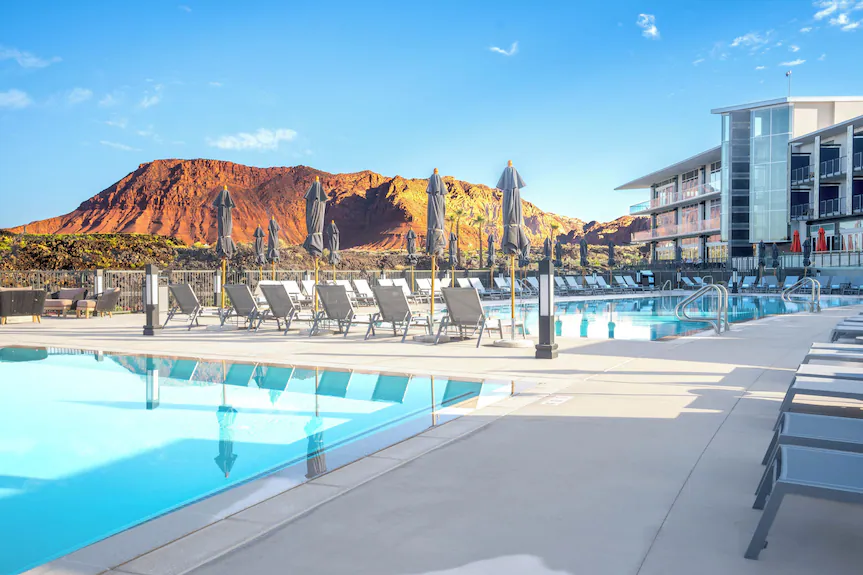
The term “best” is, by necessity, a shorthand for “most operationally consistent.” The confusion regarding best luxury resorts in the us often stems from a conflation of price with performance. High rates are frequently mistaken for a guarantee of quality, when in reality, they are often a reflection of marketing spend and prime geographic location. A property can be astronomically priced yet operationally fragile, prone to staff turnover, deferred maintenance, and the dilution of service standards.
Oversimplification is the greatest risk in this analysis. Many travelers classify properties by brand or affiliation, assuming that a global chain standardizes the experience across all its assets. This is an erroneous mental model. The true “best” properties are those that have successfully navigated the tension between scaling their operation and maintaining the intimacy of the guest experience. They are properties that have moved beyond the transactional—where the guest is a consumer—to the relational, where the guest is a stakeholder in the resort’s ongoing lifecycle.
To understand where these properties reside, one must look at the intersection of three factors: the quality of the physical infrastructure, the depth of the local labor talent pool, and the continuity of the management team. When these factors align, the result is an environment of profound reliability. This reliability is the defining characteristic of the best luxury resorts in the us.
Deep Contextual Background
The American luxury market has moved through distinct phases of development. The late 19th and early 20th centuries were the era of the “Railway Resort”—massive, architecturally dominant structures built at the terminus of major train lines. These were the first true American luxury experiences, defined by their isolation and their ability to function as self-contained micro-cities.
The post-war era introduced the “Corporate Resort,” characterized by mid-century modern design and the standardization of service. This was the era that birthed the modern hospitality industry’s obsession with metrics, consistency, and the franchise model. While this improved accessibility, it eventually led to a homogenization of the high-end experience, where a resort in Vermont felt operationally identical to a resort in Arizona.
We are currently in a post-standardization phase. The most successful properties—the ones that earn the moniker of being the best luxury resorts in the us—are those that have rejected the mass-market franchise model. They are properties that have re-engaged with the “place” of their location, focusing on deep integration with local resources, local talent, and local culture. This is not a return to the past, but a maturation of the industry, where the most valuable assets are the ones that cannot be replicated.
Conceptual Frameworks and Mental Models
Navigating the American luxury sector requires models that prioritize functional performance over aesthetic appeal.
-
The Resilience-Fragility Spectrum: A resilient resort maintains its service levels regardless of external pressure—peak seasons, staff turnover, or regional weather events. A fragile resort collapses under the slightest load. The goal is to identify properties with deep “operational buffers.”
-
The Institutional Memory Model: Luxury is built on memory. The best properties are those that possess a sophisticated CRM and, more importantly, a staff that values the transfer of guest knowledge. If you have to repeat your preferences, the property lacks institutional memory.
-
The Place-Integration Metric: Does the resort source its talent, food, and energy from the local ecosystem, or is it an imported island of luxury? The most durable properties are those deeply rooted in their geography.
Key Categories or Variations
To choose the “best,” one must define the category of excellence.
| Category | Archetype | Primary Value Proposition | Operational Risk |
| Wilderness/High-Altitude | The Ranch at Rock Creek | Extreme environmental immersion | Seasonal fragility |
| Coastal/Heritage | The Cloister at Sea Island | Stability, legacy service, tradition | Institutional inertia |
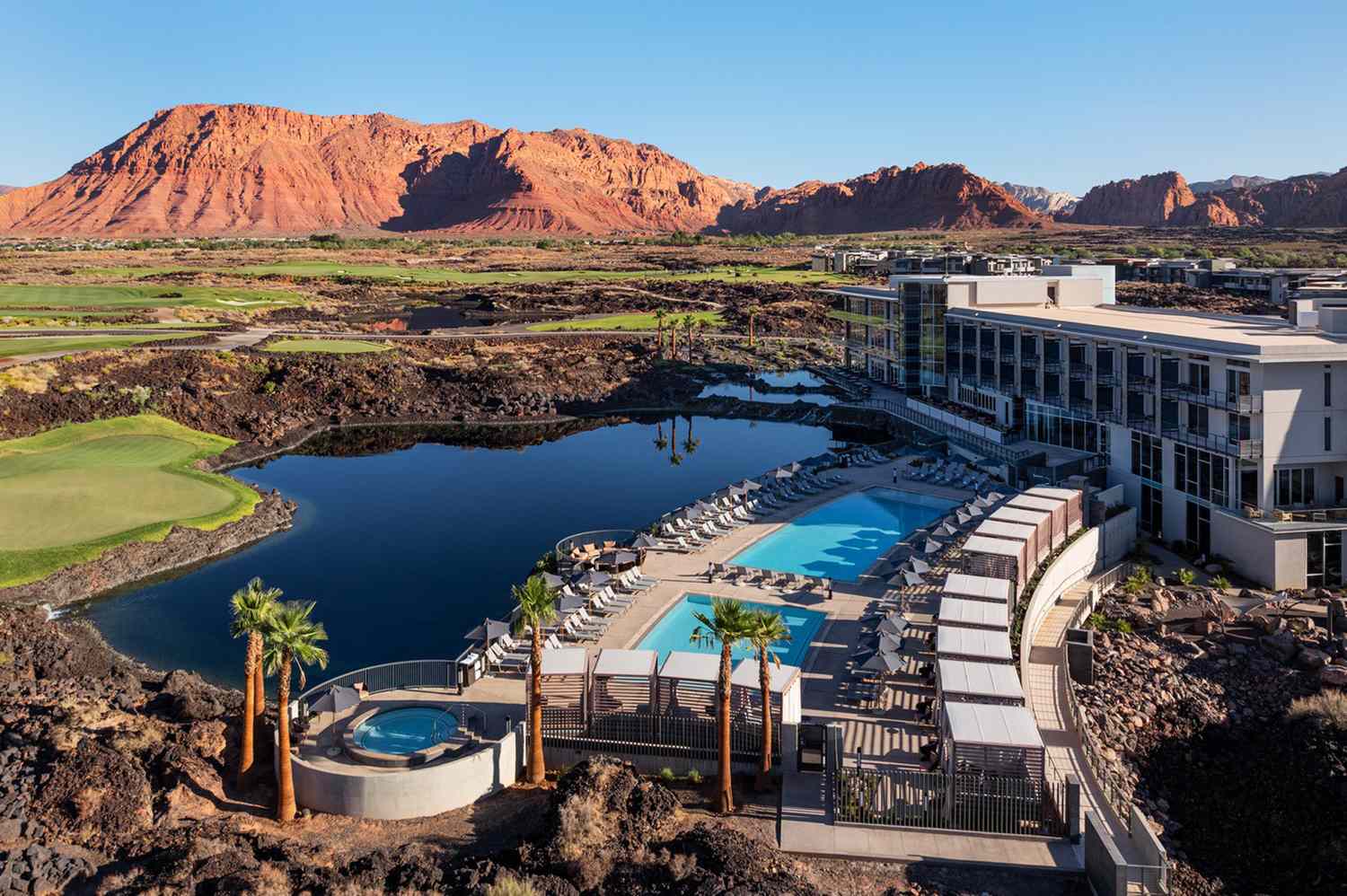
| Desert/Wellness | Miraval or Amangiri | Specialized physiological restoration | Narrow operational focus |
| Urban/Sanctuary | The Aman New York | Immediate access + absolute enclosure | External environmental noise |
| Regional/Cultural | Blackberry Mountain | Local authenticity + luxury integration | Supply chain dependency |
Realistic decision logic dictates that the “best” choice is the one that aligns with your specific intent. If the goal is biological restoration, an urban sanctuary is fundamentally the wrong asset class, regardless of its ranking on any list.
Detailed Real-World Scenarios
Scenario 1: The Multi-Generational Legacy Trip
The constraint is the heterogeneity of needs—toddlers, seniors, and active adults. The decision point is the property’s “hub-and-spoke” service model. Does the property have the infrastructure to support independent enclaves for different age groups while maintaining centralized management? Failure mode: Misaligned service expectations. Second-order effect: Constant interpersonal friction between the family and the staff.
Scenario 2: The Executive Deep-Work Sprint
The constraint is zero tolerance for operational failure and absolute privacy. The strategy involves auditing the resort’s digital infrastructure and quiet zones. The decision point is whether the resort can facilitate a “non-interrupted” workflow. Failure mode: A resort that insists on “high-touch” interaction when the guest requires high-tech solitude.
Scenario 3: The Seasonal Transformation
A traveler desires access to a “bucket-list” property. The failure mode is attempting to visit during peak demand, which dilutes the exclusivity of the experience. The solution is the “shoulder-period pivot”—identifying the weeks at the beginning or end of the season where infrastructure is fully operational but demand is tapering.
Planning, Cost, and Resource Dynamics
The economic management of these stays must shift from a “price-per-night” metric to a “cost-per-usable-night” approach.
| Cost Element | Variability | Strategic Mitigation |
| Accommodation | High (Seasonal) | Use shoulder-season booking windows |
| Logistics | Moderate | Pre-negotiate private transport rates |
| Experience Curation | Variable | Institutionalize gratuities via pre-payment |
| Friction/Time | Extreme | Target properties with local infrastructure dominance |
Opportunity cost is the silent metric. If a resort requires you to spend three hours a day navigating their bureaucratic processes, the cost of that stay is significantly higher than the room rate suggests. When you analyze what constitutes the best luxury resorts in the us, calculate the total “friction tax” of each property.
Tools, Strategies, and Support Systems
-
The Pre-Arrival Audit Email: Send a detailed, non-standard request 14 days out. If the response is template-based, the property’s management is standardized. If it is human-centric and solution-oriented, the property is operationally mature.
-
The “Fixer” Relationship: Cultivate a relationship with a single, high-authority individual at the property. This is your primary point of failure mitigation.
-
CRM Utilization: If the property does not have a formal guest profile system that they can demonstrate to you, they do not have the institutional memory to manage your long-term needs.
-
Network Mapping: Inquire about the property’s local partnerships. A resort that integrates with its local environment is structurally stronger than an “island” property.
Risk Landscape and Failure Modes
Even the most prestigious properties suffer from systemic degradation.
-
Management Churn: High turnover in General Managers is the leading indicator of declining service quality.
-
The “Luxury-lite” Drift: This occurs when a property tries to maintain high margins by cutting back-of-house staff. The decline is usually invisible until it hits the guest-facing experience.
-
Deferred Maintenance: A resort that is “redecorating” but not “maintaining” (i.e., new paint but broken HVAC) is in decline.
-
Algorithmic Dependence: If a resort has outsourced its revenue management to a third-party algorithm, its pricing and availability will become irrational and customer-hostile.
Governance, Maintenance, and Long-Term Adaptation
Treat your travel as a portfolio. Conduct an annual review of your travel history. Which properties delivered on their operational promise? Which ones required too much management effort from you?
Create a “Resort Audit Checklist” for every departure. Note the responsiveness to minor requests, the consistency of the staff, and the state of the infrastructure. If a property fails two years in a row, it is time to divest and remove it from your approved list. This rigor prevents the accumulation of mediocre experiences in your travel history.
Measurement, Tracking, and Evaluation
Do not rely on sentiment-based reviews (e.g., “the staff were nice”). Rely on operational data:
-
Resolution Latency: The time from your request for a minor service (e.g., extra linens, reservation change) to fulfillment.
-
Data Fidelity: How often did you have to repeat a preference? If it is greater than zero, the property’s backend is failing.
-
Predictive Capability: Did the staff anticipate a need before you stated it? (The gold standard).
-
Re-do Rate: How often was a service performed incorrectly on the first attempt?
Common Misconceptions and Oversimplifications
-
“Booking direct is always better.” For massive chains, yes. For ultra-luxury estates, a well-placed intermediary can often secure “off-market” inventory that the direct channel hides.
-
“Loyalty programs provide meaningful upgrades.” In the ultra-luxury tier, loyalty points are often a distraction. Focus on the relationship with the property, not the points.
-
“All-inclusive is inherently low quality.” High-end all-inclusive models actually reduce transactional friction, which can enhance the feeling of true relaxation.
-
“The most expensive room is the best.” Often, the highest-category room is the most heavily marketed and least “service-optimized” unit in the property.
Ethical, Practical, and Contextual Considerations
The luxury traveler has an implicit responsibility to understand the ethics of the property’s operation. The best resorts are those that integrate with their local community—not through performative charity, but through local employment and sustainable resource management. When deciding which properties to frequent, evaluate their labor practices. A resort with high turnover is almost certainly failing to provide the stability required for long-term, high-quality service delivery.
Synthesis and Conclusion
The search for the best luxury resorts in the us is not a search for a static list of names. It is a search for operational excellence, structural integrity, and environmental harmony. By moving away from reactive booking and toward proactive curation, the traveler transforms their experience from a transactional event into a high-performance system. The art of selecting a resort requires patience, scrutiny, and an unapologetic demand for operational consistency. It is not merely about finding a place to sleep; it is about establishing a reliable environment that facilitates the specific intent of the journey. The properties that succeed in this endeavor do so because they understand that luxury is not an amenity; it is the absence of friction.