Luxury Vineyard Resorts USA: A Strategic Audit of Terroir-Driven Hospitality
The synthesis of high-end lodging and active viticulture has moved far beyond the simplistic “bed and breakfast” model of the late twentieth century. For the modern, discerning traveler, the expectation is no longer merely proximity to a vineyard, but a profound, immersive integration into the agricultural and operational reality of the land. This shift represents a maturation of the North American market, where guests seek an understanding of place—terroir—mediated through a lens of sophisticated service and architectural intentionality. Consequently, the rising demand for luxury vineyard resorts usa has created a complex market where brand marketing often outpaces actual operational reality.
To navigate this sector requires a departure from standard hospitality metrics. One must evaluate these properties not merely as hotels, but as working agricultural estates that have layered a hospitality business on top of a highly volatile production cycle. The nuances of harvest season, the intricacies of land management, and the difference between estate-owned property and lifestyle-adjacent lodging are critical variables that dictate the quality of the guest experience.
This guide provides a comprehensive framework for the professional evaluation of these estates. It is intended for those who treat travel as an investment in experience and who recognize that the finest vineyard stays are those that balance the rigor of winemaking with the art of refined leisure. The objective here is to move past superficial aesthetic appeal and engage with the structural, economic, and logistical foundations that define true excellence in the vineyard resort category.
Understanding “luxury vineyard resorts usa”
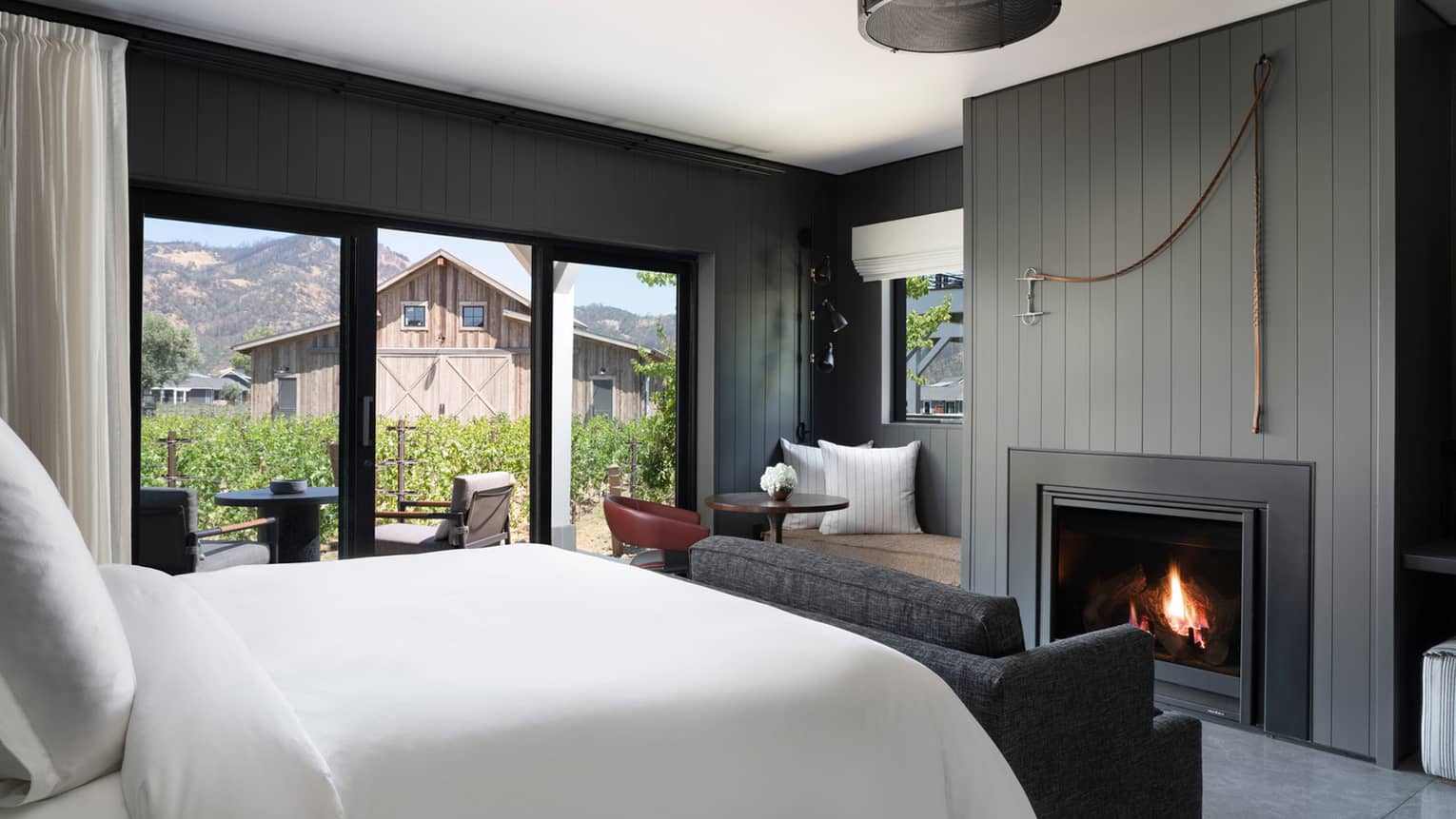
The term is frequently misused. In the digital marketplace, any property located within a ten-mile radius of a winery is often tagged as a vineyard resort, which creates significant information asymmetry for the traveler. Genuine luxury vineyard resorts usa are defined by a specific operational convergence: the accommodation must be structurally or functionally integrated into the estate’s viticultural operations. This means the guest experience is shaped by the cycle of the vine, the timing of the crush, and the specific management philosophy of the winery itself.
Oversimplification is the primary risk here. A common failure mode is assuming that a “luxury” label guarantees a peaceful, bucolic experience. Depending on the estate’s production schedule, a harvest period can involve significant industrial noise, heavy machinery traffic, and operational disruption. Conversely, assuming that all vineyard properties offer extensive educational access is also a mistake; many are purely aesthetic, with no functional link to the winemaking process. To audit these properties correctly, one must look past the room design and interrogate the nature of the relationship between the hotel management and the winery operations.
Deep Contextual Background
The trajectory of viticulture-focused hospitality in the United States has mirrored the broader maturation of the American wine industry. In the 1970s and 1980s, the focus was purely on production; hospitality was an afterthought, often limited to a simple tasting room with minimal amenities. As the Napa Valley and Sonoma regions gained global prestige, the model shifted toward “lifestyle branding,” where estates began to treat their facilities as showrooms for their product.
The current era, however, is defined by the “estate-as-sanctuary” model. This systemic evolution was driven by both consumer demand and a need for wineries to diversify revenue streams against the volatility of agricultural yields. By integrating luxury lodging, estates create a captive audience, ensuring that their high-margin premium labels are consumed in the very environment of their production. While this has resulted in some of the finest lodging options in the country, it has also led to the “corporate-resortification” of some historic estates. Today, the landscape of luxury vineyard resorts usa is diverse, ranging from family-operated boutique retreats to expansive, conglomerate-owned properties that operate with the efficiency and sterility of a global five-star chain.
Conceptual Frameworks and Mental Models
To effectively evaluate these estates, one must employ specific analytical frameworks:
-
The Production-Hospitality Duality: View every property through the tension between production (noisy, seasonal, operational) and hospitality (quiet, consistent, service-oriented). The best properties have found ways to decouple these systems so the guest experience remains pristine.
-
The Harvest Cycle Metric: Evaluate your booking timing against the winery’s calendar. Are you looking for the engagement of the harvest (busy, active, industrial) or the tranquility of the dormancy (quiet, introspective)?
-
The “Estate Integration” Index: How much access does the property actually grant to the winemaking process? Is it a passive view of the vines from a balcony, or is it an active, guided participation in the estate’s operations?
Key Categories or Variations
When analyzing the market, it becomes clear that most luxury vineyard resorts usa operate under one of several distinct structural models.
| Category | Operational Focus | Guest Experience | Risk Factor |
| Estate-Owned Luxury | Integrated Production | High (Direct access) | Corporate oversight |
| Boutique Farmstay | Agricultural Immersion | High (Personalized) | Limited amenities |
| Lifestyle-Adjacent | Leisure & Aesthetics | Moderate (View-based) | Disconnect from wine |
| Conglomerate Managed | Hospitality Efficiency | High (Service-heavy) | Lack of intimacy |
The decision logic is consistent: if the objective is deep viticultural engagement, the Estate-Owned Luxury or Boutique Farmstay models are superior. If the goal is a high-comfort vacation with a wine-country aesthetic, the Lifestyle-Adjacent properties provide the most reliable service floor, albeit with less educational value.
Detailed Real-World Scenarios
Scenario 1: The Oenophile’s Sabbatical. A guest requires deep access to the winemaking process. They seek out a property during the harvest. The risk? Operational noise and staff unavailability due to production demands. The second-order effect is a breakdown in concierge service. The mitigation is selecting a property that separates “guest operations” from “production operations” with distinct staffing.
Scenario 2: The Corporate Strategic Retreat. A firm requires privacy and meeting spaces. They select a high-profile, lifestyle-adjacent vineyard property. The failure mode? The “tourist density.” These properties are often crowded with day-trippers in public tasting areas. The retreat loses its privacy because the estate is optimized for throughput. The lesson is to prioritize estates that offer private, non-public guest-only areas.
Scenario 3: The Wellness Seekers. Guests want to combine vineyard views with spa protocols. They choose an estate focused on wellness. The failure mode is the mismatch between the “industrial” reality of the vineyard (dust, tractors) and the “sterile” requirements of a spa. Successful estates in this category build architectural buffers between these two zones.
Planning, Cost, and Resource Dynamics
The economic structure of a vineyard stay is deceptively complex. The room rate is only the baseline.
-
The Seasonality Premium: Prices can fluctuate by 40-50% between harvest season (peak demand) and winter (low demand).
-
The Hidden F&B Costs: Because these properties are often isolated, the guest is captive to the resort’s dining options, which carry significant markup.
-
Tasting Fees and Access: Even when staying on-site, tastings are rarely complimentary. Factor these into the total cost of the stay.
| Stay Duration | Economic Profile | Strategic Tip |
| 1–2 Nights | Transient / High Margin | Use for aesthetic/relaxation |
| 3–5 Nights | Immersive / Value-based | Negotiate “access” packages |
| 7+ Nights | Residential / Contract-based | Negotiate long-term estate rates |
Tools, Strategies, and Support Systems
-
The “Crush” Check: Always cross-reference your travel dates with the local harvest schedule. If you want peace, avoid these dates. If you want action, schedule around them.
-
The Estate Inquiry: When booking, contact the property’s concierge before confirming. Ask: “Is the guest area physically separated from the production facilities?” This simple question reveals the property’s operational logic.
-
Third-Party Consortia: Utilize premium travel advisors who have “preferred partner” relationships with specific estates. They can often unlock private vineyard tours that are not available to the public or standard booking channels.
Risk Landscape and Failure Modes
The primary risks within the vineyard resort sector are almost always operational.
-
Crop Maintenance: Viticulture involves spraying, weeding, and mechanical maintenance. If the property is not transparent about its agricultural schedule, guests may find themselves disrupted by pesticide application or tractor noise at 5 AM.
-
The Management Shift: Many vineyards outsource their hospitality management to third-party hotel groups. When this relationship fails or changes, the service level of the estate can plummet overnight. Always check who is actually managing the property—the winery family or a separate hotel operator.
-
Insolvency/Ownership Risk: Vineyards are asset-heavy. If the estate faces financial pressure, the hospitality side is often the first to see budget cuts, leading to a degraded guest experience.
Governance, Maintenance, and Long-Term Adaptation
To manage your stay, treat it like an operational project rather than a vacation.
-
Audit the Relationship: During the planning phase, look for reviews that mention the relationship between the hotel staff and the winery team. If the reviews show friction (“the hotel staff didn’t know about the tasting schedule”), the management is not integrated.
-
Adjustment Triggers: If you are planning an extended stay, confirm the “guest-only” protocols. Are there spaces restricted to guests? If not, you will be sharing your property with the general public.
-
Layered Checklist: Confirm internet connectivity (often poor in rural vineyards), cell coverage, and the availability of on-site transport (as these properties are usually isolated).
Measurement, Tracking, and Evaluation
Evaluation is the difference between a high-value stay and a commoditized one.
-
Leading Indicators: The quality of the pre-arrival contact. A high-end vineyard resort should reach out to discuss your interest in wine before you arrive. If they don’t, they are likely selling “room nights,” not “wine country experiences.”
-
Lagging Indicators: The “Service Fidelity” metric—was the service as sophisticated in the morning (breakfast) as it was in the evening (wine service)?
-
Documentation: Keep a ledger of the specific vintages you enjoyed. The best estates track this and will have your preferences ready for your next visit.
Common Misconceptions and Oversimplifications
-
Myth: “All vineyard resorts are sustainable.” Correction: Agricultural practices vary wildly. Some estates use intensive chemical inputs that are not conducive to a wellness-focused stay.
-
Myth: “Staying on-site means I have a private experience.” Correction: Many “luxury” vineyard hotels are actually attached to public-facing tasting rooms. You may have the public on your doorstep.
-
Myth: “Vineyard hotels are quiet.” Correction: The agricultural cycle involves early starts. 5 AM tractor runs are common.
Ethical and Contextual Considerations
The sustainability of the vineyard itself is a critical ethical consideration. High-end hospitality increases the water and energy footprint of the estate. A truly sophisticated traveler will inquire about the estate’s water reclamation systems, their approach to organic or biodynamic farming, and their labor practices. By supporting estates that treat the land with stewardship rather than extraction, the guest participates in the preservation of the landscape, ensuring that these destinations remain viable for future generations.
Conclusion
The selection of luxury vineyard resorts usa is an exercise in discerning the difference between aesthetic dressing and genuine agricultural integration. It requires a traveler to look past the marketing imagery—the perfect sunset over the vines—and interrogate the operational reality of the estate. By focusing on properties where the hospitality is a deliberate, high-touch extension of the land’s viticultural soul, rather than a mere commercial appendage, the traveler can secure an experience that is both intellectually enriching and profoundly restorative. The most successful stays in wine country are those where the guest understands the rhythm of the harvest, respects the labor of the land, and appreciates the complexity of the glass.