Urban Luxury Destinations USA: An Analytical Guide to Elite Travel
The modern city is a friction engine. It is characterized by speed, density, and the relentless pressure of constant interaction. In this environment, the true value of high-end hospitality is not found in the luxury of the appointment—the thread count, the marble finish, or the presence of a soaking tub—but in the ability of a property to suspend the friction of the city. An urban destination that succeeds does so by functioning as a high-performance atmospheric seal. It allows the traveler to inhabit the core of a metropolitan center while simultaneously existing within a meticulously engineered, private ecosystem.
The identification of premier urban luxury destinations usa travelers frequent requires a pivot away from the traditional, tourist-facing criteria. Most travelers approach city hotels as consumers looking for convenience; the sophisticated traveler, however, approaches them as an asset manager looking for reliability. The goal is to identify properties where the management of the human and physical plant is so rigorous that the volatility of the outside city cannot penetrate the guest experience. This is not about the “best” view or the most central location; it is about the operational maturity of the institution.
To treat a city as a luxury destination is to engage with a complex logistical problem. It requires an understanding of how property management interacts with municipal density, how service culture is maintained despite high labor turnover, and how digital connectivity is balanced with the physical need for seclusion. This analysis serves as an audit of the current landscape, providing the tools and mental frameworks necessary to curate a high-performance urban itinerary that remains resilient to the erratic nature of the metropolitan environment.
Understanding “urban luxury destinations usa”
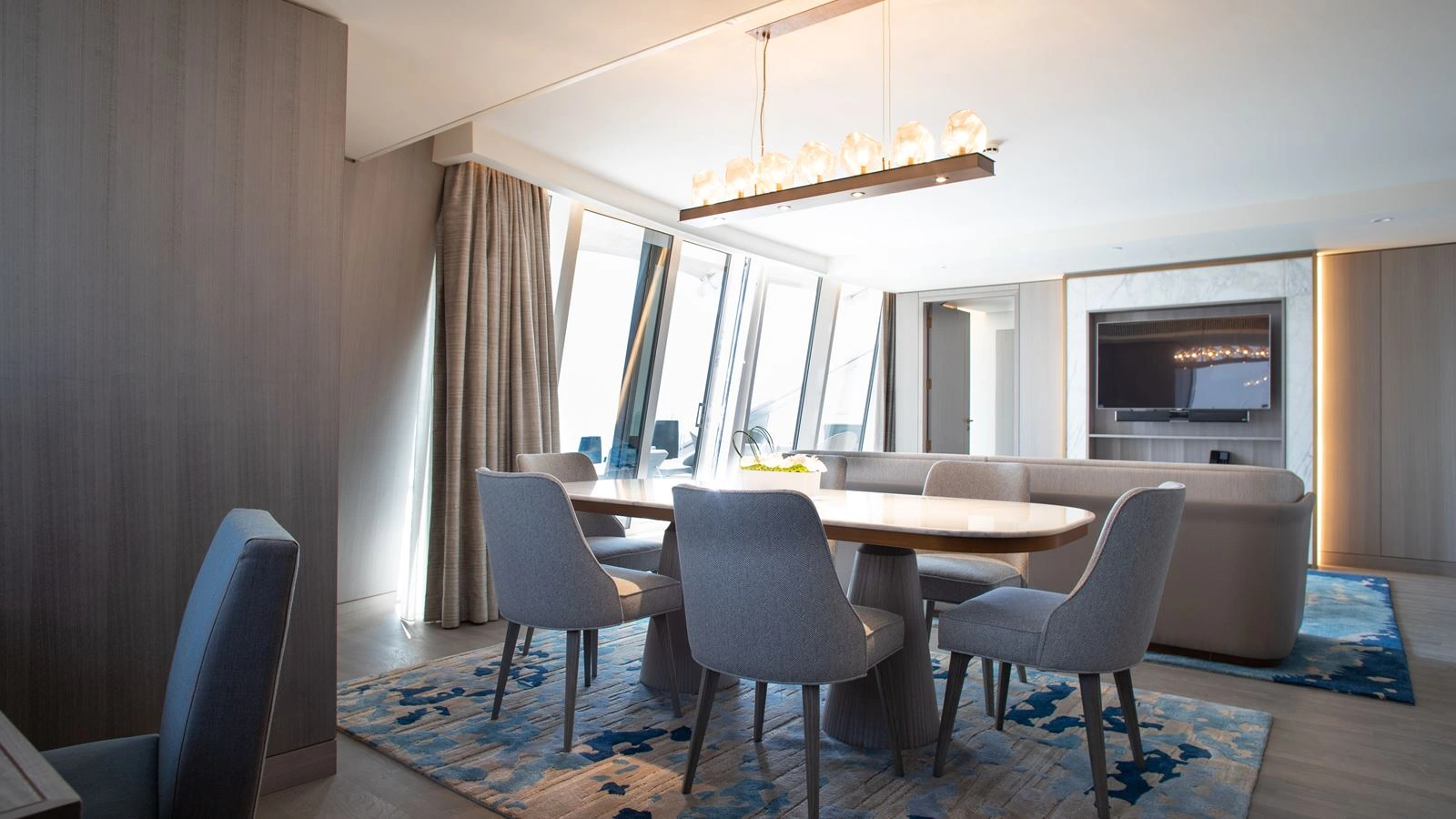
When we classify the urban luxury destinations usa markets prioritize, we are essentially categorizing systems of managed solitude. A common misunderstanding in this space is the belief that luxury is an inherent quality of the building. It is not. Luxury is a function of the service-to-guest ratio and the efficacy of the property’s back-of-house operations. A property with exceptional architecture that suffers from high staff turnover or broken yield-management software is not a luxury destination; it is a high-cost commodity experiencing operational failure.
The oversimplification risk here is profound. Travelers often fall back on brand-affiliation heuristics, assuming that a global flag guarantees a consistent experience. In the urban context, the “brand” is frequently decoupled from the “operator.” The actual quality is determined by the local General Manager and the specific labor pool of the city in question. Consequently, the most sophisticated approach involves auditing the property’s current management trajectory rather than relying on its historical pedigree or public-facing reputation.
To understand these destinations is to recognize the trade-off between accessibility and seclusion. The premier properties are those that offer a “permeable membrane”—they provide immediate access to the cultural, financial, or political pulse of the city, but they allow the guest to retreat behind a barrier of silence, security, and service within seconds. This is the definition of success in the urban luxury sector: the seamless transition between the hyper-active public sphere and the hyper-curated private sphere.
Deep Contextual Background: The Evolution of Hospitality Logic
The history of American urban luxury is a timeline of increasing technological and service complexity. The Gilded Age hotels, such as the Waldorf-Astoria or the St. Regis, were designed as social palaces—monolithic structures where the architecture itself was the primary marker of status. They were destinations in their own right, meant to house the elite within a contained, highly stratified society. The focus was on the grandeur of the space and the visibility of the guest.
Mid-century shifts introduced the era of “Corporate Efficiency.” This period prioritized speed, standardized service, and the integration of the hotel with the business-traveler economy. The aesthetic became more restrained, and the operation became more data-driven. This improved the reliability of these hotels but, in many cases, sanitized the experience. The “personality” of the hotel became a reflection of corporate brand standards rather than local culture.
We are currently in a third era: the era of the “Hyper-Local Curator.” Today’s premier urban luxury destinations usa travelers visit are those that have successfully synthesized the grandeur of the past with the operational efficiency of the corporate era, while adding a new, critical layer: the integration of the local ecosystem. These properties no longer view themselves as isolated fortresses. Instead, they position themselves as the “living room” of their neighborhood, sourcing talent, food, and culture from the surrounding district. This is a return to relevance, where the hotel serves as a gateway to the city’s authentic character rather than a sanitized alternative to it.
Conceptual Frameworks and Mental Models
To effectively evaluate urban luxury, the traveler must adopt specific mental models that bypass the marketing fluff.
-
The Density-Privacy Paradox: The most valuable urban properties are those that exist in the densest parts of the city but provide the highest level of isolation. Evaluate a property based on its “acoustic and visual threshold”—how quickly can you go from the chaos of the street to absolute silence?
-
The Institutional Memory Model: Luxury is a service that remembers. A property that forces you to repeat your preferences—dietary, room temperature, pillow firmness—is a property lacking in internal systems. In an urban environment with high turnover, the ability to maintain a robust Guest History Profile (GHP) is a marker of operational health.
-
The Access-Exclusivity Model: This framework evaluates how a property balances its public-facing functions (restaurants, bars) with its private-guest functions. The best properties separate these streams entirely, ensuring the paying guest is never inconvenienced by the property’s commercial success as a public venue.
Key Categories or Variations
Realistic decision logic dictates that the “best” destination is one that matches the intent of the stay. A high-efficiency business trip requires a property with a mature “Business Core” operational model, whereas a multi-week cultural immersion demands the stability of an “Integrated Residence” or a highly-service-focused “Cultural/Historical” property.
Detailed Real-World Scenarios
Scenario 1: The High-Stakes Negotiation An executive requires a neutral, secure environment to conduct confidential business. The constraints are zero noise, high-speed secure connectivity, and absolute privacy. The decision point is the property’s ability to provide a “private-entry” or “restricted-floor” configuration. Failure mode: A property that focuses on its “vibrant lobby scene,” which inevitably leads to guest-space infiltration by non-guests.
Scenario 2: The Art and Cultural Immersion A traveler visits for a major cultural event (e.g., an art fair). The primary challenge is logistical congestion. The optimal property is one with established “back-door” relationships with local curators and transporters. Failure mode: Relying on the property’s standard concierge, who is often incentivized by commissions rather than by your specific cultural objectives.
Scenario 3: The Urban Long-Stay A family spends three weeks in a city. The goal is to feel like a resident rather than a guest. The failure mode is choosing a property with a high transient turnover, leading to a loss of institutional memory. The second-order effect is having to re-educate the staff every 24 hours. The solution is targeting properties with dedicated “Residences” staff.
Planning, Cost, and Resource Dynamics
The economic management of these trips requires a shift from “nightly rate” thinking to “Total Cost of Experience” (TCOE). When evaluating urban luxury destinations usa travelers often overlook the indirect costs of logistical friction.
Opportunity cost is the silent metric. If a property requires you to spend three hours a day navigating their logistical challenges, the effective cost of your stay is significantly higher than the nightly rate suggests.
Tools, Strategies, and Support Systems
-
The 14-Day Audit: Send a specific, multi-layered inquiry to the property 14 days before arrival. If they respond with a templated email, their internal system is likely brittle. If they respond with a personalized, multi-point plan, they are operationally mature.
-
The Fixer Relationship: Cultivate a relationship with an independent travel designer who possesses direct lines to property management. They are not merely booking agents; they are your insurance policy against operational drift.
-
CRM Fidelity: Ask the property to confirm your preferences are logged in their CRM. If they cannot confirm, they lack the institutional memory to manage your long-term needs.
-
Local Network Mapping: Inquire about the property’s local partnerships. A resort that integrates with its city’s ecosystem is structurally stronger than an “island” property.
Risk Landscape and Failure Modes
A taxonomy of failure is essential for those learning how to evaluate urban luxury destinations usa markets offer.
-
Systemic Collapse: Total failure of core services (power, water, food safety). These are rare but catastrophic.
-
Management Drift: A slow, creeping decline in service standards that goes unnoticed until a breaking point is reached. This is the most common risk.
-
Physical Degradation: The building is neglected. This is often disguised by “frequent renovations,” which may only be cosmetic.
-
The Reputation Gap: The resort’s online presence is maintained by a high-end PR firm, but the guest experience is lagging years behind. This is the “Marketing-Reality Gap.”
Governance, Maintenance, and Long-Term Adaptation
A successful risk-averse strategy requires a feedback loop. When you find an urban property that demonstrates high resilience, treat it as a core asset. Do not discard it for a “new” property. Build a relationship with that management team. When a property fails, govern your relationship with it: provide clear, structured feedback. If they do not acknowledge or adapt to this feedback, the governance decision is simple: divest and remove it from your approved portfolio. This disciplined approach ensures that your efforts in evaluating these destinations are channeled toward reliable, high-performance assets.
Measurement, Tracking, and Evaluation
-
Leading Indicators: Staff morale (detectable through demeanor), speed of response to inquiries, and the quality of internal communication.
-
Lagging Indicators: The frequency and specificity of critical complaints on industry-specific networks or internal audit logs.
-
Documentation: Keep a “Property Audit Journal.” Record your experiences, the tenure of staff encountered, and the operational quirks. This data becomes your competitive advantage in future planning.
Common Misconceptions and Oversimplifications
-
“High Prices Guarantee High Quality.” Price is a function of demand and marketing, not operational excellence.
-
“Newer is Always Better.” New properties often suffer from “teething” operational failures. Mature properties, if well-maintained, are more resilient.
-
“Reviews are Objective.” Online reviews are highly volatile and often represent the extreme ends of the spectrum, providing little insight into the “average” operational state.
-
“The Concierge is an Expert.” Often, the concierge is a gatekeeper for third-party commissions. Distinguish between a concierge who understands the property’s limitations and one who is selling inventory.
Ethical, Practical, and Contextual Considerations
The ultimate risk is not just to the traveler, but to the environment and the local community. A property that is operationally failing is often also failing its staff, its local suppliers, and its ecological surroundings. Knowing how to evaluate urban luxury destinations usa markets offer also means avoiding properties that are unethical in their business practices. A property that treats its workers with dignity and manages its resources with care is, invariably, a property that is better managed from an operational standpoint as well.
Synthesis and Conclusion
The evaluation of high-end urban travel is a discipline of anticipation. It requires moving from a state of reliance on marketing promises to a state of independent verification. By applying the analytical frameworks of operational auditing, tenure assessment, and supply-chain scrutiny, the sophisticated traveler can insulate themselves from the failures that plague less intentional itineraries. The goal is the creation of a travel portfolio comprised of assets that are structurally sound, operationally resilient, and perpetually capable of delivering the quality of experience that defined the luxury standard in the first place. This is not about suspicion; it is about the professional management of leisure, ensuring that every urban expedition is an investment in restoration rather than a gamble against operational mediocrity.