
How to Manage Luxury Resort Bookings: A Structural Guide for Experts
The contemporary landscape of high-end travel has evolved beyond the simplistic model of exchange—where currency is provided in return for temporary shelter. For those whose requirements for privacy, service, and environmental control are absolute, the act of securing a room is merely the initiation of a complex, long-term logistical operation. The efficacy of an itinerary depends entirely on the degree of sophistication applied to the planning phase. When the objective is an experience free from systemic failure, one must move away from the passive “consumer” mindset and adopt the role of an active curator.
The challenge inherent in this domain is that the luxury hospitality market is fundamentally opaque. Properties often distribute their most valuable inventory through private channels, proprietary membership networks, or negotiated corporate contracts, rendering the public-facing reservation interface a misleading barometer of availability and capability. Learning how to manage luxury resort bookings is, therefore, not about mastering a website; it is about mastering the underlying architecture of hospitality distribution.
This analysis deconstructs the methodology of high-tier travel management. It provides the intellectual scaffolding required to secure access, mitigate risk, and ensure that the property’s operational output aligns perfectly with the traveler’s specific intent—whether that is radical solitude, high-intensity corporate retreat, or multi-generational restoration.
Understanding how to manage luxury resort bookings
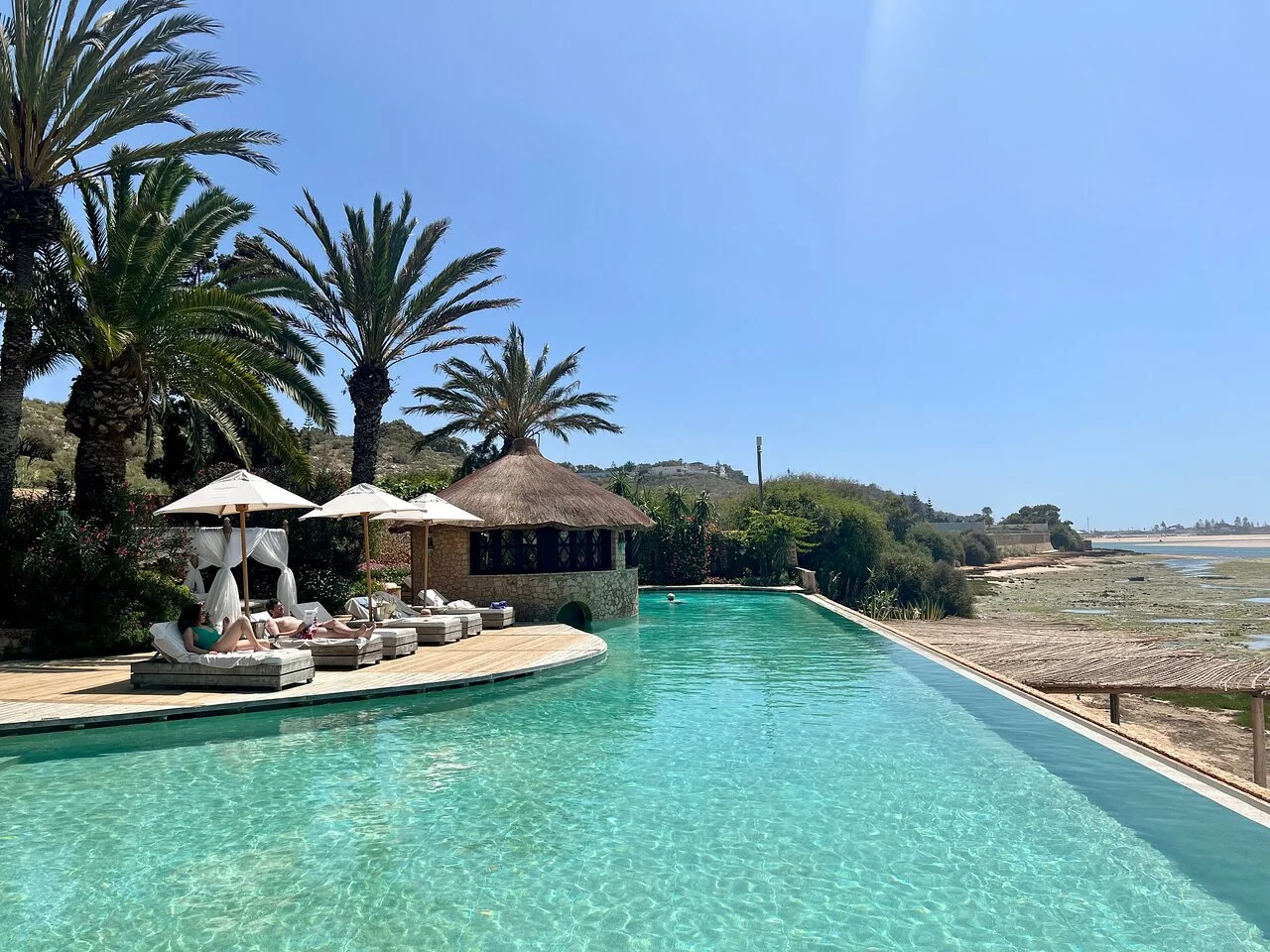
The term “manage” is the critical differentiator here. To book is a singular, reactive action; to manage implies a continuous, strategic lifecycle. The core challenge of how to manage luxury resort bookings lies in bridging the gap between the traveler’s stated requirements and the property’s actual operational capacity. Common misunderstandings often arise when guests assume that a high price point guarantees a uniform level of service. In reality, the quality of service is a variable determined by the alignment between the guest’s profile and the property’s management philosophy.
Oversimplification poses the greatest risk to the high-end traveler. Many utilize aggregated travel portals, which prioritize properties that maintain high volume and standardized, mass-market protocols. These platforms effectively filter out the “hidden” inventory—the specific villas, the owner-reserved suites, or the long-term contract blocks—that constitute the true value in the ultra-luxury segment. When you initiate the process of how to manage luxury resort bookings, you are essentially engaging in a negotiation for access. You are looking to bypass the commodity tier and enter the curated, high-touch tier where information asymmetry is resolved in your favor.
Deep Contextual Background
Historically, the management of elite travel was a centralized function performed by trusted intermediaries—private concierges or high-level executive assistants who maintained personal relationships with property managers. This system provided a form of “relational insurance.” The manager knew the guest, and the guest knew the property’s limitations.
The late 20th century, dominated by the rise of the Global Distribution System (GDS), disrupted this relationship. It prioritized efficiency, standardizing the inventory and creating the modern travel industry’s reliance on algorithms. While this increased accessibility, it eroded the nuanced, bespoke management of the guest experience. Properties began to cater to the “average” high-end guest rather than the “specific” one.
We are currently witnessing a correction. High-performing properties are decoupling from mass-market systems to reclaim control over their guest intake. They are building private booking portals, invite-only membership tiers, and direct-to-manager communication lines. This shift has returned the power to those who understand how to manage luxury resort bookings through direct institutional engagement, effectively restoring the relational model but layering it upon modern, data-driven infrastructure.
Conceptual Frameworks and Mental Models
Navigating this terrain requires specific analytical models that strip away marketing noise and expose the operational mechanics of a resort.
-
The Information Asymmetry Model: Assume that the property knows more about their inventory limitations than you do. Your goal is to narrow this gap by asking precise, diagnostic questions regarding infrastructure, staffing ratios, and maintenance cycles.
-
The Pre-Arrival Audit Cycle: Treat every reservation as a project. The timeline begins 30 days out, with milestones at 14 days (the non-negotiable audit), 7 days (final logistical confirmation), and 48 hours (status verification).
-
The Service Continuity Protocol: This model measures how a property retains your preferences across multiple visits. If you have to explain your requirements (pillow preferences, diet, room temperature) a second time, the property has failed the continuity test.
-
The Access-Flexibility Trade-off: A property with absolute, guaranteed access (e.g., residence clubs) often demands a loss of geographical flexibility. A property with high flexibility (e.g., transient luxury) lacks the “home base” familiarity that facilitates deep, high-performance rest.
Key Categories or Variations
Understanding the categories is the first step in effective portfolio management.
| Category | Typical Booking Structure | Primary Advantage | Risk Factor |
| Transient High-End | Dynamic Nightly Rate | Maximum geographic agility | No institutional memory |
| Membership-Based | Annual Dues + Usage Fees | Guaranteed access, priority | High fixed overhead |
| Fractional/Equity | Asset Title / Long-term Lease | Asset appreciation potential | Low portability |
| Exclusive-Use Contract | Full Property Buyout | Total environmental control | Massive capital intensity |
The decision logic here is clear: Do not apply the same management strategy to a short-term transient trip as you would to a long-term estate stay. The former requires speed and negotiation, while the latter requires legal review and institutional relationship building.
Detailed Real-World Scenarios
Scenario 1: The High-Stakes Corporate Retreat
The constraint is zero tolerance for operational failure. The secondary requirement is privacy. When determining how to manage luxury resort bookings in this context, the standard reservation channel is insufficient. The strategy must involve a direct contract with the Director of Sales, an explicit clause regarding staffing ratios, and a pre-arrival site inspection (or a virtual walk-through of the specific villas). Failure mode: The resort overbooks during a peak season, and your “exclusive” block is compromised. Second-order effect: A loss of professional credibility.
Scenario 2: The Multi-Generational Legacy Trip
The constraint is the heterogeneity of needs—toddlers, seniors, and active adults. The strategy involves auditing the resort’s “hub-and-spoke” service model. Does the property have the infrastructure to support independent enclaves while maintaining centralized management? Failure mode: Misaligned service expectations. Second-order effect: Constant interpersonal friction between the family and the staff.
Scenario 3: The Global Nomad’s Network
The constraint is consistency across varying cultures. The strategy here is not to manage individual bookings but to manage a relationship with a high-end travel consultancy that has “preferred partner” status across global hotel groups. They act as the institutional memory for your preferences. Failure mode: Over-reliance on a single consultant who loses their property-level influence. Second-order effect: A sudden drop in the quality of your stay.
Planning, Cost, and Resource Dynamics
The economic management of luxury travel must shift from a “price-per-night” metric to a “cost-per-usable-night” approach.
| Cost Element | Variability | Strategic Mitigation |
| Accommodation | High (Seasonal) | Use shoulder-season booking windows |
| Logistics | Moderate | Pre-negotiate private transport rates |
| Experience Curation | Variable | Institutionalize gratuities via pre-payment |
| Friction/Time | Extreme | Target properties with local infrastructure dominance |
Opportunity cost is the silent metric. If a resort requires you to spend three hours a day navigating their bureaucratic processes (e.g., waiting for shuttles, resolving billing errors), the cost of that stay is significantly higher than the room rate suggests. When you analyze how to manage luxury resort bookings, calculate the total “friction tax” of each property.
Tools, Strategies, and Support Systems
-
The Pre-Arrival Audit Email: Send a detailed, non-standard request 14 days out. If the response is template-based, the property’s management is standardized and likely rigid. If it is human-centric and solution-oriented, the property is operationally mature.
-
The “Fixer” Relationship: Cultivate a relationship with a single, high-authority individual at the property. This is your primary point of failure mitigation.
-
CRM Utilization: If the property does not have a formal guest profile system that they can demonstrate to you, they do not have the institutional memory to manage your long-term needs.
-
Network Mapping: Inquire about the property’s local partnerships (guides, boats, fixers). A resort that integrates with its local environment is structurally stronger than an “island” property.
Risk Landscape and Failure Modes
Even the most prestigious properties suffer from systemic degradation.
-
Management Churn: High turnover in General Managers is the leading indicator of declining service quality.
-
The “Luxury-lite” Drift: This occurs when a property tries to maintain high margins by cutting back-of-house staff. The decline is usually invisible until it hits the guest-facing experience.
-
Deferred Maintenance: A resort that is “redecorating” but not “maintaining” (i.e., new paint but broken HVAC) is in decline.
-
Algorithmic Dependence: If a resort has outsourced its revenue management to a third-party algorithm, its pricing and availability will become irrational and customer-hostile.
Governance, Maintenance, and Long-Term Adaptation
Treat your luxury travel as a portfolio. It requires regular governance. This means conducting an annual review of your travel history. Which properties delivered on their operational promise? Which ones required too much management effort from you?
Create a “Resort Audit Checklist” for every departure. Note the responsiveness to minor requests, the consistency of the staff, and the state of the infrastructure. If a property fails two years in a row, it is time to divest and remove it from your approved list. This rigor prevents the accumulation of mediocre experiences in your travel history.
Measurement, Tracking, and Evaluation
Do not rely on sentiment-based reviews (e.g., “the staff were nice”). Rely on operational data:
-
Resolution Latency: The time from your request for a minor service (e.g., extra linens, reservation change) to fulfillment.
-
Data Fidelity: How often did you have to repeat a preference? If it is greater than zero, the property’s backend is failing.
-
Predictive Capability: Did the staff anticipate a need before you stated it? (The gold standard).
-
Re-do Rate: How often was a service performed incorrectly on the first attempt?
Common Misconceptions and Oversimplifications
-
“Booking direct is always better.” For massive chains, yes. For ultra-luxury estates, a well-placed intermediary can often secure “off-market” inventory that the direct channel hides.
-
“Loyalty programs provide meaningful upgrades.” In the ultra-luxury tier, loyalty points are often a distraction. Focus on the relationship with the property, not the points accumulation.
-
“All-inclusive is inherently low quality.” High-end all-inclusive models actually reduce transactional friction, which can enhance the feeling of true relaxation.
-
“The most expensive room is the best.” Often, the highest-category room is the most heavily marketed and least “service-optimized” unit in the property. Sometimes, a mid-tier villa offers better proximity to core services.
Ethical, Practical, and Contextual Considerations
The luxury traveler has an implicit responsibility to understand the ethics of the property’s operation. The best resorts are those that integrate with their local community—not through performative charity, but through local employment and sustainable resource management. When deciding how to manage luxury resort bookings, evaluate the property’s labor practices. A resort with high turnover is almost certainly failing to provide the stability required for long-term, high-quality service delivery.
Synthesis and Conclusion
The management of luxury travel is a discipline of reduction. It is the practice of removing friction, managing risk, and aligning institutional output with personal requirements. By moving away from reactive booking and toward proactive curation, the traveler transforms their experience from a transactional event into a high-performance system. The art of how to manage luxury resort bookings requires patience, scrutiny, and an unapologetic demand for operational excellence. It is not merely about finding a place to sleep; it is about establishing a reliable environment that facilitates the specific intent of the journey.